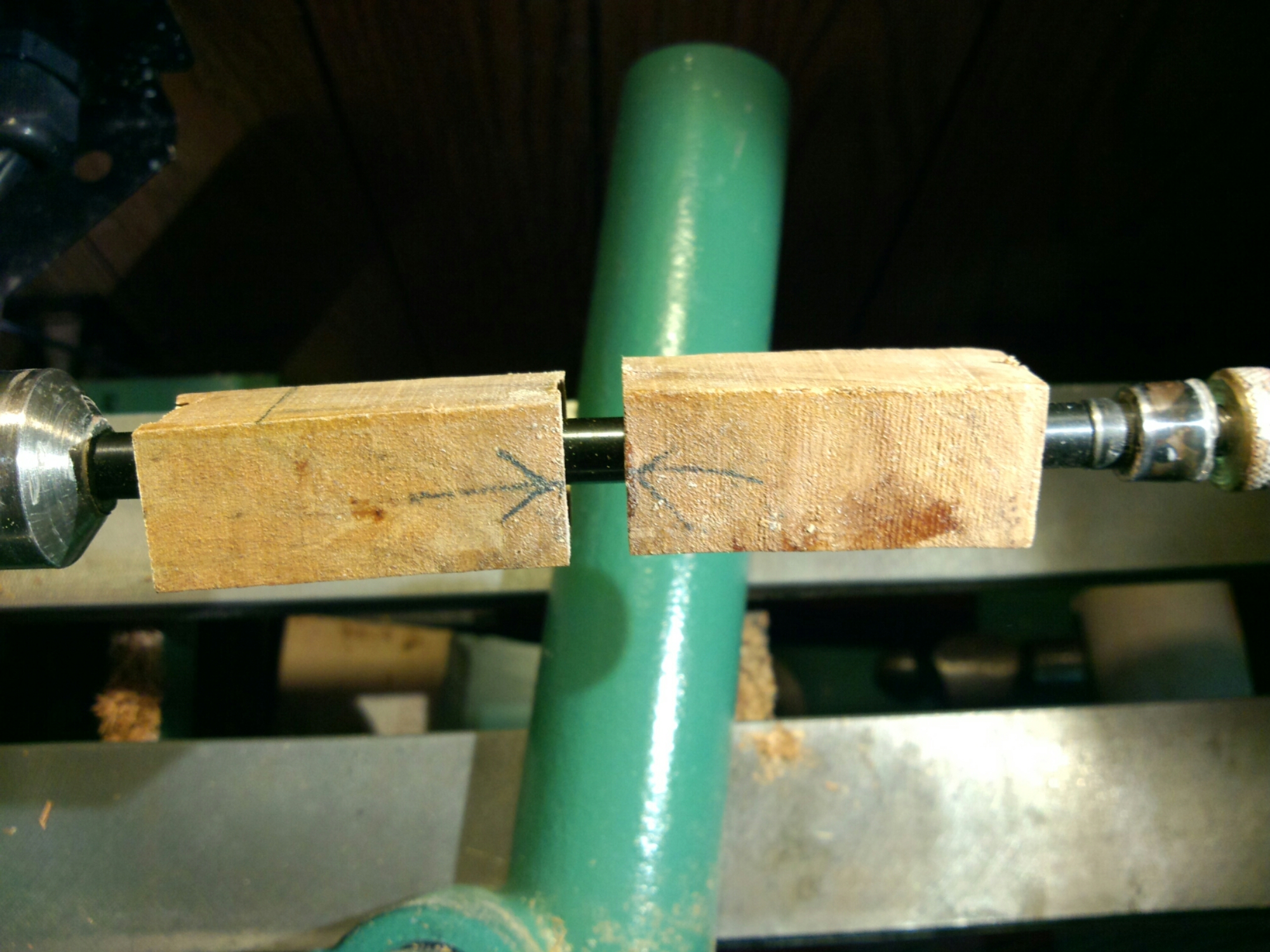
The pieces are now on the mandrel and on the lathe ready for turning.
I have read that the dust from turning has some very deleterious effects on a person’s lungs and so I ALWAYS wear my respirator when turning.
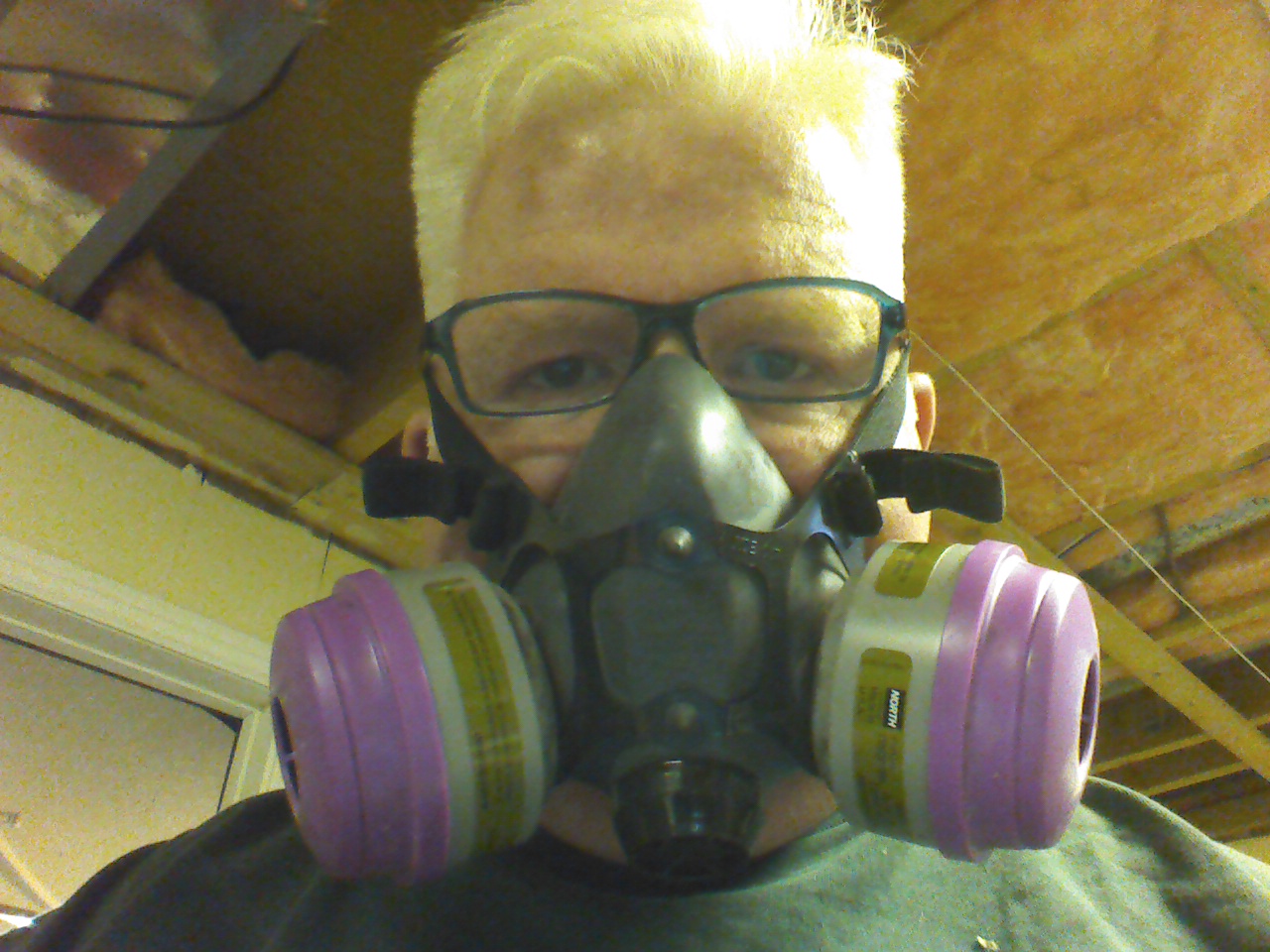
This has P100 cartridges and are intended for gases and fumes, but the rating is higher than the P95 particle cartridge. I am still trying to determine the specific cartridge that I need with this wok, but in the meantime, my rationale was that the higher the rating the better.
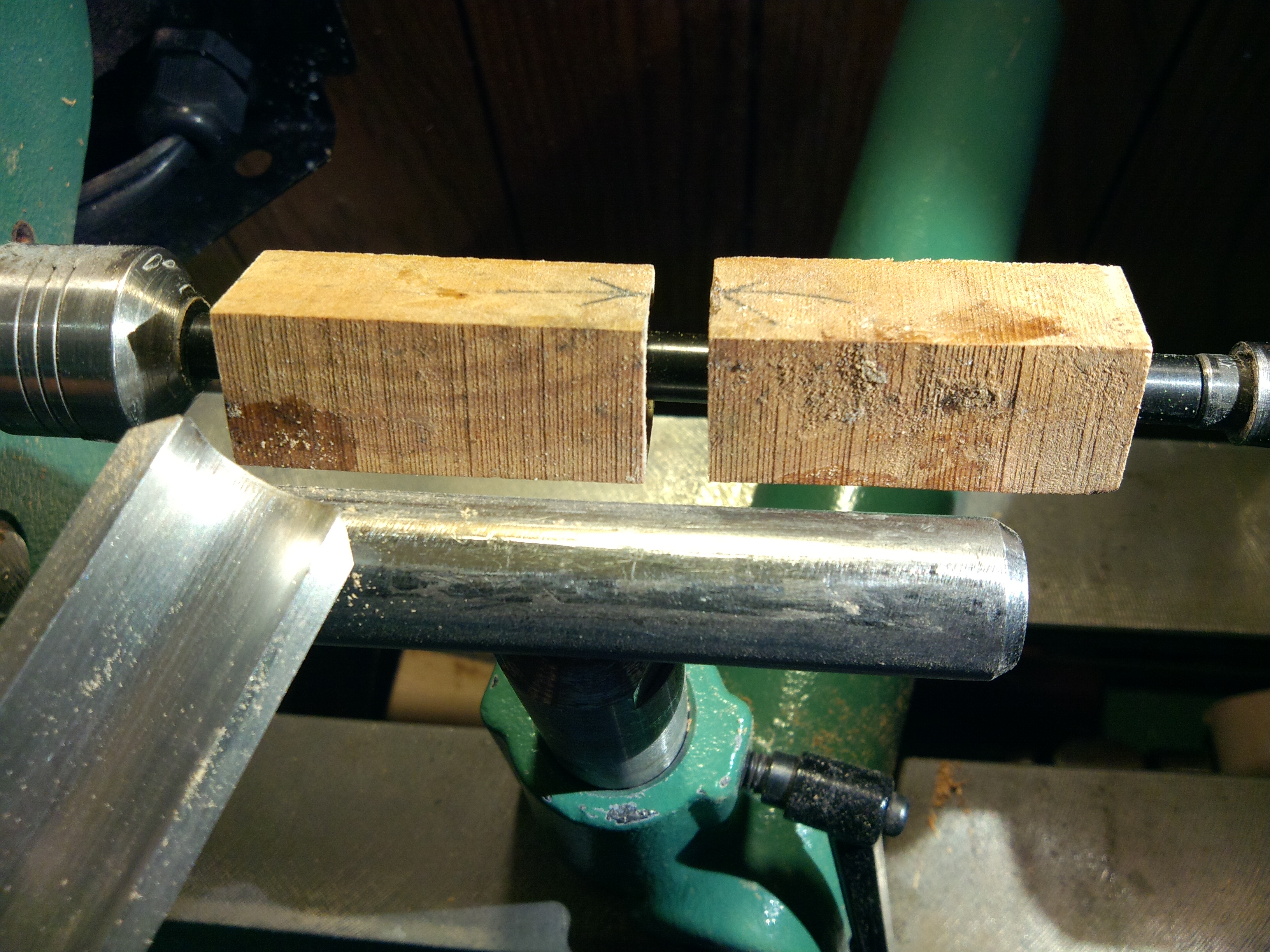
I first start the turning with a roughing gouge (shown above). You should set up the rest as close as possible to the turning piece and keep adjusting it as the piece gets smaller.
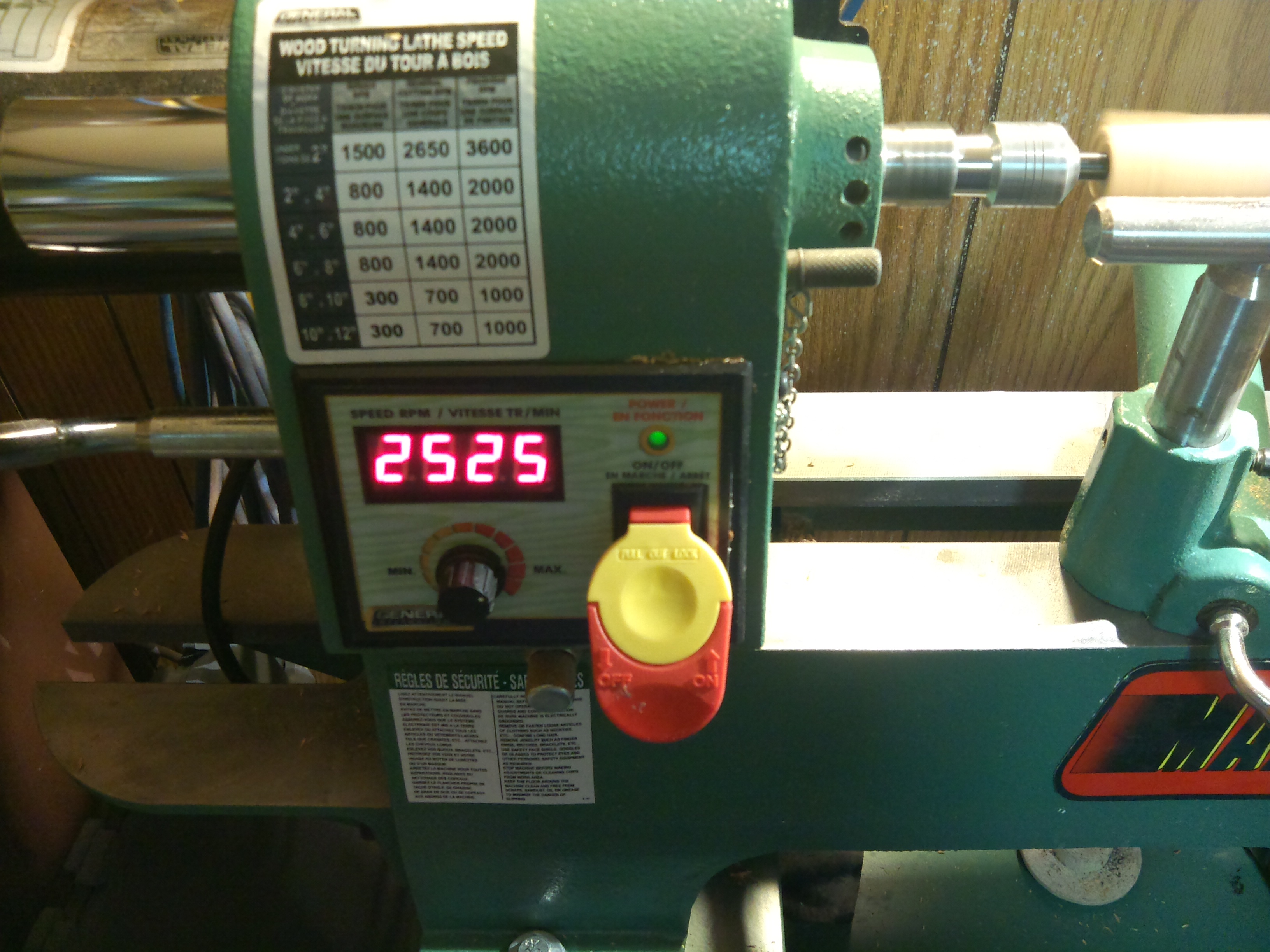
To start the turning on a small spindle, I like to start at 2500 (ish) rpms. With a small spindle these high rpms are not problematic and they produce a cleaner cut. The roughing go much quicker as well.

Roughing of one half complete and the rest is adjusted to complete the second half.
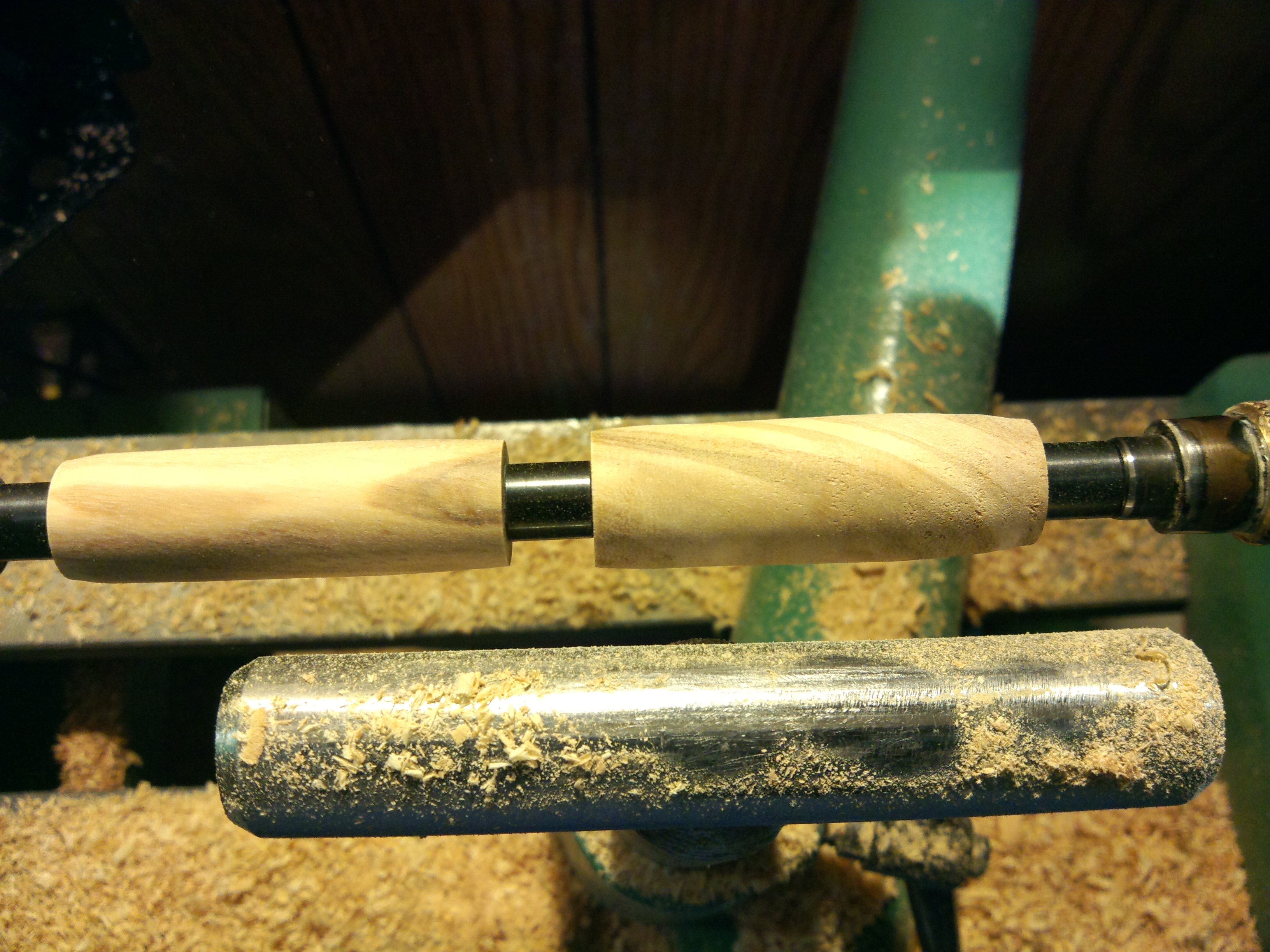
Roughing is now complete. For the final shaping you can use a variety of gouges. I use a spindle gouge to get the approx shape and then do a pass with a skew. The skew tends to cut so nicely that it tends to “burnish” the wood.. I will also use the skew as a negative rake scraper to take the wood right down to the bushing size.
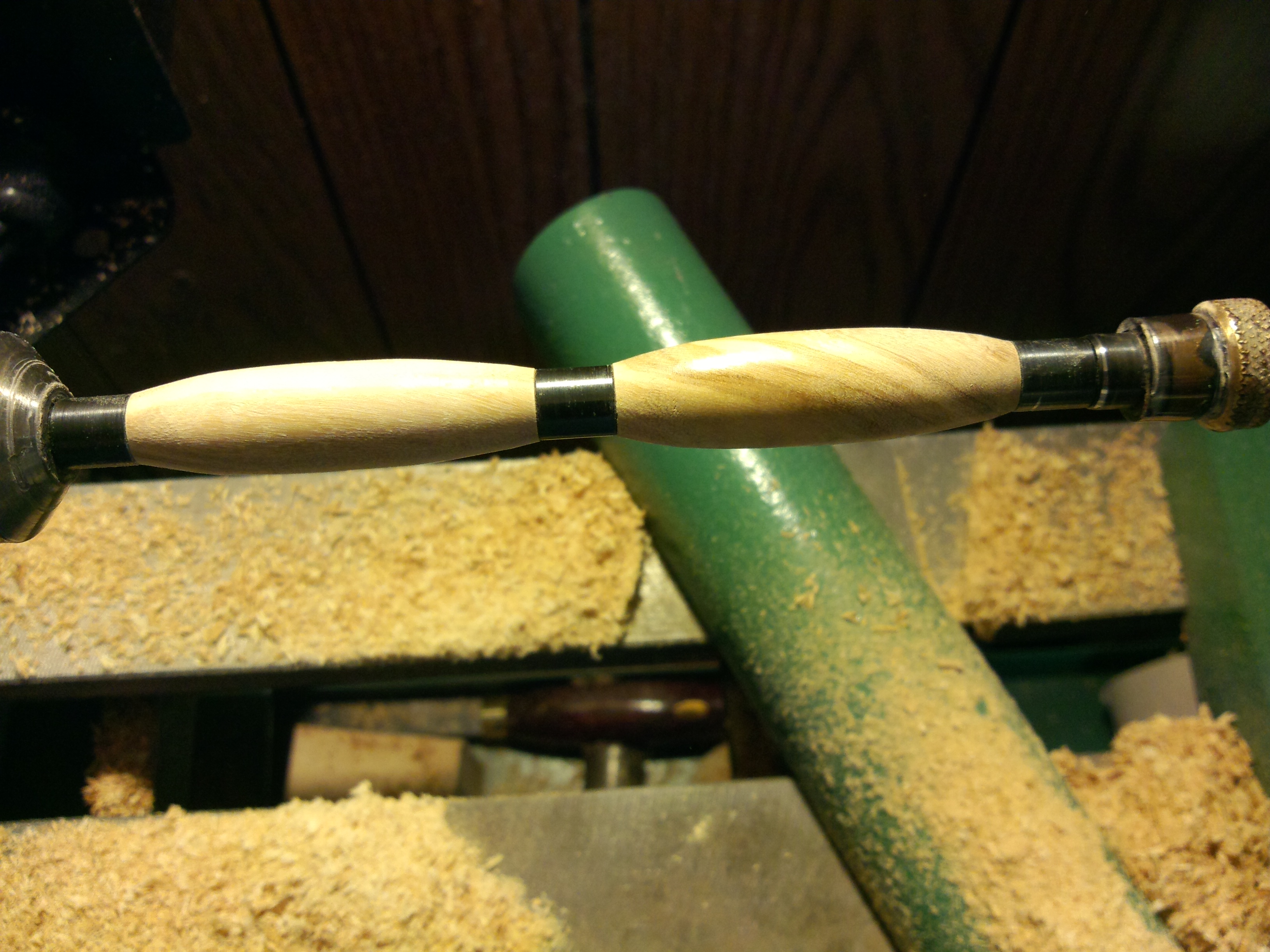
Here is the turned blank just before sanding. Some turners are good enough with the skew that they don’t need to sand, but that is not me… yet. i do make an effort to use my skew on every project so that I can develop my skill on this chisel. For sanding, I work through 4 grits (180, 240, 420, and 600).

I reduce the rpms for sanding, and I will reverse the direction of the lathe as well so that I can lay down all the fibres that were raised while turning
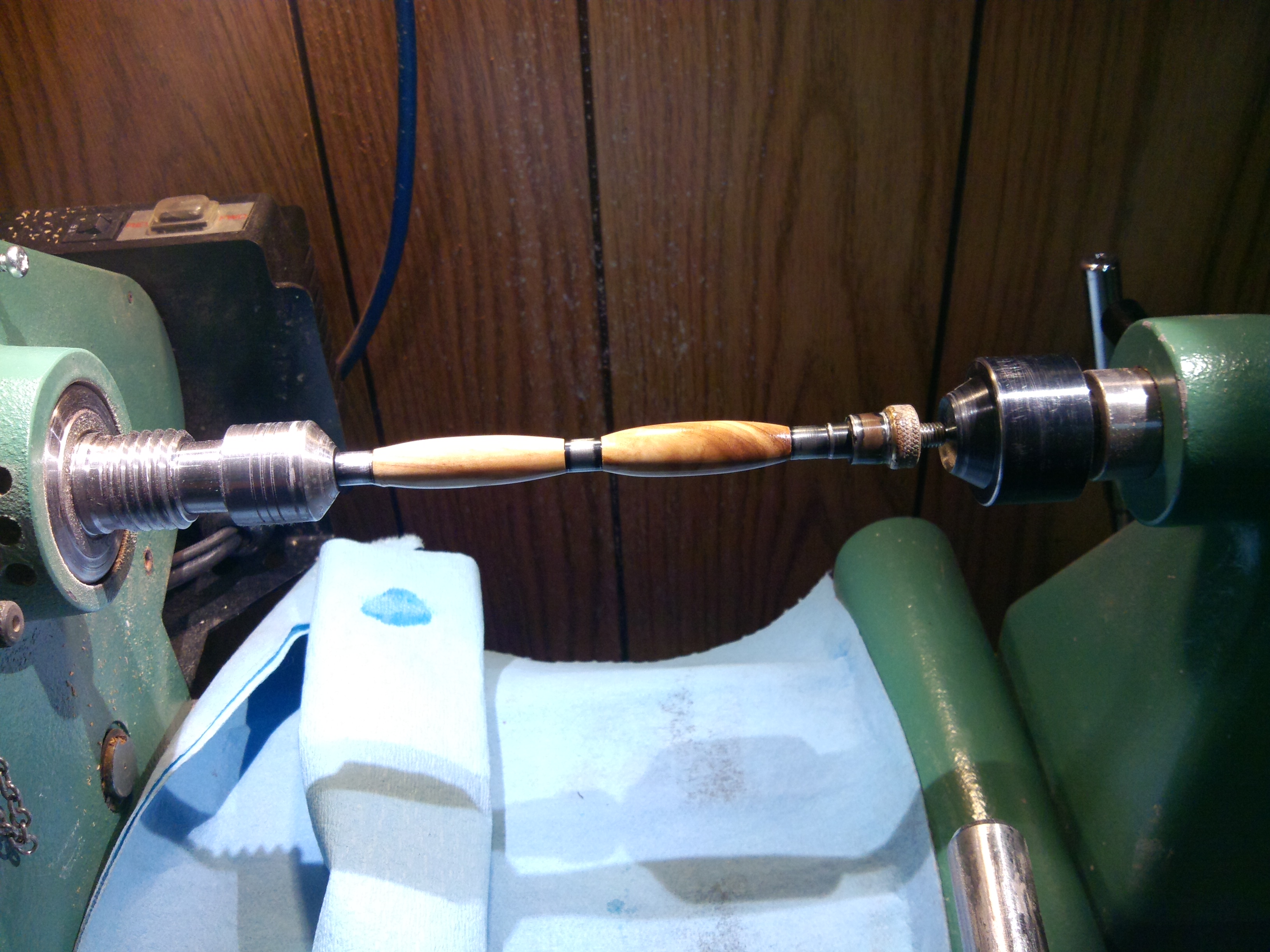
After the pencil is sanded, I clean the blank with Accelerator and, when dry, I start to layer 6 coats of CA glue on the blank. This shows the blank after the first coat of CA is applied. I am sure to leave every coat to dry very well before applying a new one. Six coats are, I think, fine. After allowing to cure overnight, I polish the pen with micromesh paper from 1500 grit to 12000 grit. After the micromesh, I use EEE Cream and finish with my Meguiar’s PlastX polish.
To be continued…
 To Everything, Turn...Turn...Turn