To Everything, Turn…Turn…Turn

Alan's Turning Log – Adventures in Wood Turning

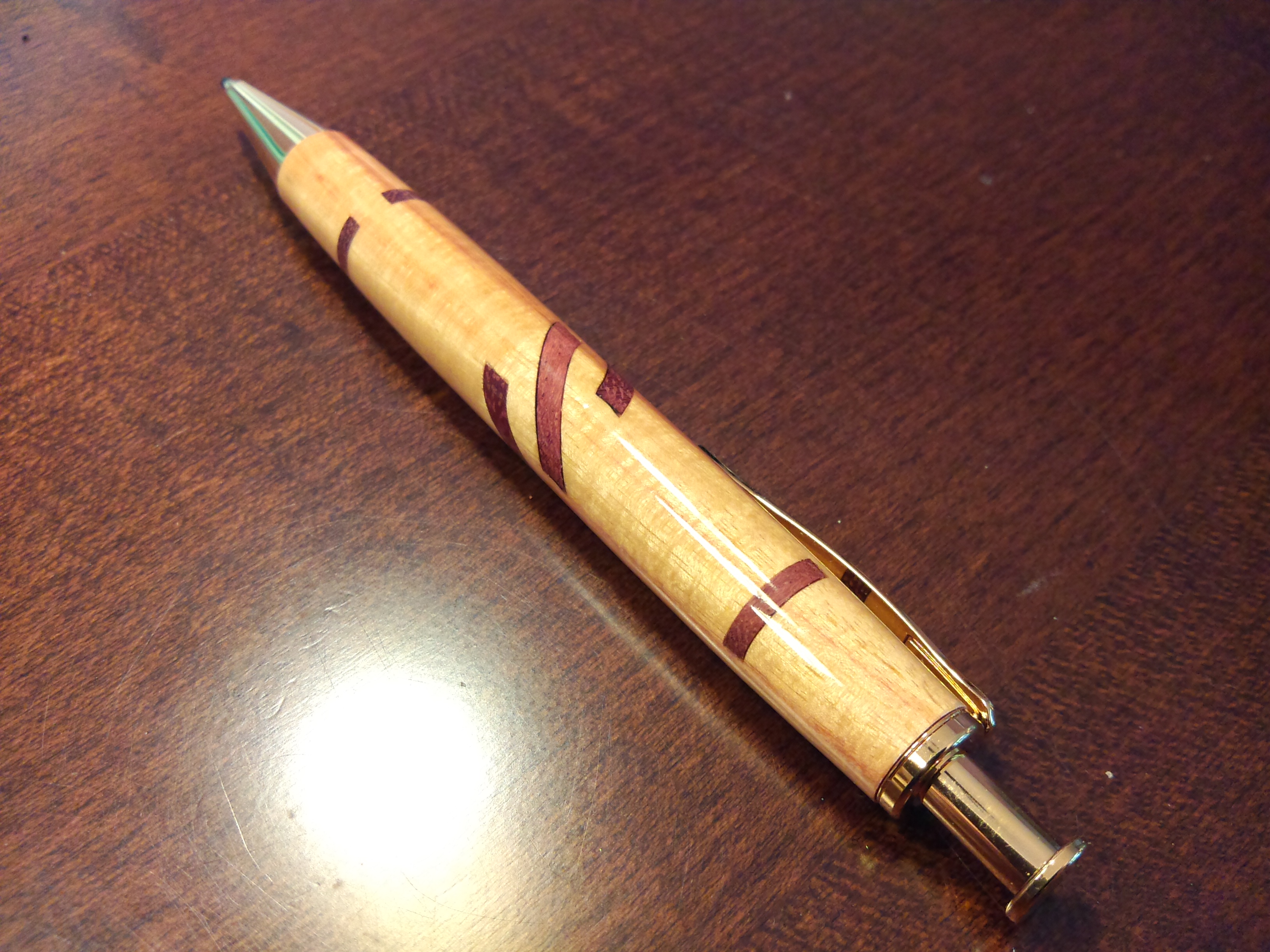
  • It has been some time since I posted anything to this blog.  I have been rather busy through the summer with work and didn’t feel much like working in the shop in the few hours that I had off.  My office had another Change of Command in August and I decided, once again, to make some matching pens for the ceremony.  I have been wanting to try a new pen kit and the Virage uses the same size bits as the Baron and so I just needed to buy bushings for the Virage.  I decided to make these pens with what I call a “Lazy S” design in the stock of the pen and just some slices in the cap.  It was an experiment because I didn’t know if I would like the effect on a two barrel pen. 

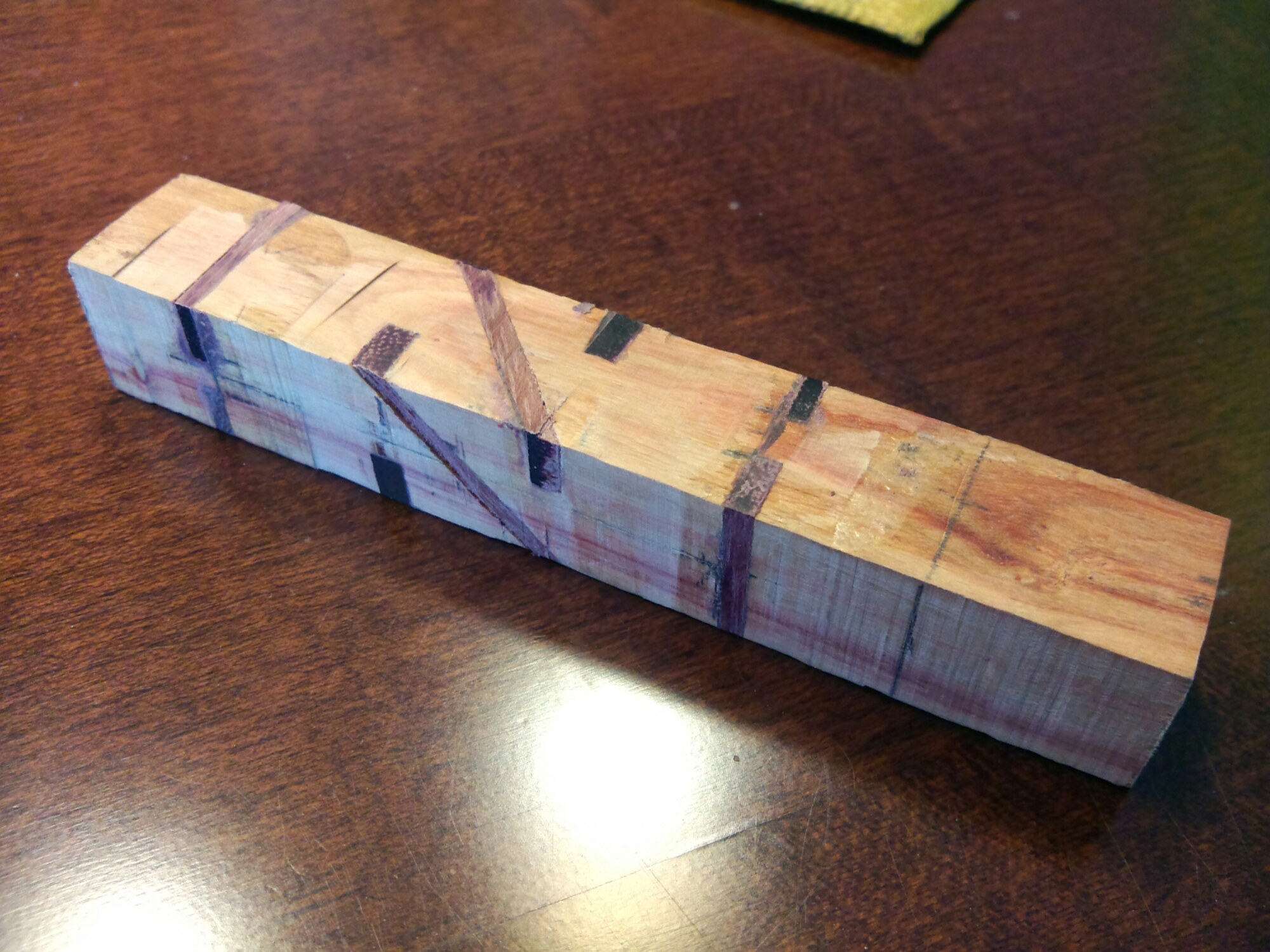
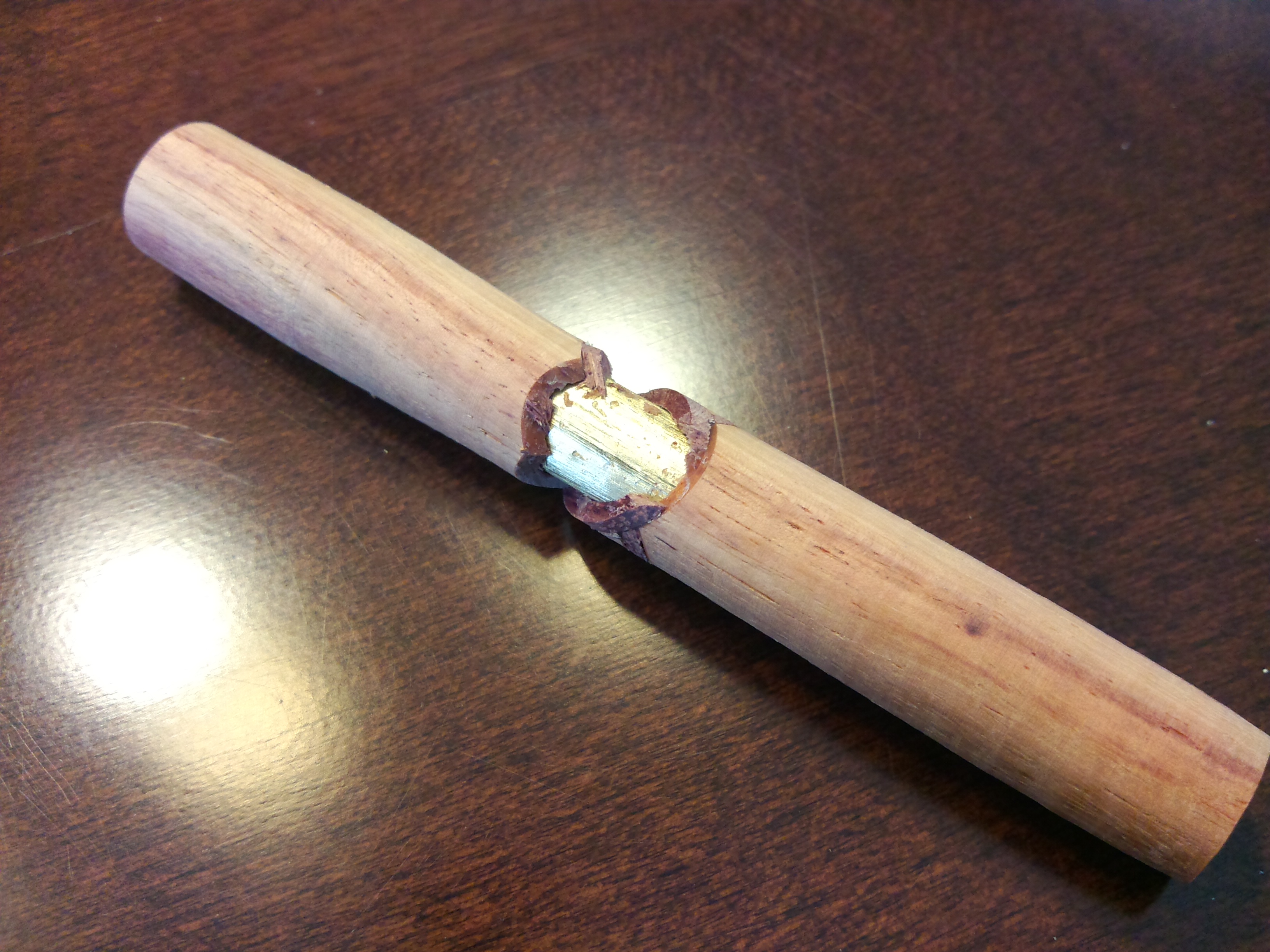
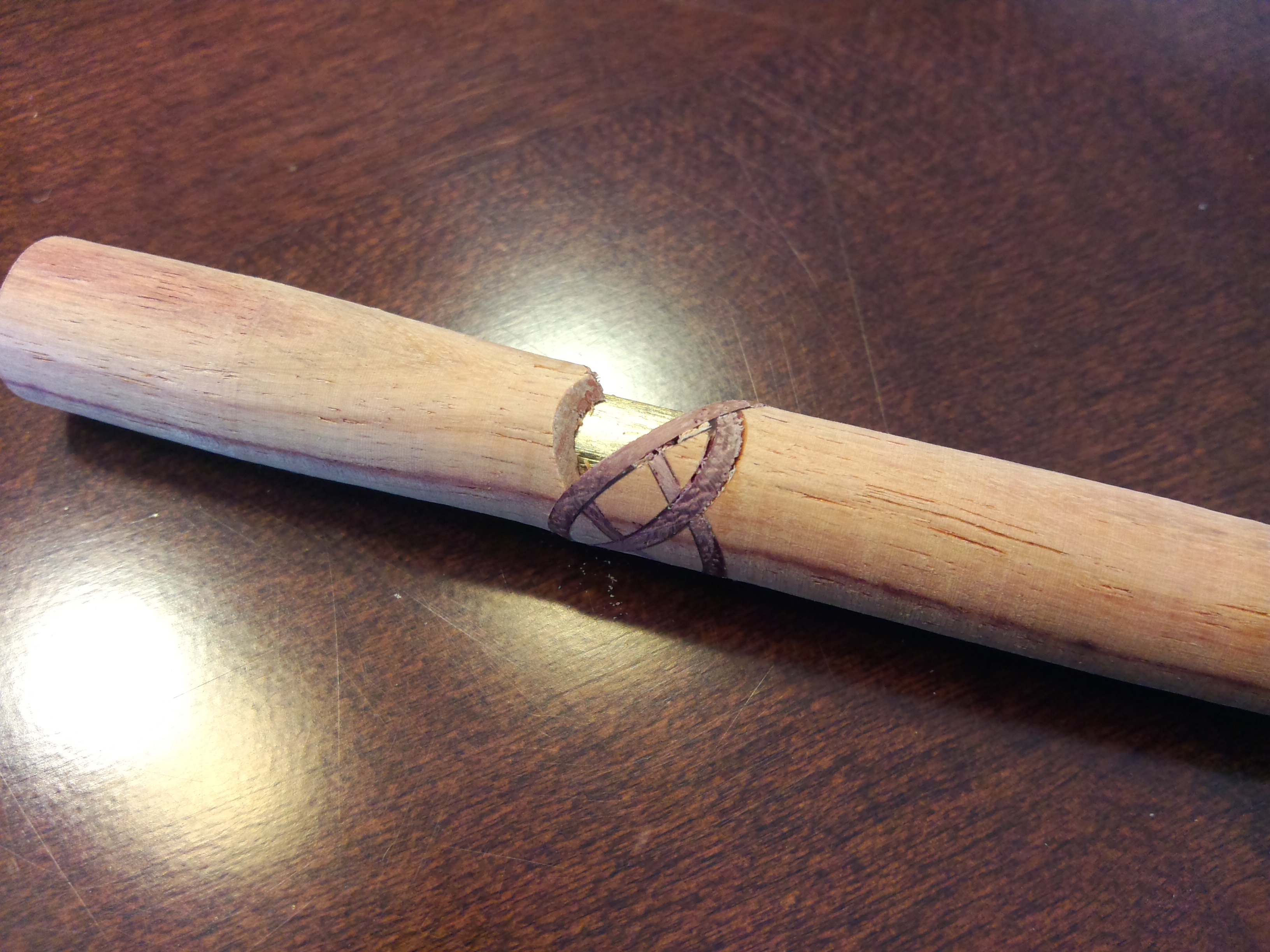
    I tried something different with the inlaid purpleheart this time.  The last time I did this, I made a cut in the Tulipwood, glued in the inlay, waited for it to dry, made a second cut, etc.  I decided this time to make all the cuts at once.  This way, I could do all my cuts in the garage (where the tablesaw lives) and then come in to the house to finish the inlay.  Because I was making three pens in the same way, this was a much more productive way of doing this.  The cuts are not so deep that it really compromises the stability of the blank.  This is an easy inlay because my saw makes a 1/8 inch kerf and I have 1/8 inch thick purpleheart.  I like the substantial lines that a 1/8 inch slice creates.

    Here is a video of the rough inlaid blanks.

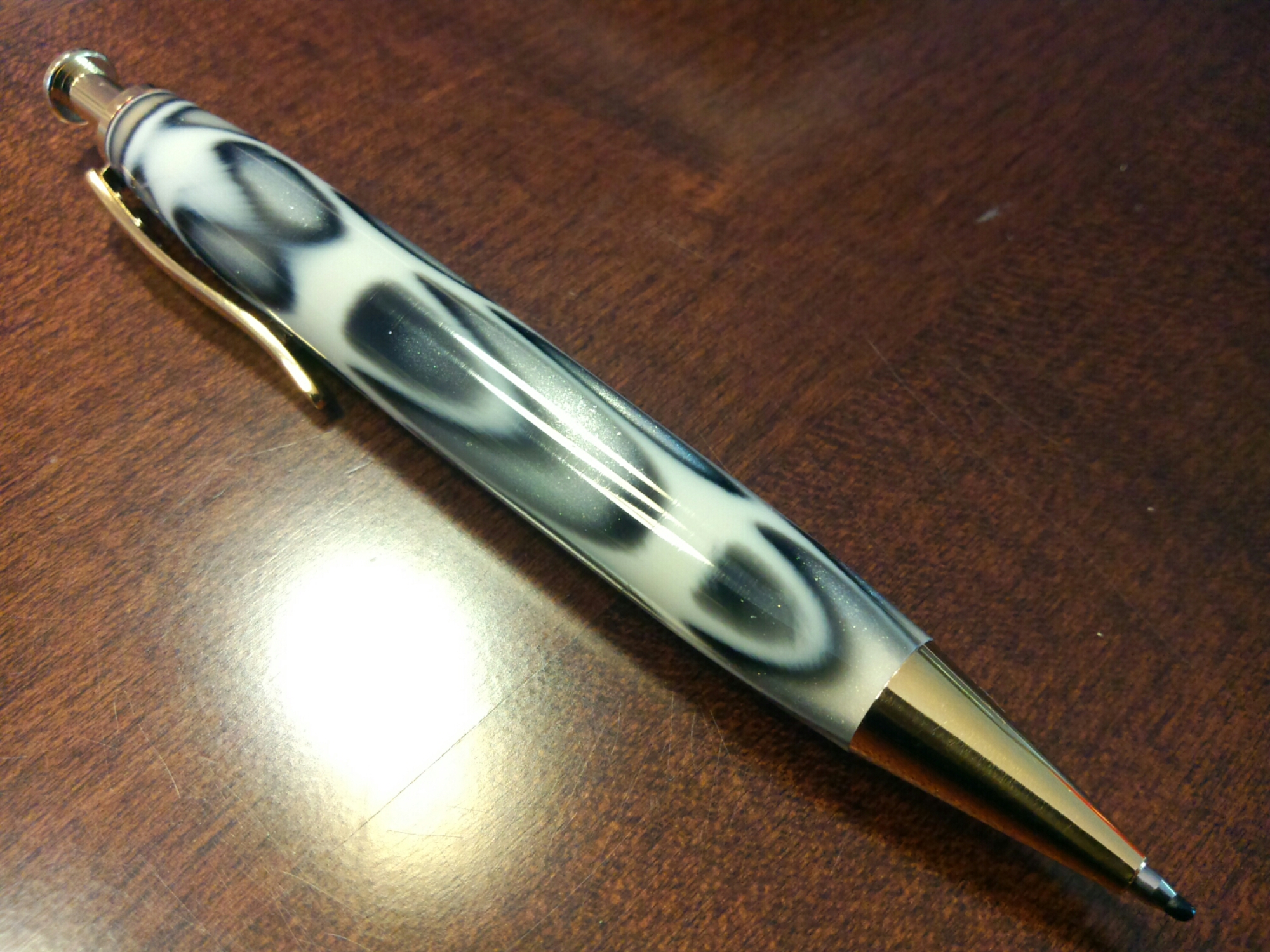
  • I have had several blanks for over a year now.  In fact they are among the first ones that I bought.  They are made of some kind of resin and they are called “Animal Prints”  for obvious reasons.  I was waiting for the CA finish on the Bocote pen to cure so I decided to make a Longwood pen with one of these blanks.  The blanks themselves are oddly shaped.  They are rectangles as opposed to squares.  I had tried to slice one down the middle to make two blanks but when I drilled the small blanks, they broke.  For this one, I decided that I would turn the rectangle.  It took forever to take this down to round, and it really smelled bad, not like the acrylic.  I also found it chipped quite easily, although as it was getting closer to round, I turned the speed up and the chipping minimized.  This really did need to be spinning at 3000 rpm in order not to melt the resin.  As I finished it, I wasn’t very happy with how this material worked, but then I used the wet micromesh to polish the pen and was impressed by the shimmer in the resin.  Not sure I will buy any again, but I am glad that I made this one.  This is called “Snow Leopard”.
    image

    image

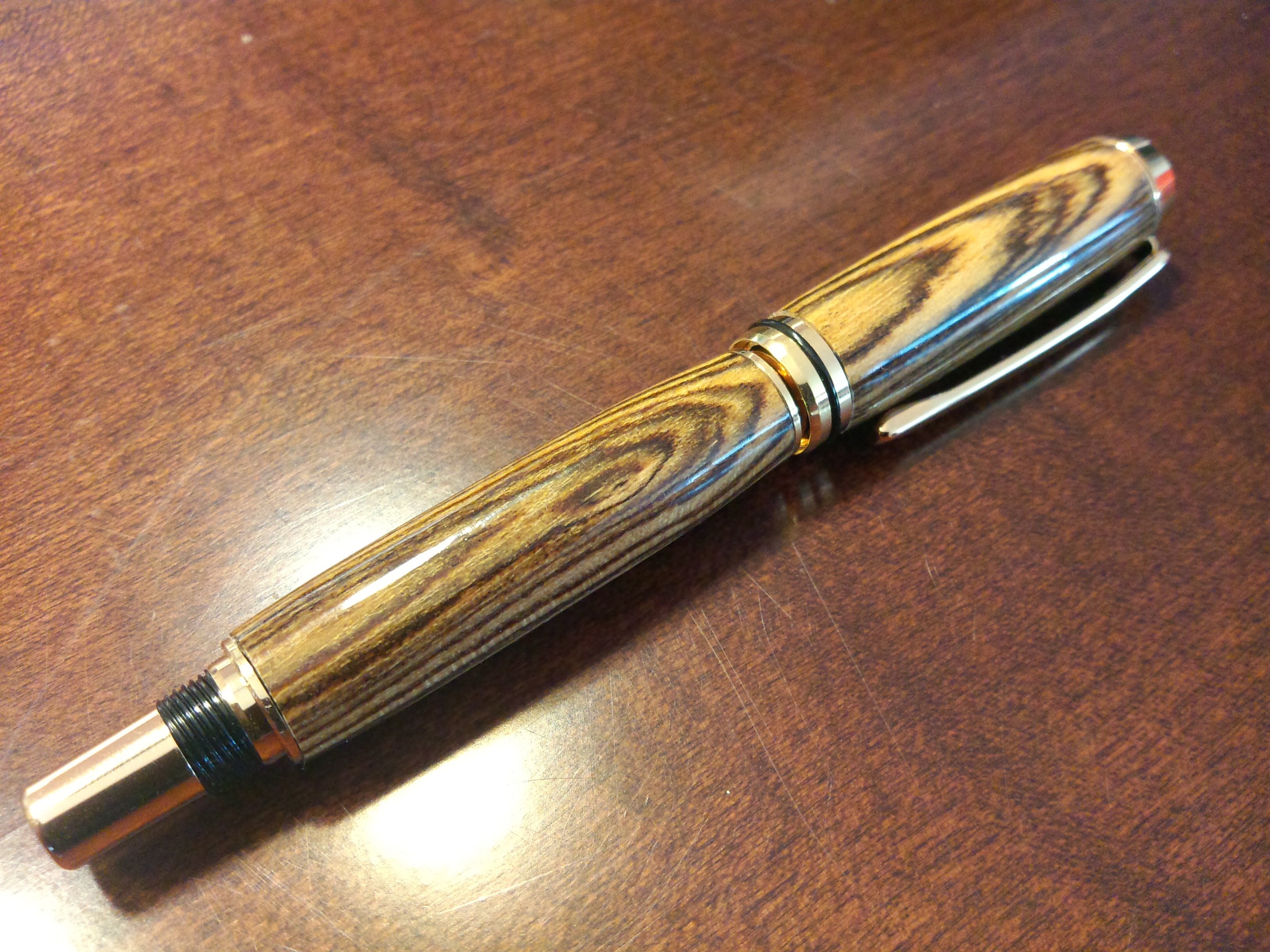
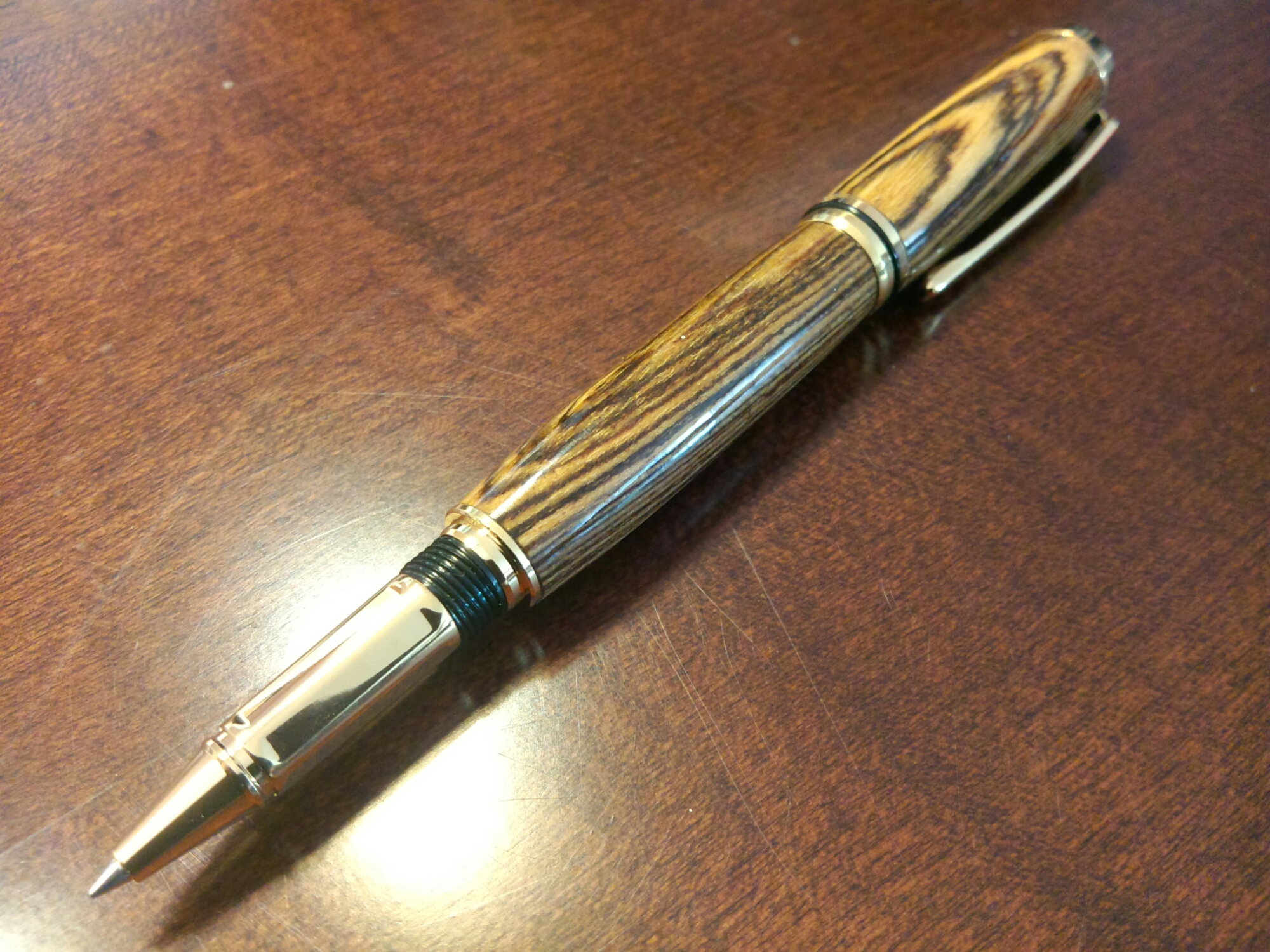
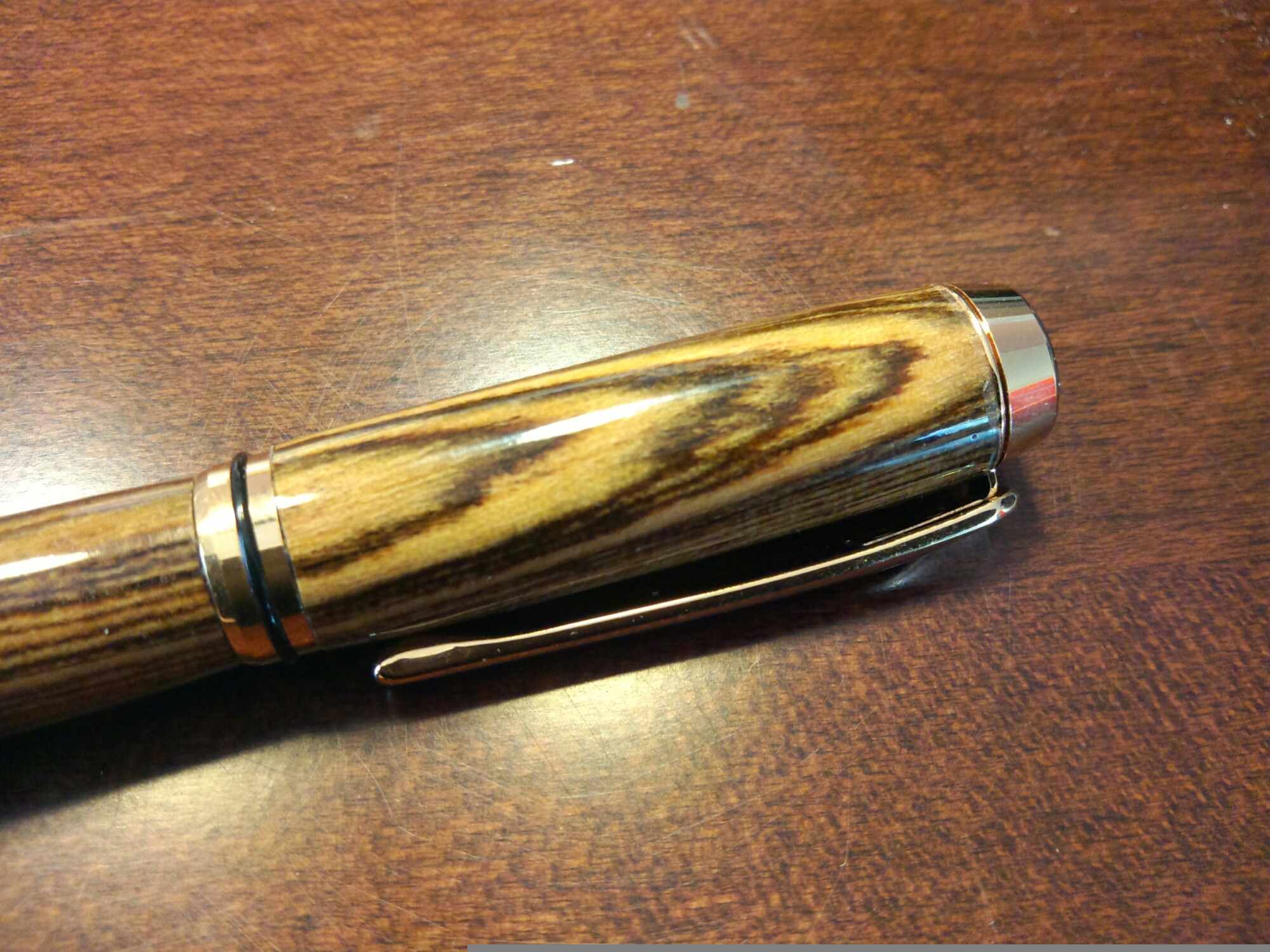
  • I have recently run into a friend from about 20 years ago (on Facebook).  Turns out she lives just down the street from me.  At any rate, she has been admiring my latest pens and asked if I could make one for her.  After some questions back and forth, she decided on a Rollerball made out of Bocote.  I have been playing with segmenting of late and did consider doing something on this, but with a two piece barrel, I didn’t think that a knot or “lazy s” design would look in proportion to the pen as it does in the Longwood pens.  Bocote has such a strong grain pattern that I didn’t really want to detract from it.  Finished in CA Glue, this pen turned out really well.

    image

    image

    image

    image

  • I haven’t made a pen with acrylic for quite some time and thought that it was time.  I came home sick from work this morning and slept for several hours.  When I woke up I was still feeling a bit poorly, so to take my mind off my stomach, I went down into the shop. 

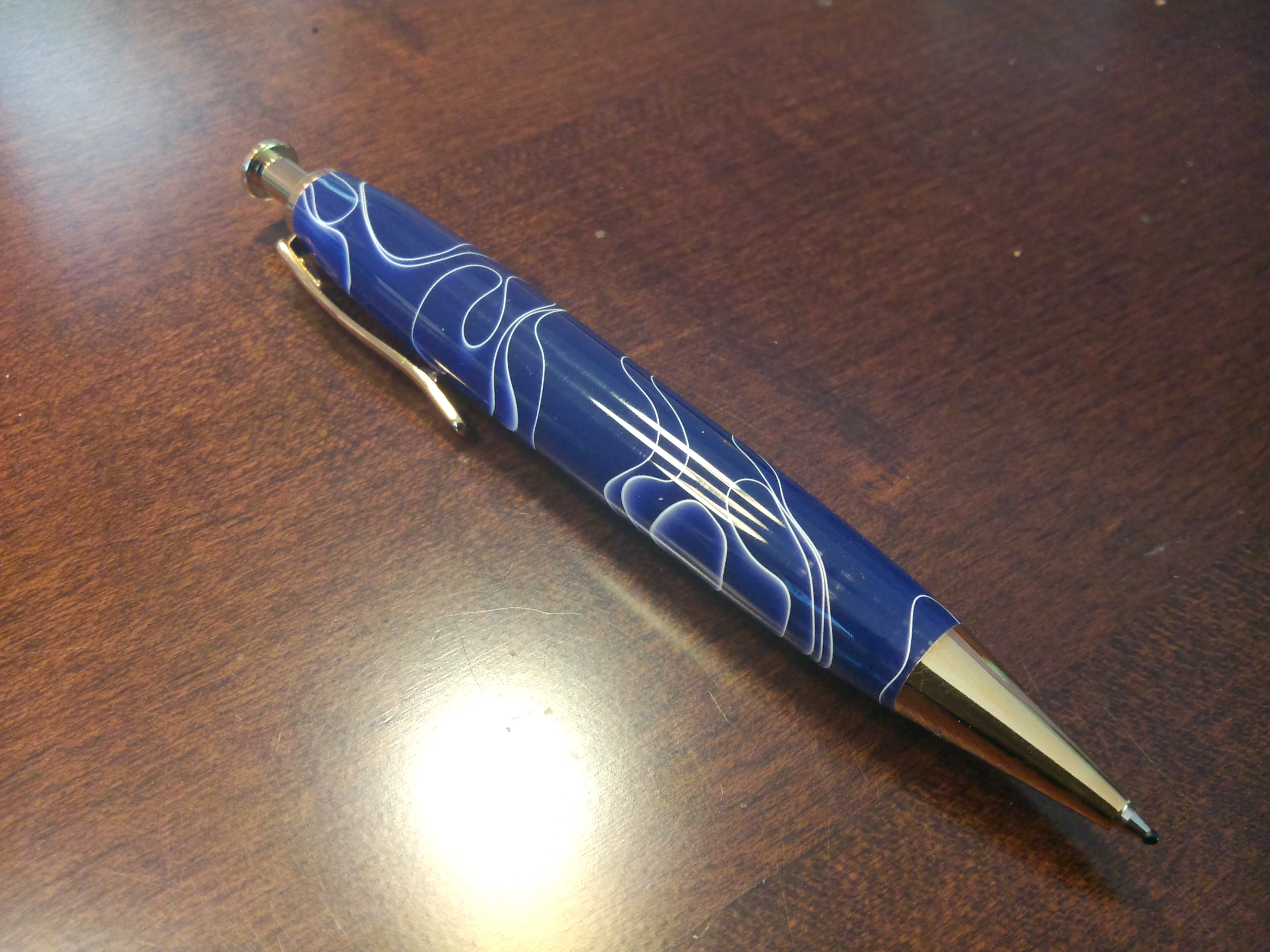
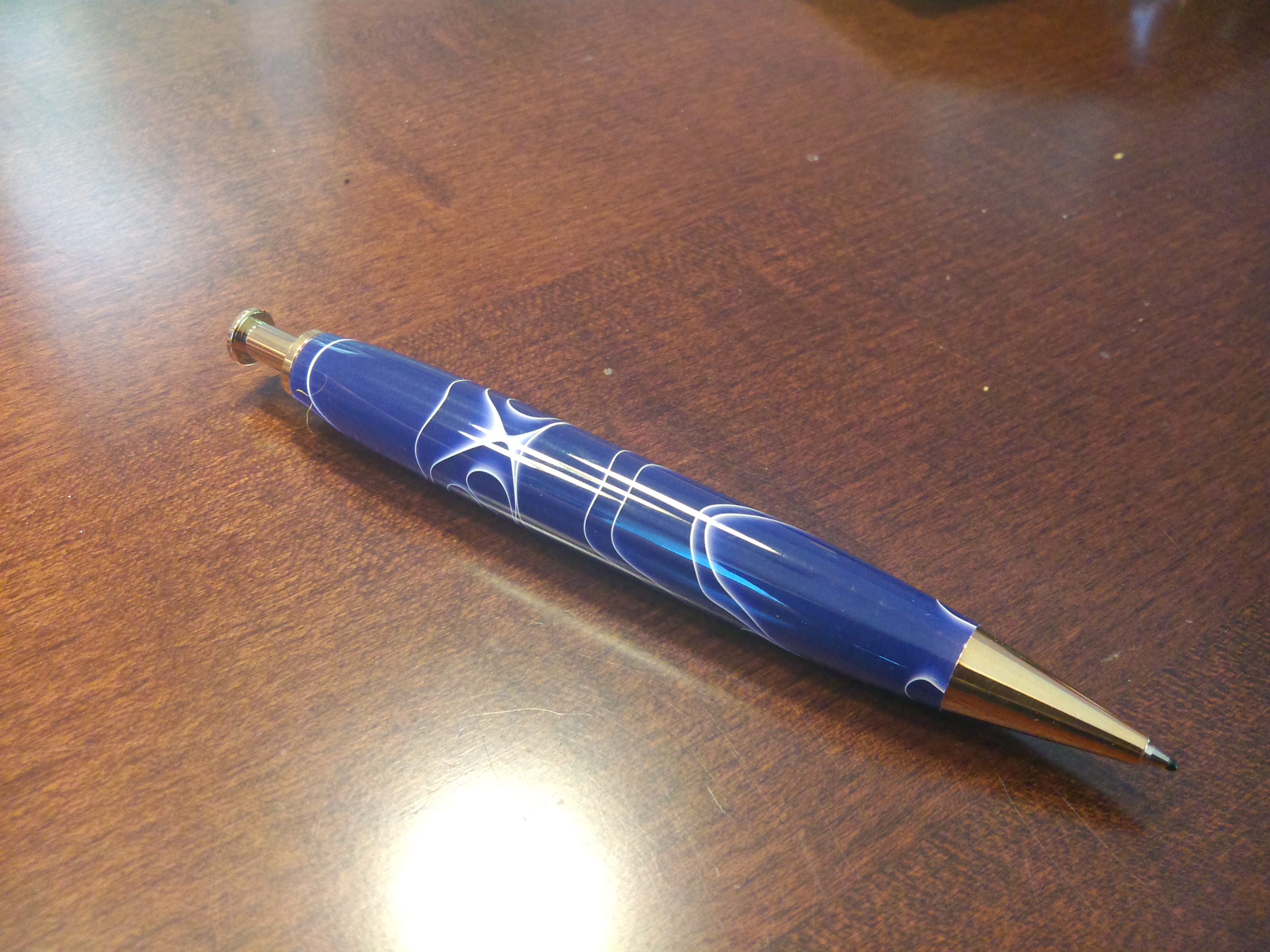
    This pen is made from a blank from William Wood-Write, called Stonewashed Denim.  Last year, I tried to make a pen with another of these and turned too much of the acrylic away.  Today I was very careful.

    One of the things I learned about these blanks is they are very brittle.  I have started drilling the holes on the lathe with a jacob’s chuck in the tail stock.  Centre the stock in my scroll chuck, turn it on and the stock spins around the drill bit.  This way, the bit doesn’t wander as much as it does in my drill press.  An idea, that has taken me far too long to come to realize.  Because I am worried about excessive heat blowing out the blank, I have started to drill a small hole through the blank first, and then use my final size drill bit.  I started with a 7mm bit and the hole went through beautifully.  When I chucked up the 3/8 bit and advanced it, when it bit into the blank, it tore out about 1/8 inch of the blank leaving a very rough hole.  The remainder was fine and fortunately, I had not cut the blank to length (another idea that I have been trying), so I was able to cut off the chipped out portion of the blank before sizing the final length and cutting.

    Another realization occurred when I was squaring the blanks on my segmented pens.  Up until this week, I had been chucking my pen mill into my drill press and then holding the blank and manually pushing the stock onto the cutter.  The other day, I thought, “Hey… this is a drill press” and so I put the blank in the drilling vice and lowered the mill onto the blank.  No more slivers or cut palms.  My only concern is the pin on the mill.  They wobble a bit and there is quite a lot of side to side movement of the top of the blank.  My solution to that is to have a smaller pin that is free to move around in the tube.

    Once squared and on the lathe I was able to start turning.  I have mentioned before that these blanks have two very different densities of acrylic.  The white ribbons are quite a bit softer than the blue and so you have to be very careful to not gouge the blank at the ribbons.  Use a very light touch on the cutting.  It takes longer to do the turning but it is worth it to have a nice smooth blank.  Acrylic also has to spin at a much faster speed because you want to cut the acrylic with your knife instead of melting it.  I had the lathe turning at 2750 rpms and could probably have gone a little faster as the heat was melting the shaving as it was leaving the blank.  It seems to me that 2000 rpm was the recommended speed, but it could have been 3000.  I don’t remember from my class.  This is a bit of research that I will have to do.  My lathe maxes out at about 3200 rpms so I hope it doesn’t need to go faster than that.

    This is, once again, a Longwood Click style pen.
    image

    Once turned, I sanded with a piece of wet 600 grit sandpaper (I had some chatter marks from my scraper).  In my class I was told to use a Bastard File to remove tool marks so this was a bit of an experiment.  An experiment that worked quite well.  After the 600 grit sandpaper, I moved to my wet micromesh sanding pads and moved up the line from 1500 grit to 12000 grit which left a nice polished surface.  After the micromesh I polished further with my EEE Cream and then finished off with my Meguiar’s PlastX Plastic polish.  Both the EEE Cream and the Meguiar’s uses the same principle that as the heat and friction is generated, the particles break down and sand finer and finer.  A beautiful finish. 
    image

    Next non-segmented Longwood that I do will be a little finer.  I think more of a straight pen rather than this slightly bulbous look is in order. 
  • Here are  few photos of the end result of what I have dubbed the “Lazy S” Design segmented pen.  Then I have placed a photo or two of both of the recent segmented pens together.  Which is your favourite?

    image

    image

    And here is a short video.

    Finally, the pens together.

    image

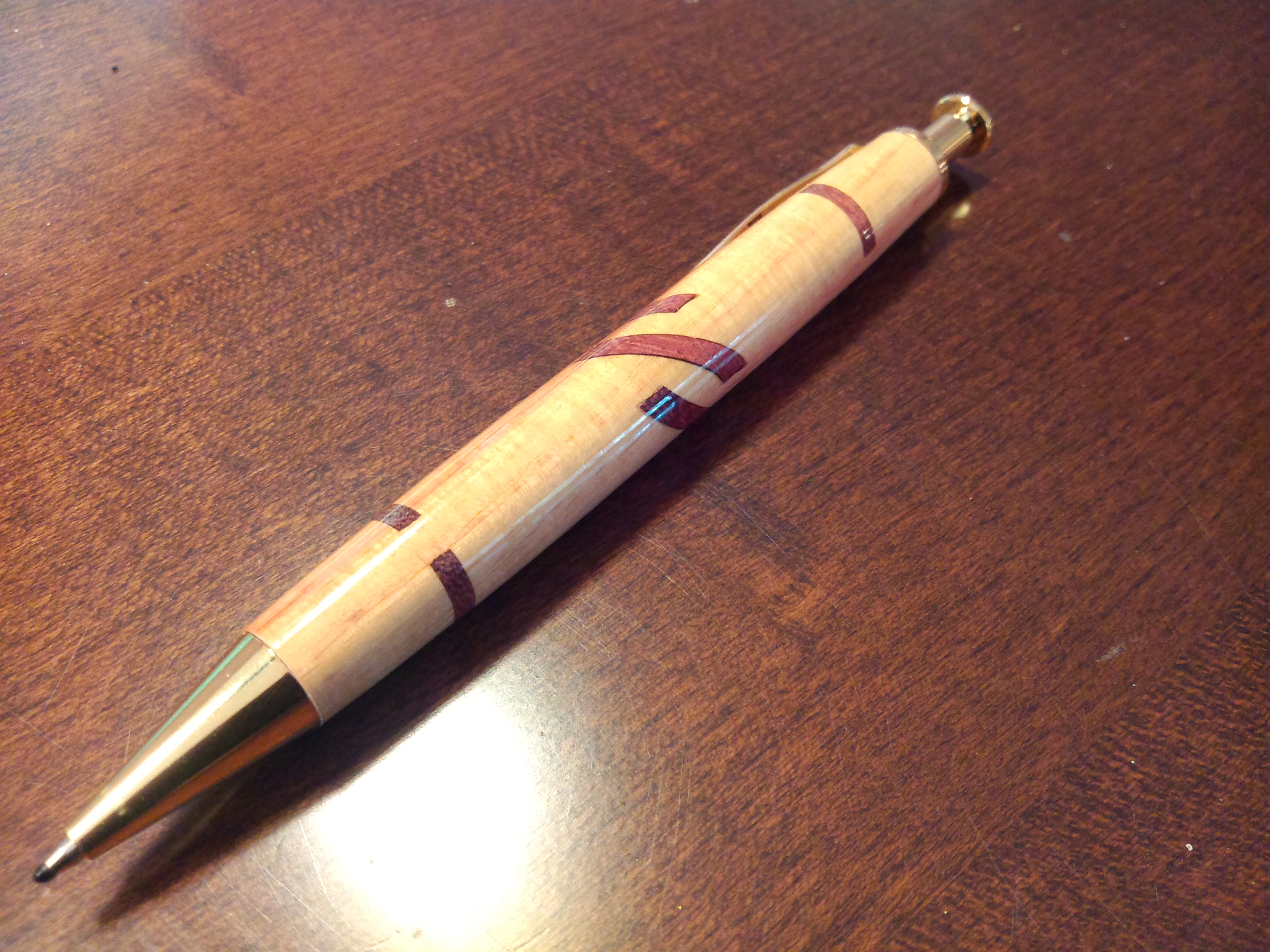
  • You might call this a companion to the last pen posted last week.  I had seen a different segmented pen design on a forum a little while ago and Mack C posted a couple of pictures on how he created the design.  I decided that, after the knot design, this would be the next one that I attempted.  The straight pieces of inlay on either end of the blank were cut with my Bladerunner the same way that I cut the knot pen blank, but for the partial cuts (at the 45 degree angle) my Bladerunner wouldn’t work.  So yesterday I went out to the garage, where I have my tablesaw and cleaned it up and made a little jig so that I could make repeatable cuts.  This worked quite well, but the tablesaw blade has offset teeth that leave a bit of a vee cut at the depth of cut.  It isn’t VERY noticable in the final product, but I would like to find a flat kerf blade.  Not sure if they exist, but I think I will do some searching.

    Like the last pen, this Longwood style click type pen is made with Tulipwood and has Purpleheart inlay pieces.

    image

    This is the blank ready to go for drilling and then cutting to final length.

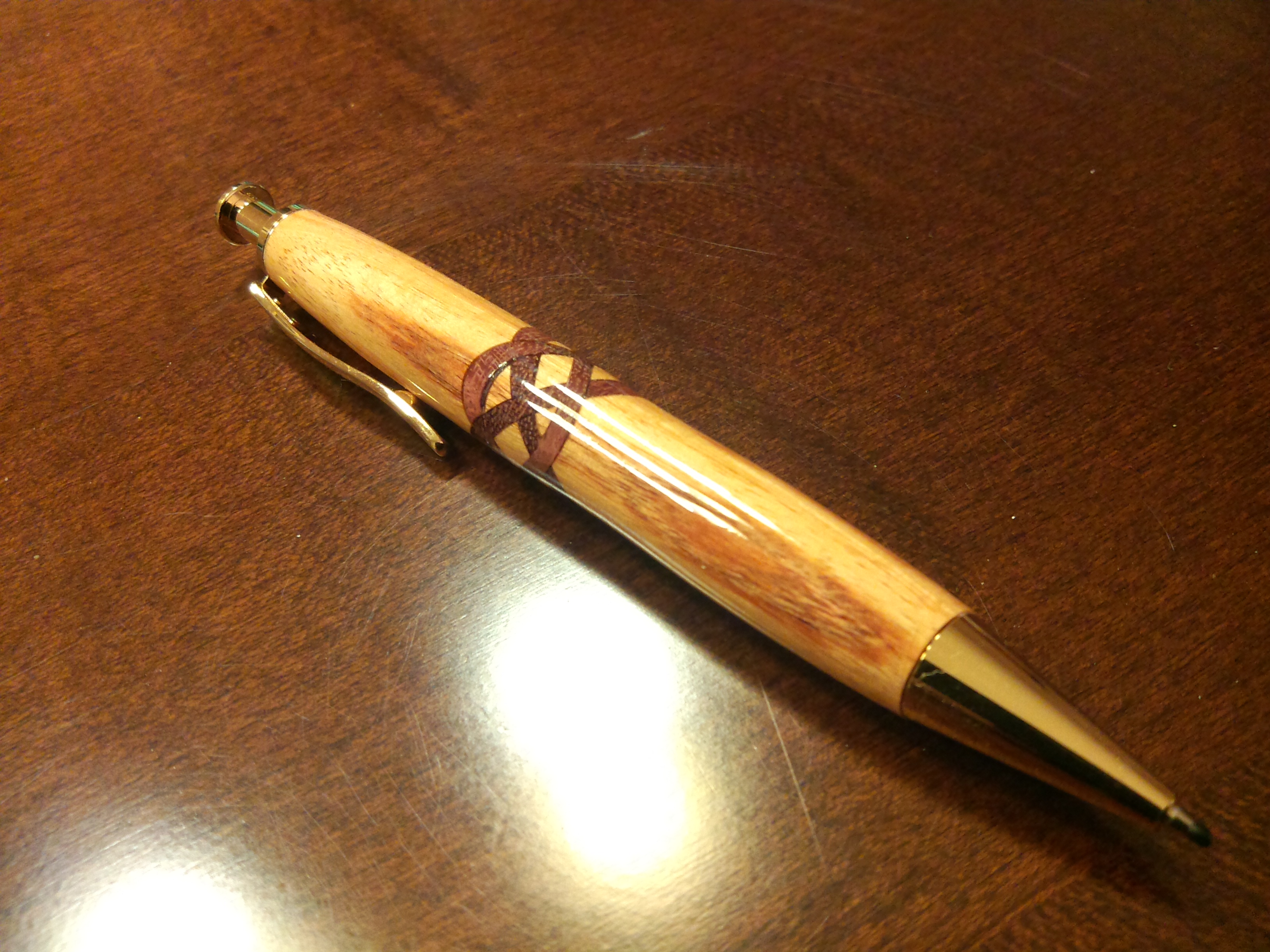
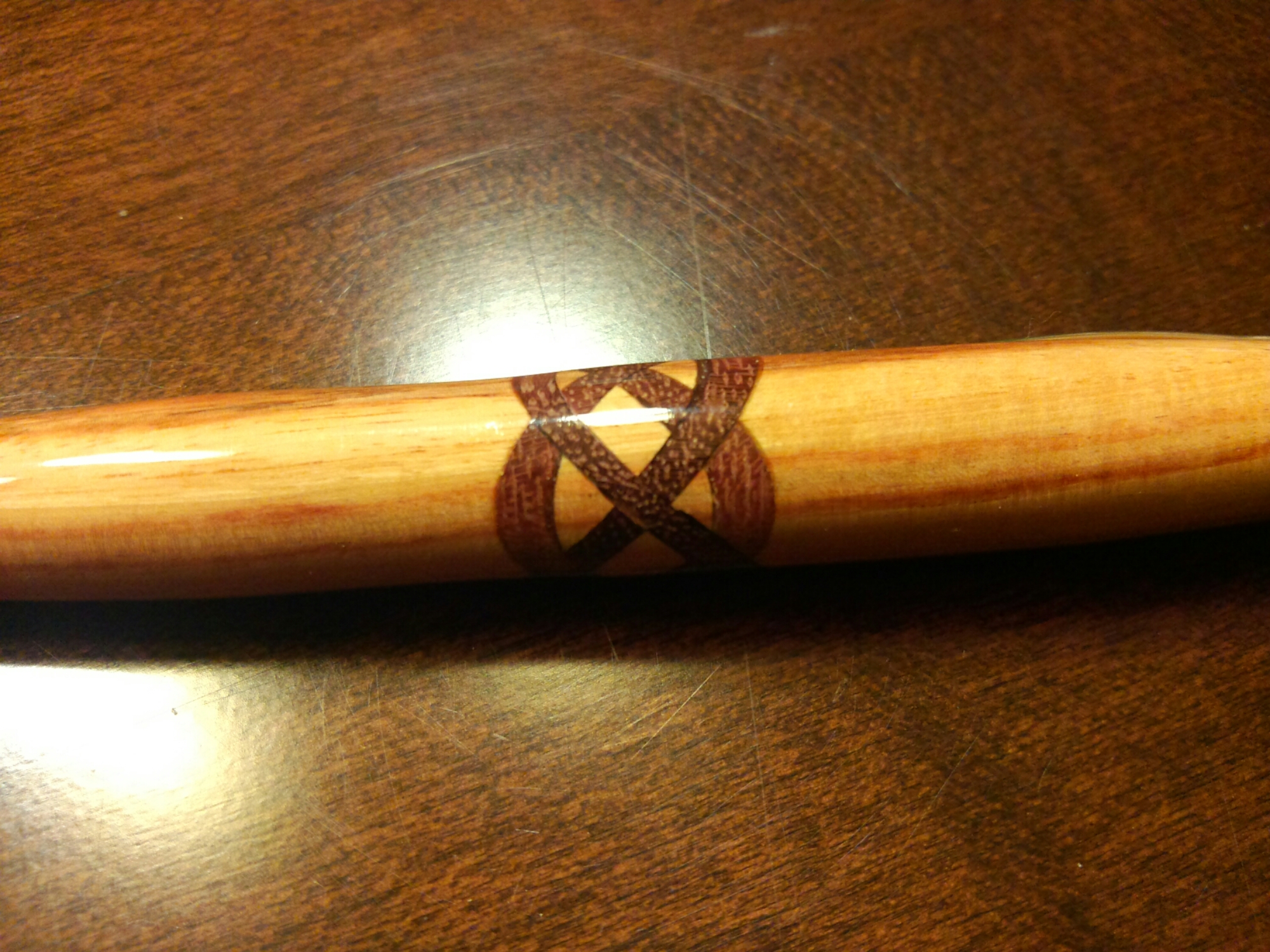
  • Since the debacle yesterday where I caught the gouge and blew out the blank at the knot, I decided to try again right away.  I did a couple of things differently.  First, I set up a stop block on my mitre guage on my bladerunner and, before I made a cut, I inserted a saw blade between the stop block and the pen blank.  Then I made a single cut.  Then, I removed the shim (saw blade) from the stop block and recut taking off 1 more thickness of the blade.  With a double kerf, I was able to use Purpleheart that was approx 1/16 inch, as opposed to the 1/64 sliver that I used in the damaged blank.  On turning the blank down, the knot appeared far more in proportion to the Longwood pen, so in that regard, I was pleased that the last blank blew out.

    When I finished the turning, I decided to go with the CA finish.  This too turned out very well and I was very pleased with the result.

    image

    Once again, the pen is Tulipwood and the knot is made with Purpleheart.

    image

    And here is a short video of the pen.

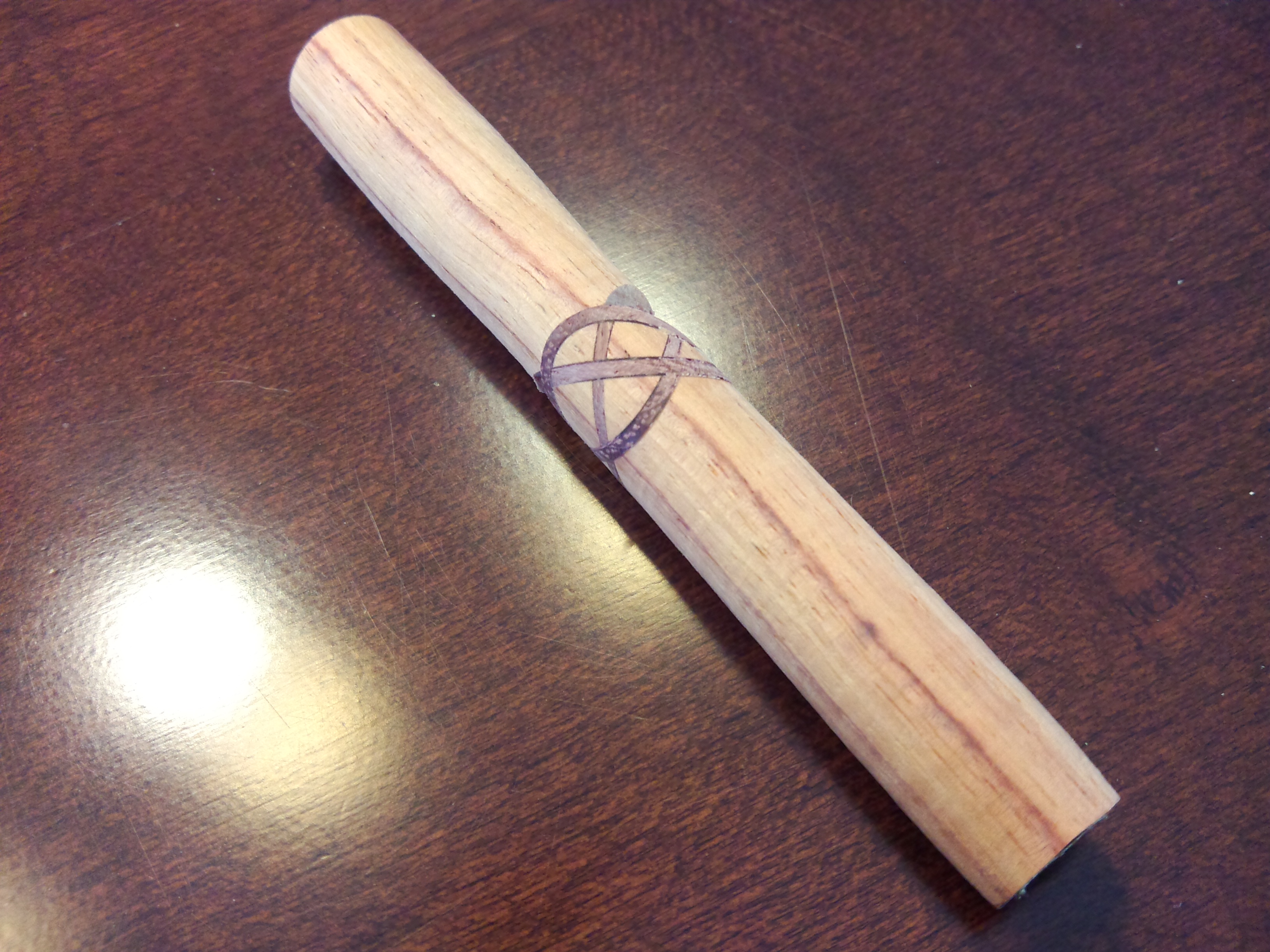
  • Quite some time ago, I tried my hand at creating a “knot” design in a block of wood.  I was limited back then because I was trying to make the cuts in the blank with a handsaw.  My cover picture is the result of that trial.  It turned out reasonably well, but the “strands” in the knot do not line up as they are supposed to.  With the new Longwood pen that I picked up, I decided that the wood was TOO long not to have some kind of interest in it.  I decided to try again with my new Bladerunner.

    Accurate cutting is possible now with my mitre fence that came with the saw.  I decided to use Tulipwood and make the knot with Purpleheart.  Sawing and gluing went well and I was getting close to a finished pen when I had an unrecoverable blowout.

    image

    Looks good doesn’t it?  Take a look at the other side!

    image

    Oops!  I got a bit aggressive with the gouge and the purpleheart (denser than the Tulipwood) caught. 

    image

    I guess they say that you don’t learn anything when everything goes right.  Well… I definitely learned something here.  I have already glued up a new blank and will post an article when it is finished.

  • On Thursday night this past week I attended a Sharpening class at Lee Valley Tools.  They have great classes from time to time, and I like to take new ones to learn different skills.  This sharpening class however was the second time that I have taken the same class.  The first time I took the class, I had gouges, but I did not have a lathe or a sharpening system which quite limited me at the time.  Also, I had no context for most of what Jesse said that night and didn’t really apply it right away.  Thursday night was a whole new kettle of fish.  After using a sharpening system, and turning for a year, and still struggling with sharp tools, I decided to give this class another go.  Jesse Antonation was, once again, the instructor and he presented in much the same way, but this time I understood the terminology.  I am also no longer afraid to muck up my gouges (I have mucked them up plenty in the last year) and so I was able to actually apply what Jesse was saying then and there.  I took my three most used gouges and they have never been looking as good as they do now.

    One of the problems that I was having was repeatability.  I use a belt sander to sharpen my gouges and that has an advantage over the bench grinder in that you can set the angle and always grind at the same angle.  What I have been doing is eyeballing the angle of the bed to the gouge and I keep missing the mark by a degree or two which changes the grind angle.  Jesse uses a little protractor that I happen to own and in fact it has been in my workshop since I started.  I dug it out and in the time that I struggled to sharpen one gouge, I was able to set each angle and grind ALL of my gouges.  They have never looked better.  My next goal is to set the bed on my sander with Lock-tite and build some jigs that are set to the different angles of my gouges.

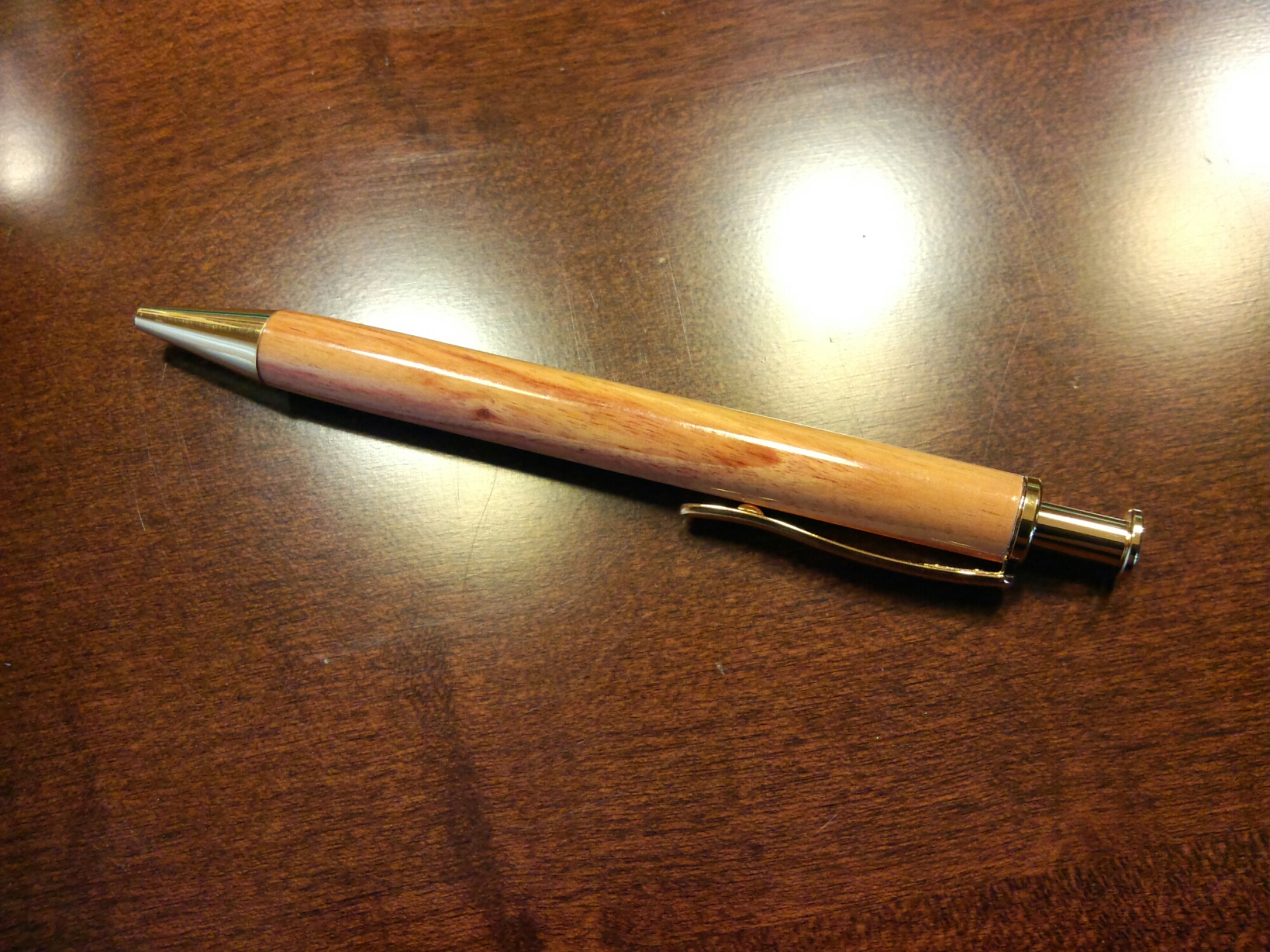
  • I purchased a new starter kit from William Wood-write this week and it arrived in the mail on Friday, along with some Tulipwood Blanks and so I decided to spend a bit of time yesterday (Saturday) trying out this new kit.  The Longwood is the first “click” pen that I have tried (meaning, you click the button on the end to extend or retract the refill).  In fact this is the first pen of this style I have ever seen, but it will be a good seller, I am sure.  It is a single tube system and quite long.  This one is made out of tulipwood and I am reminded that Tulipwood is one of the nicest woods that I have used.  There are some amazing colours in it and it finishes beautifully.  After sanding to 600 grit, I applied CA finish to this pen.  Every time I do the CA finish, I marvel at how easy it is, although it does take longer to finish a pen (it has to cure overnight), I really appreciate the durability of the finish.

    image

    image