To Everything, Turn…Turn…Turn

Alan's Turning Log – Adventures in Wood Turning

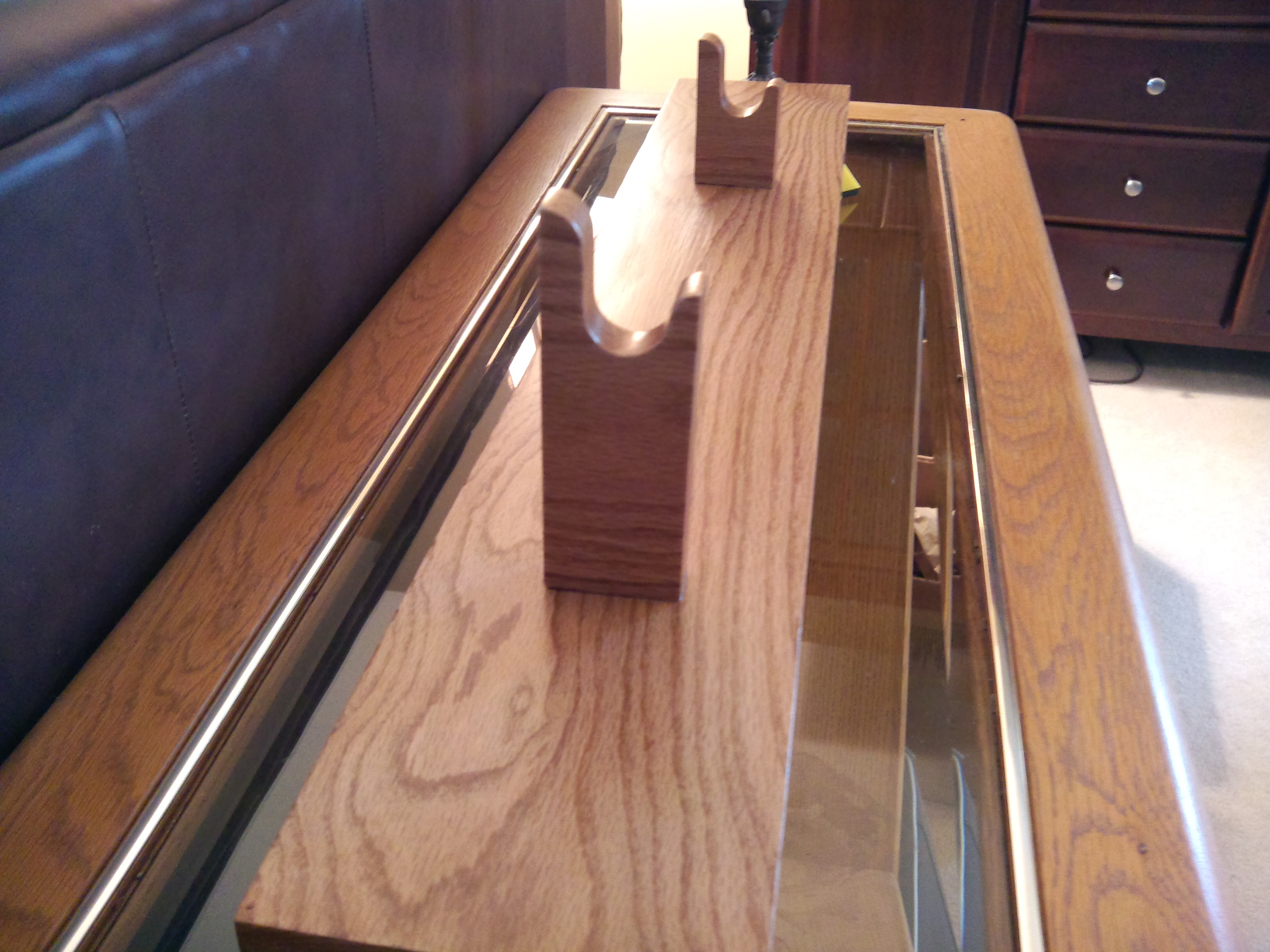
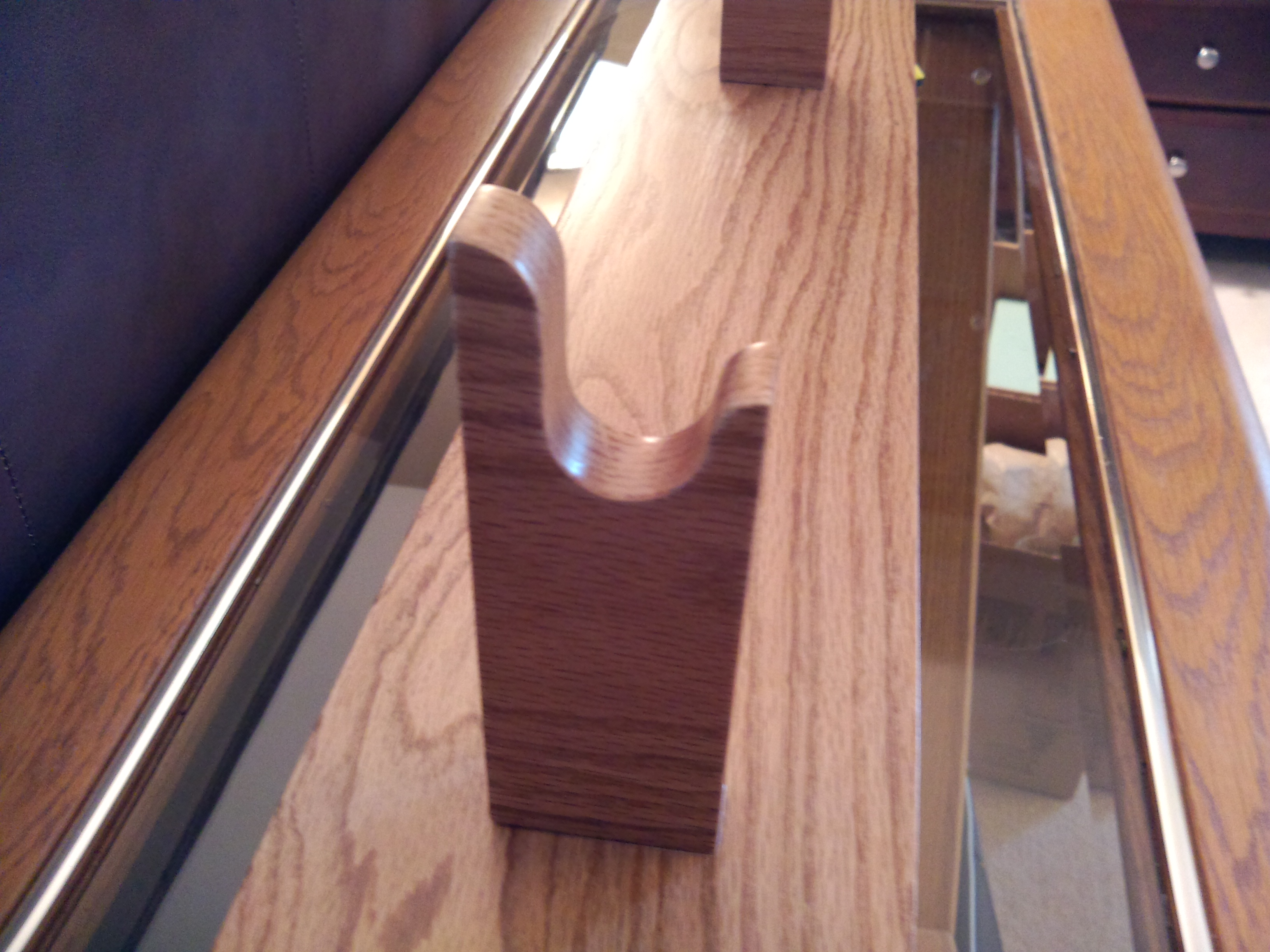
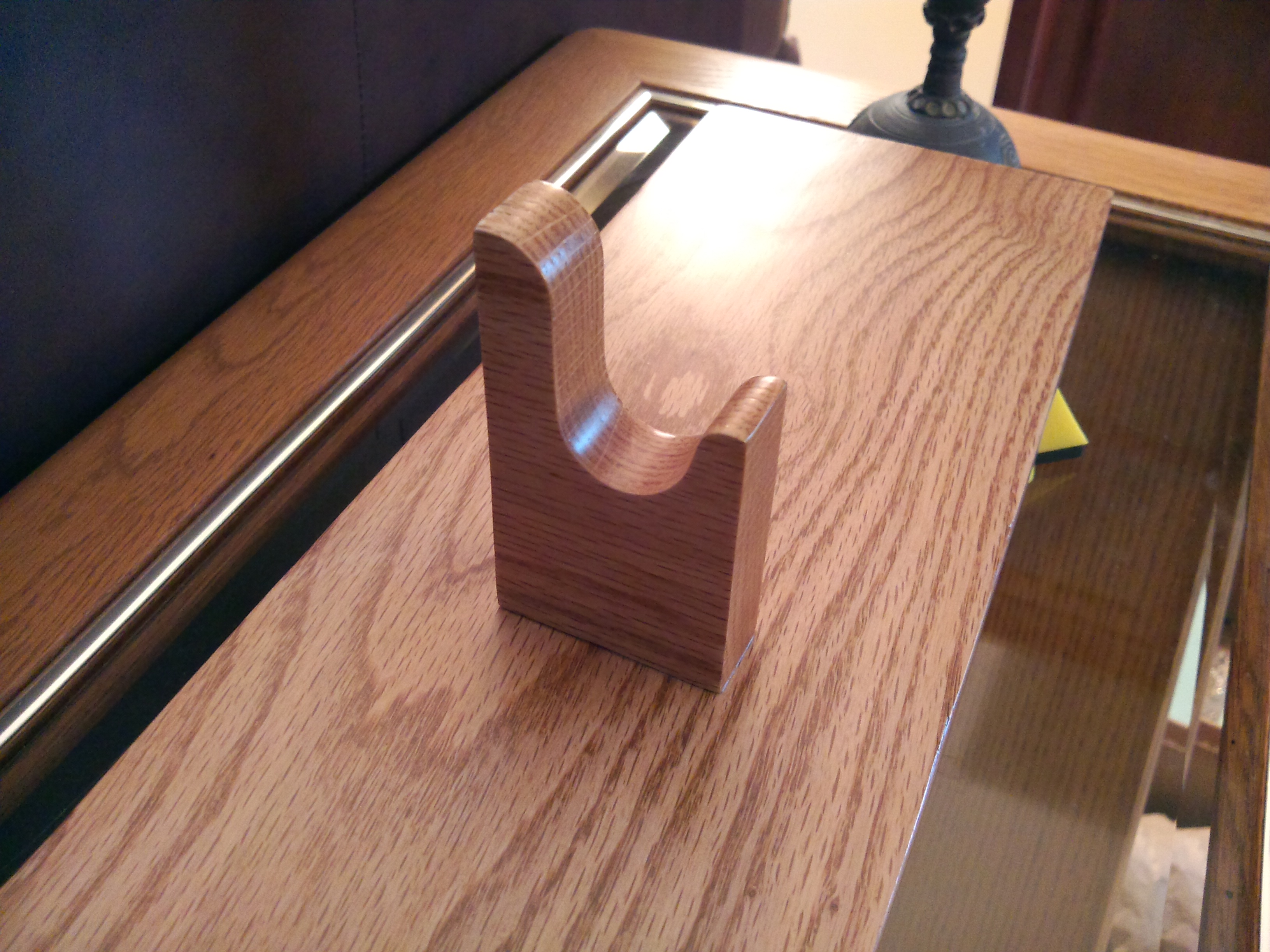
  • One of my colleagues from work asked me to fabricate a display stand for a presentation Ice Axe that he wanted to display.  Another colleague has a similar stand that I used for a model and so made a departure from round wood for a bit to make this.  I was able to use my Blade Runner to cut the saddles out of Oak and the plank itself is oak as well.  My colleague wanted a cherry stain and a nice satin finish.  The prototype had the saddles screwed in from the bottom of the plank and, I suppose that was OK, but I decided not to mar the bottom of this beautiful plank of oak with screw holes and used dowels to attach the saddles.  The Ice Axe doesn’t weight more than a few ounces, and I suspect… I hope… the dowels with be durable enough for the long run.  The piece took no time at all to make, but the finishing took several days.  I used a nice product from Minwax called a Gel Stain.  This went on very evenly and only took one coat.  I chose not to use a sanding sealer because it is hardwood.  Sanding Sealers are absolutely critical to seal the grain on softwoods for staining, but I didn’t realize that I would have a problem with raised grain in oak.

    I sanded to 600 grit and fine tuned the saddles to ensure a good fit with the Axe.  The stain didn’t raise the grain, but the Varathane did.  In total there are 5 coats of varathane on the top and sides (4 on the bottom).  I had to sand between coats and was finally, mostly able to sand down the grain so that the varathane is nice and smooth.  After a few days of hardening, I will take it in for Bruce.

    image

    image

    image

    image

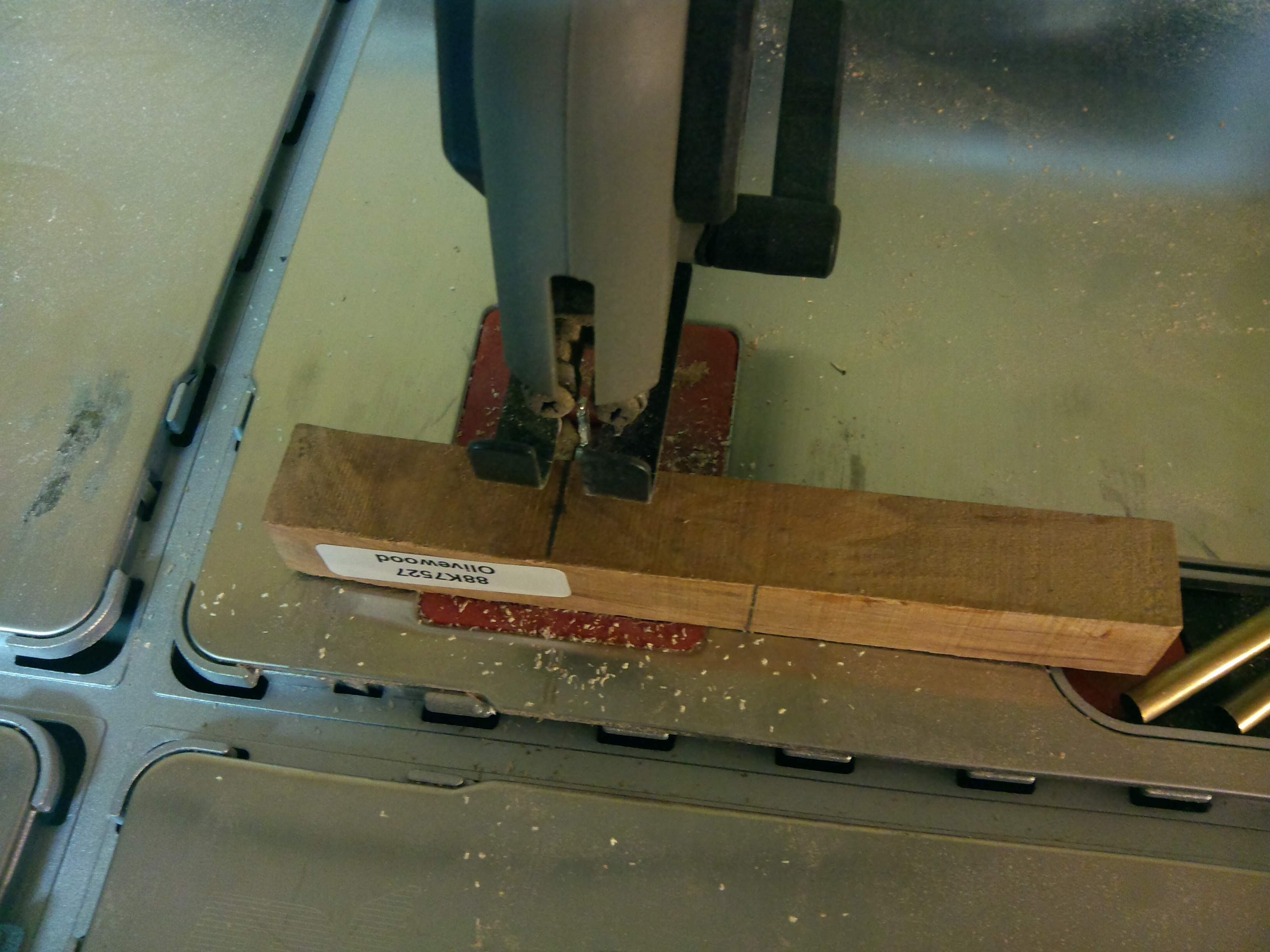
  • Most wood turners have a bandsaw to cut their turning stock for the lathe.  These tools are very expensive and I have not yet saved enough for one.  I can cut my blanks with a handsaw, and in fact did for many months, but then I started using my scrollsaw.  The problem with a scrollsaw is that the blades are so fine that they break very easily.  They are only meant to cut softwoods or thinner hardwood stock for intarsia projects etc.  One day a few weeks ago, I was in the Sears store at Polo Park and I saw this Blade Runner by Rockwell.  Sears was clearing them out and they were on for $100.  It is basically an upside down jigsaw with a table.  The guard arm is like a sewing machine foot that holds the piece in place and the saw blade comes up from below.  Although I haven’t needed it yet, the saw comes with a mitre gauge and you can get a circle cutter for it as well.  It makes short work of the pen blanks and I don’t go through many blades.  The saw also comes with a wall mount that seems to be a storage rack, but you can use it mounted on the rack.  All in all I am very impressed by the ingenious nature of this tool and hope to get many years of use out of it.

    image

  • You might have noticed that the project that I started, or the wood anyway, was different from part 1 to part 2.  I started the photographs with the Chechen pencil and then when I started turning, I forgot to continue taking pictures until I moved on to the Olivewood pencil.  These projects are for a couple of members of my church choir.  We are dining them this week and the choir director asked me to make a pen and pencil set for each of them.  One was the church secretary for many years, and the other was the choir librarian for several years.  I sure hope they like the sets.

    image

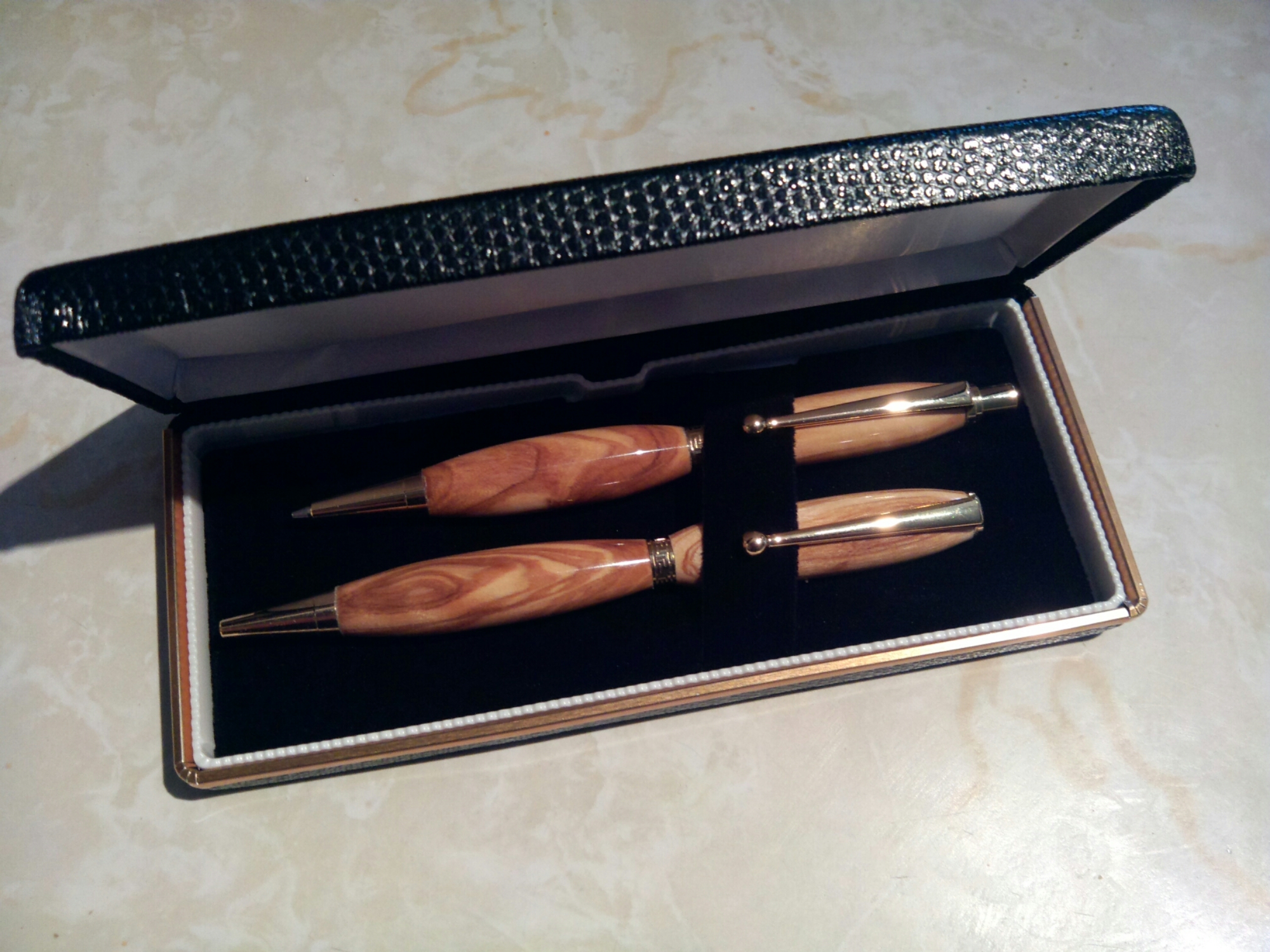
    This set is Chechen (above).  It is amazing that the colour shifts so much in these pieces, from light brown to yellows and deep reds.  This is an Art Deco pen and pencil set.

    image

    This set is the Greek key design in olivewood.  This is a european wood that is highly figured.

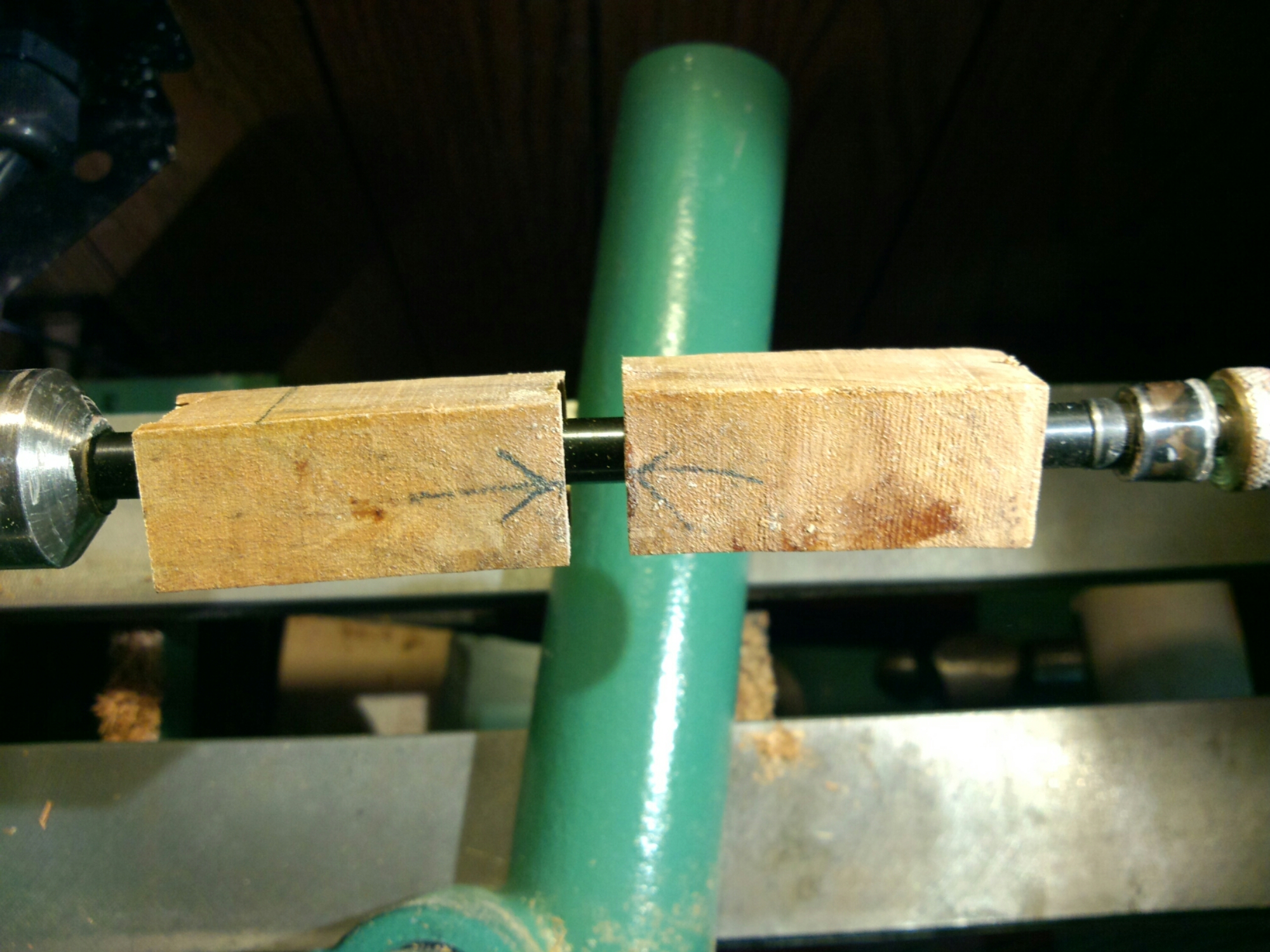
  • The pieces are now on the mandrel and on the lathe ready for turning.
    image

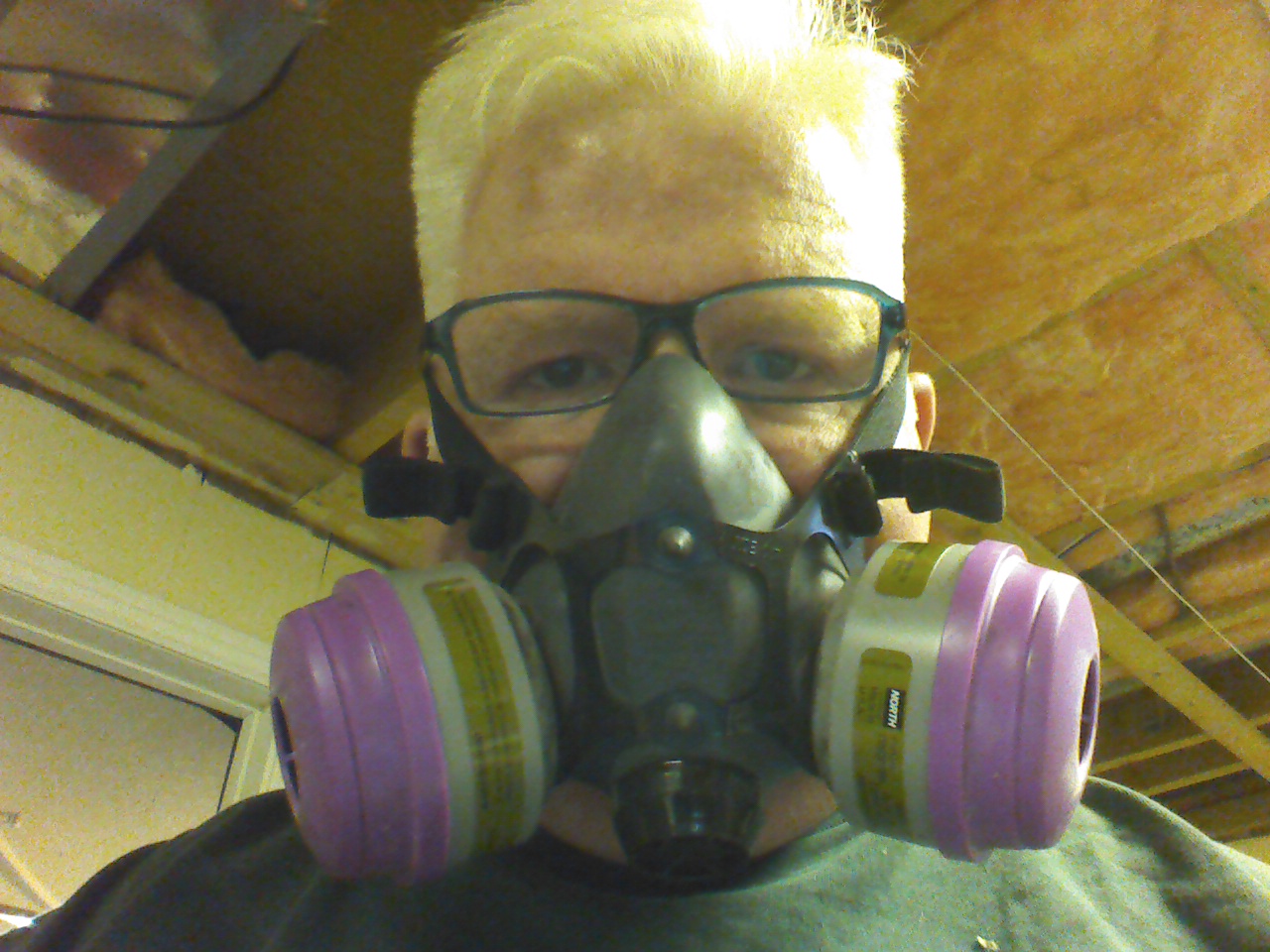
    I have read that the dust from turning has some very deleterious effects on a person’s lungs and so I ALWAYS wear my respirator when turning.

    image

    This has P100 cartridges and are intended for gases and fumes, but the rating is higher than the P95 particle cartridge.  I am still trying to determine the specific cartridge that I need with this wok, but in the meantime, my rationale was that the higher the rating the better.

    image

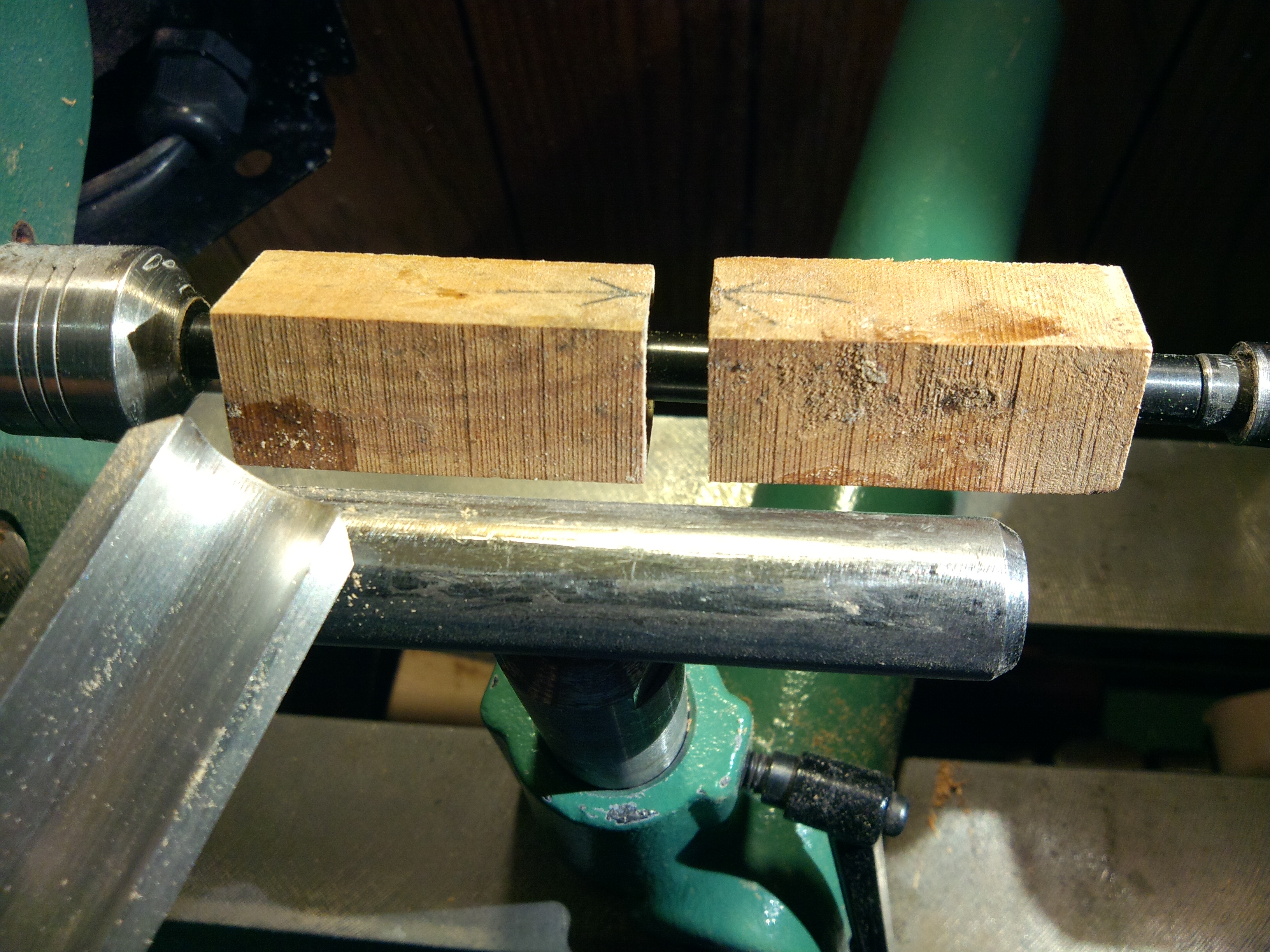
    I first start the turning with a roughing gouge (shown above).  You should set up the rest as close as possible to the turning piece and keep adjusting it as the piece gets smaller.

    image

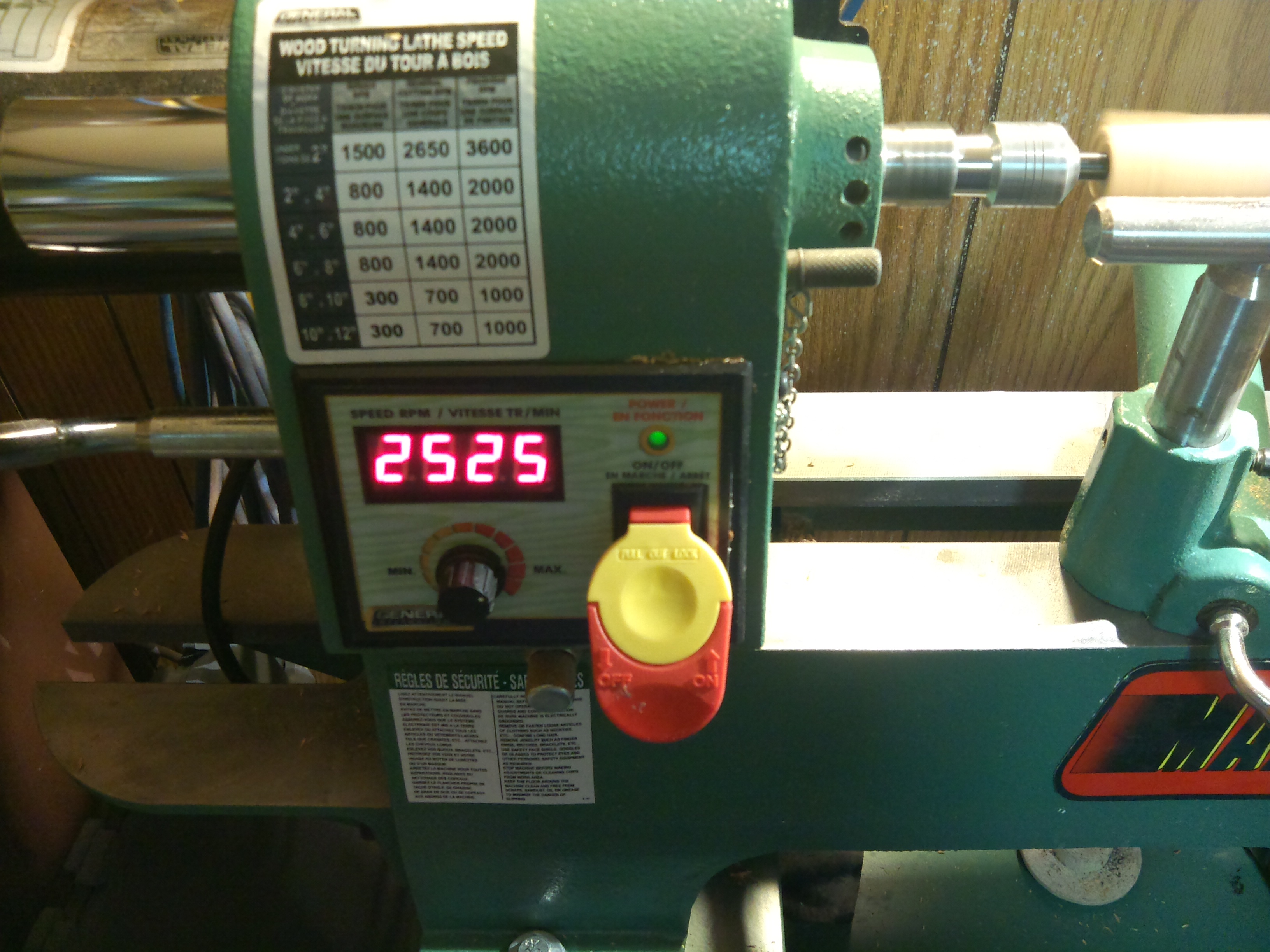
    To start the turning on a small spindle, I like to start at 2500 (ish) rpms.  With a small spindle these high rpms are not problematic and they produce a cleaner cut.  The roughing go much quicker as well.

    image

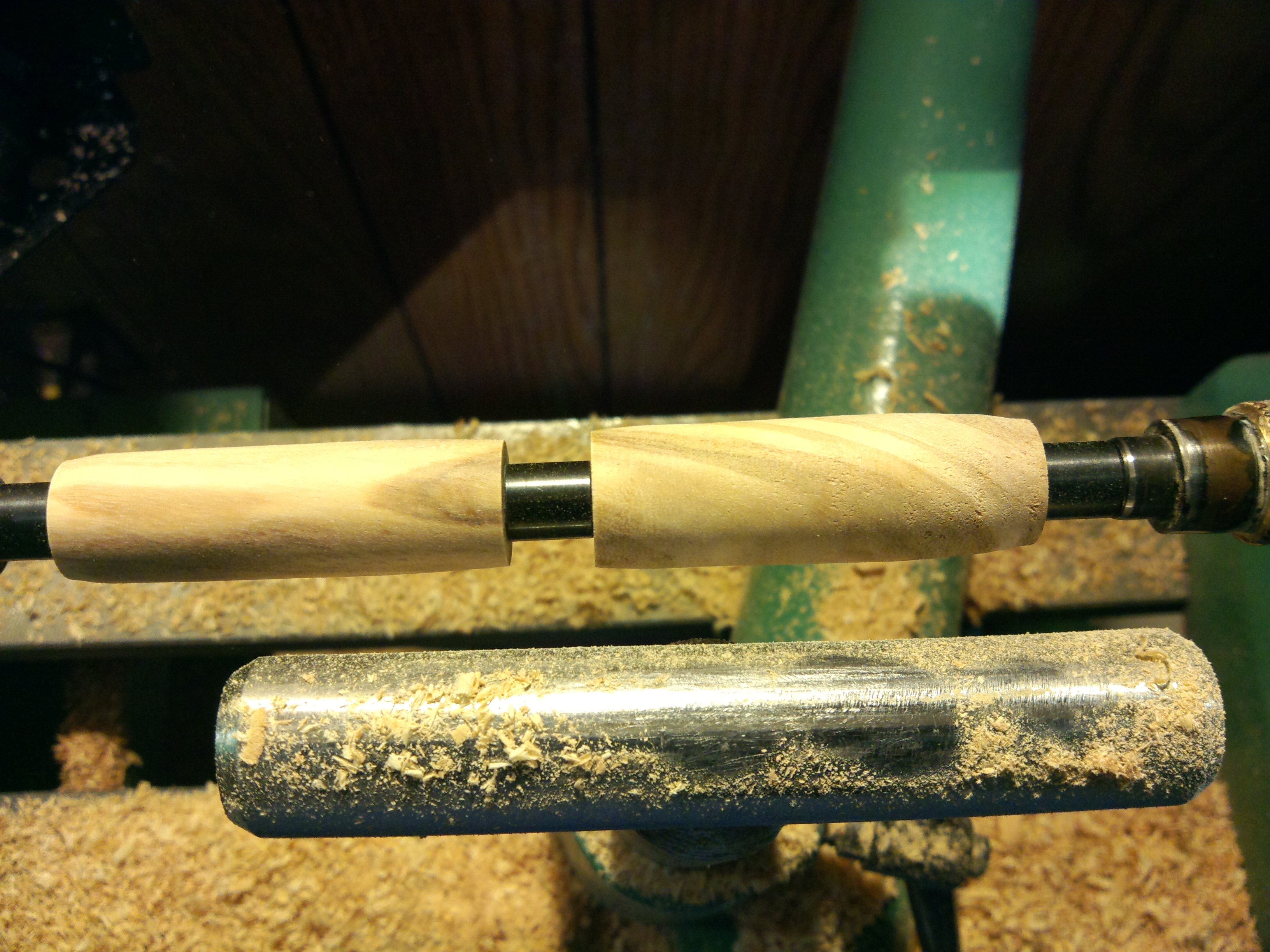
    Roughing of one half complete and the rest is adjusted to complete the second half.

    image

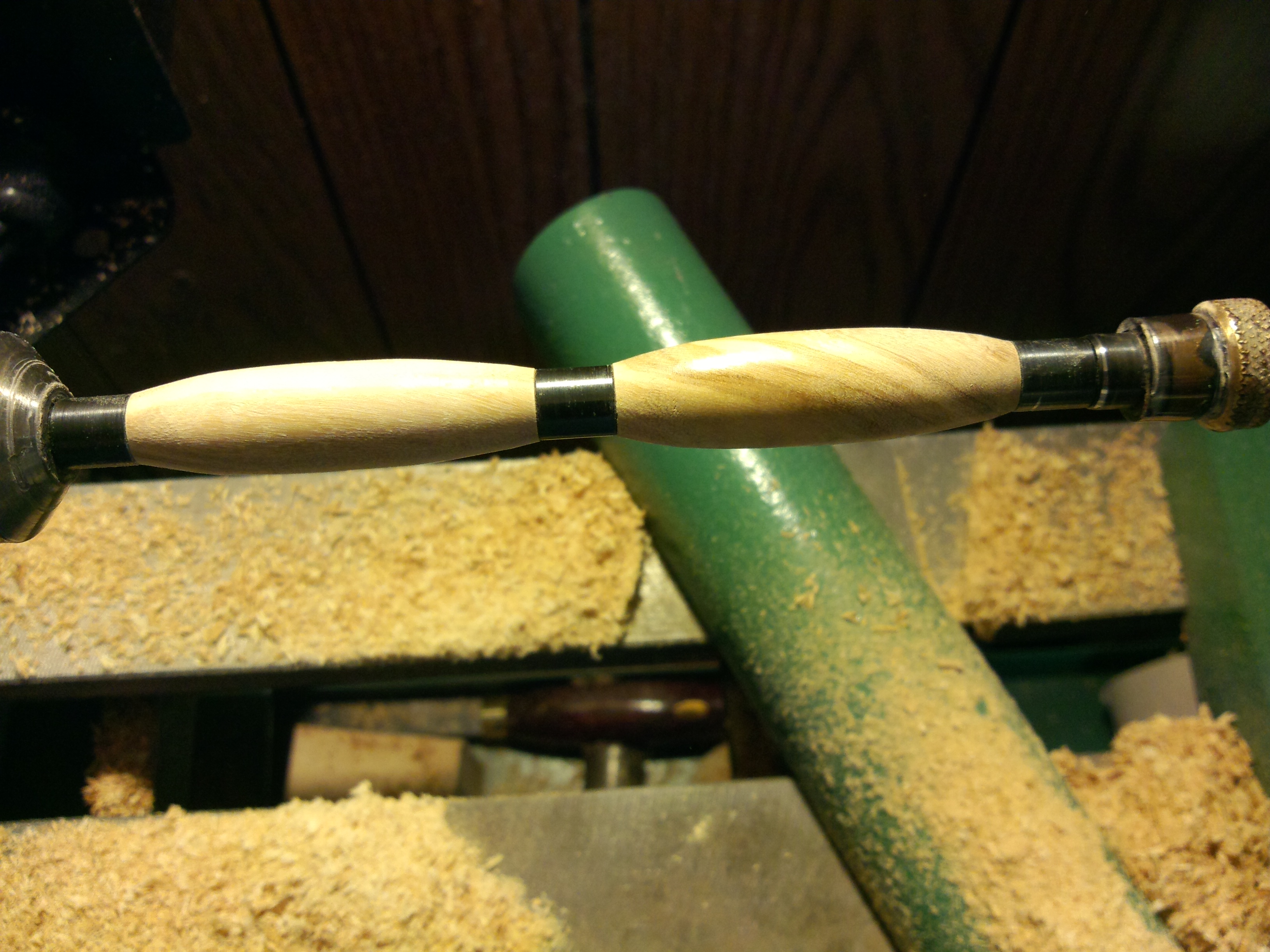
    Roughing is now complete.  For the final shaping you can use a variety of gouges.  I use a spindle gouge to get the approx shape and then do a pass with a skew. The skew tends to cut so nicely that it tends to “burnish” the wood..  I will also use the skew as a negative rake scraper to take the wood right down to the bushing size.

    image

    Here is the turned blank just before sanding.  Some turners are good enough with the skew that they don’t need to sand, but that is not me… yet.  i do make an effort to use my skew on every project so that I can develop my skill on this chisel.  For sanding, I work through 4 grits (180, 240, 420, and 600).

    image

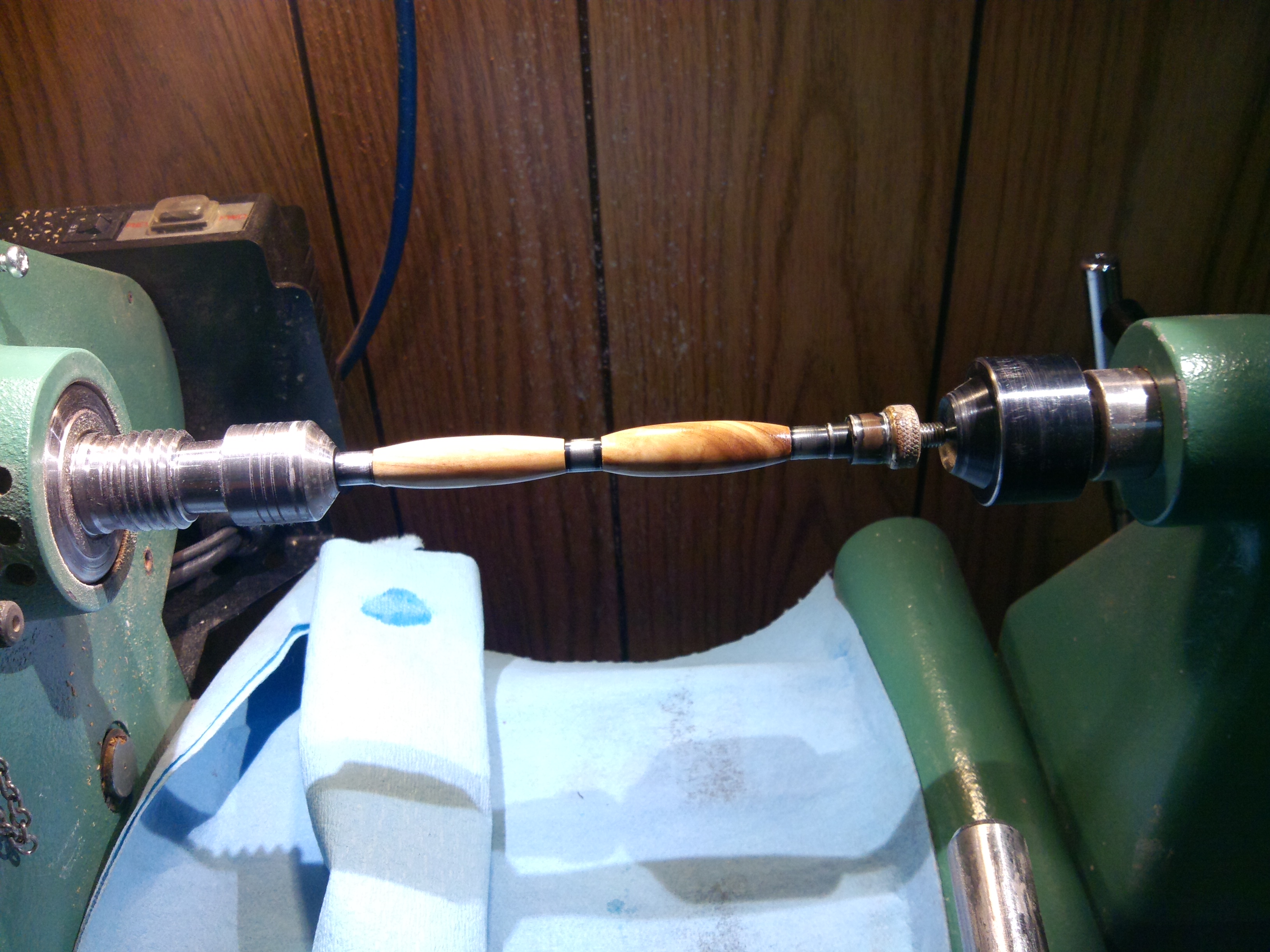
    I reduce the rpms for sanding, and I will reverse the direction of the lathe as well so that I can lay down all the fibres that were raised while turning

    image

    After the pencil is sanded, I clean the blank with Accelerator and, when dry, I start to layer 6 coats of CA glue on the blank.  This shows the blank after the first coat of CA is applied.  I am sure to leave every coat to dry very well before applying a new one.  Six coats are, I think, fine.  After allowing to cure overnight, I polish the pen with micromesh paper from 1500 grit to 12000 grit.  After the micromesh, I use EEE Cream and finish with my Meguiar’s PlastX polish.

    To be continued…

  • This is going to be an extensive post as it strikes me that I have never really explained how a block of wood becomes a pen.  I decided that I would chronical the work at every stage.  I will see how long this post is and may truncate a bit of it for a follow-on post.

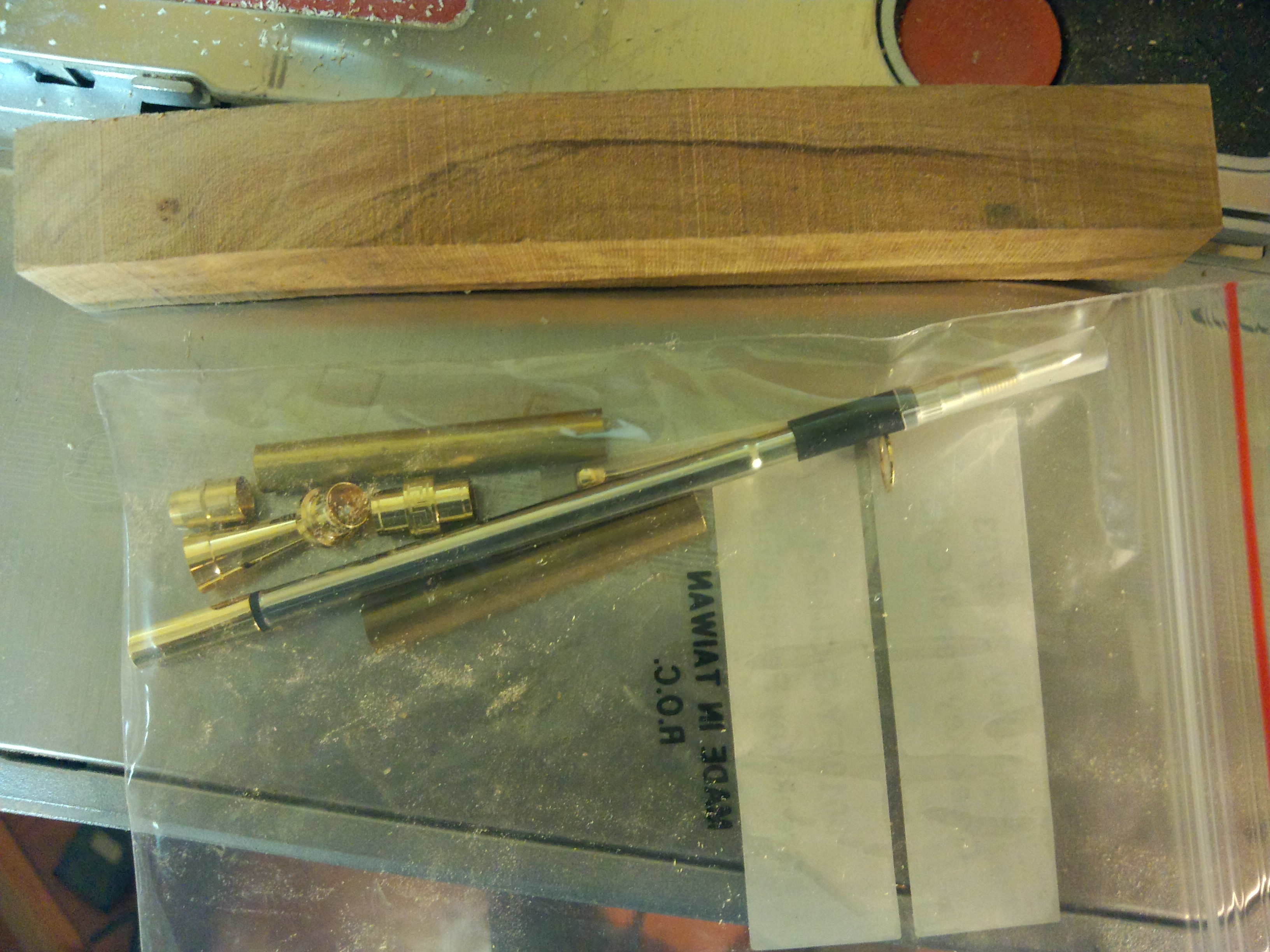
    The first step in making a pen is to have a kit.  In Winnipeg, there is only 1 place to buy pen and pencil kits and that is my favourite store (Lee Valley).  There are several mail-order options, but often, I don’t plan well enough ahead to order from my other favourite (William Wood-write – http://www.penblanks.ca).  The kits come with all of the metal/brass parts of the pen.  Each pen or pencil kit has a different set of parts that are pressed together after turning and finishing to make a functioning pen.

    The blanks (wood) are quite small.  Most are 3/4 X 3/4 inch X 5 inch long blocks of hard wood.  In the example here, the wood is Chechen, which ironically is NOT from Chechnya but from Central America and the West Indies.  Sometimes this wood is known as Black poisonwood.  The blank is also from Lee Valley.
    image

    This is a pencil kit with “Greek Key” ornamentation.

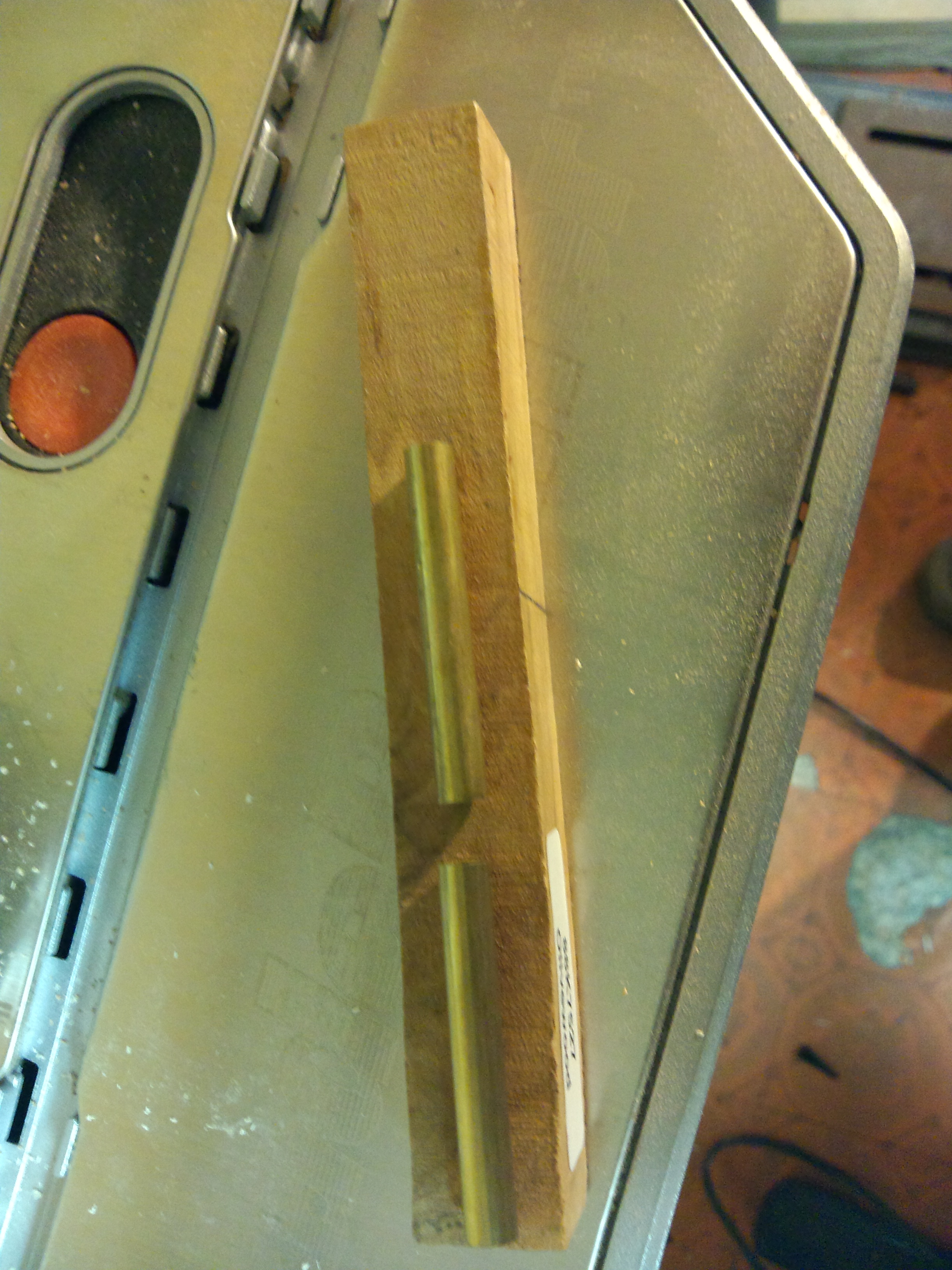
    The first step is to measure the blank with a brass tube and mark it for cutting.  The parts of the blanks have to be cut slightly longer than the brass tube (1/16 to 1/8 inch).
    image

    Mark the blank and draw a “square” line as a guide for cutting.
    image

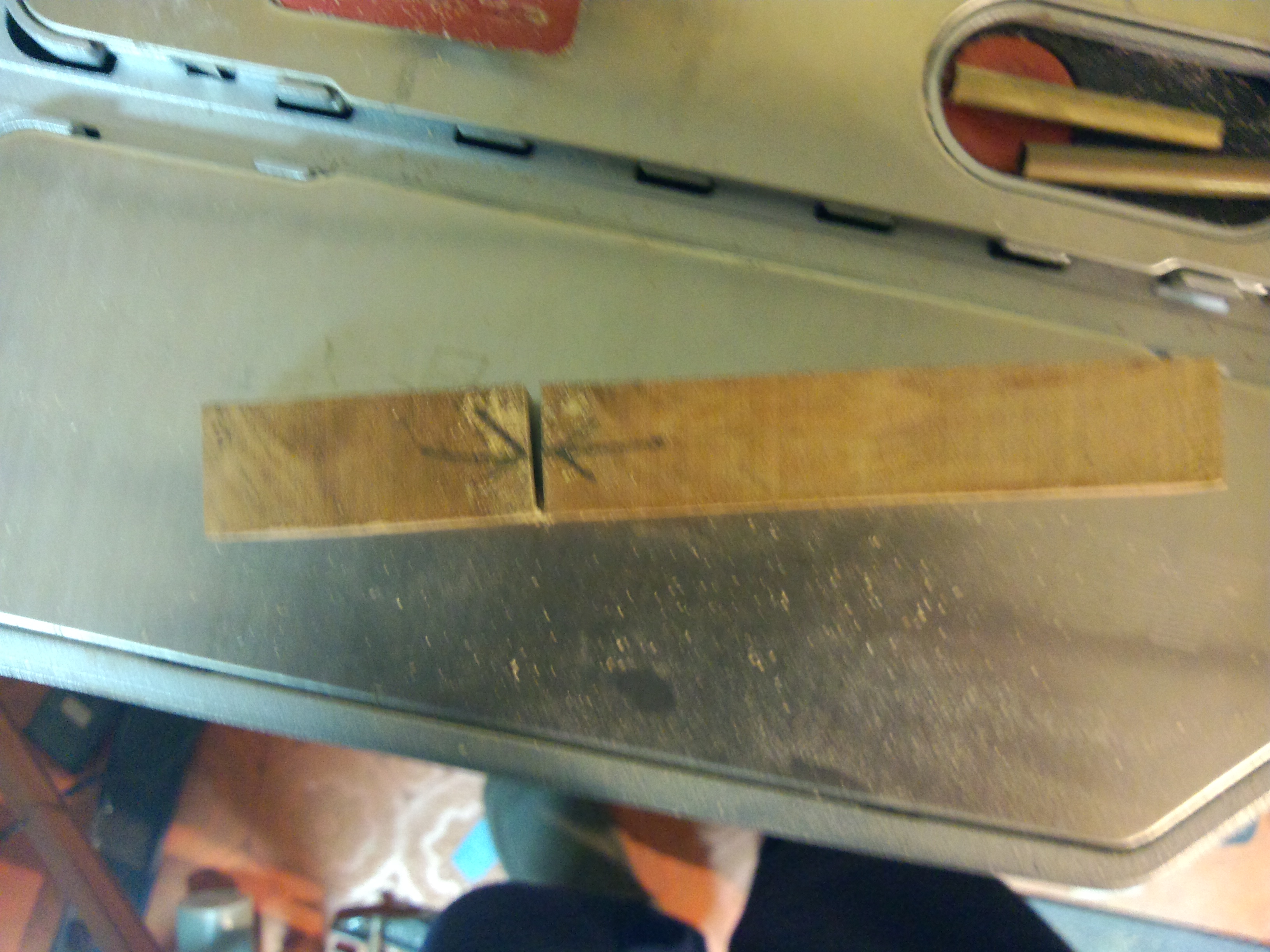
    I always mark the blank across the cut mark and then draw arrows so that I can align the grain on the lathe and in the finished piece.  Orientation of the grain is quite important.  If the grain pattern angle are in opposite directions on the two halves, the pen will look quite strange.
    image

    Once the two halves are cut you need to mark the centre of the ends for drilling.  The way to find a centre in a square is quite simple.  Draw lines from corner to corner each way.  The intersection of lines is the centre.  In a piece this small it is not overly critical to be precise, in terms of balance on the lathe.  It is important though that if you miss the centre in the drill press by too much you run the risk of the bit wandering out the side of the blank.  When drilling very hard woods, the drill bit will wander a bit.
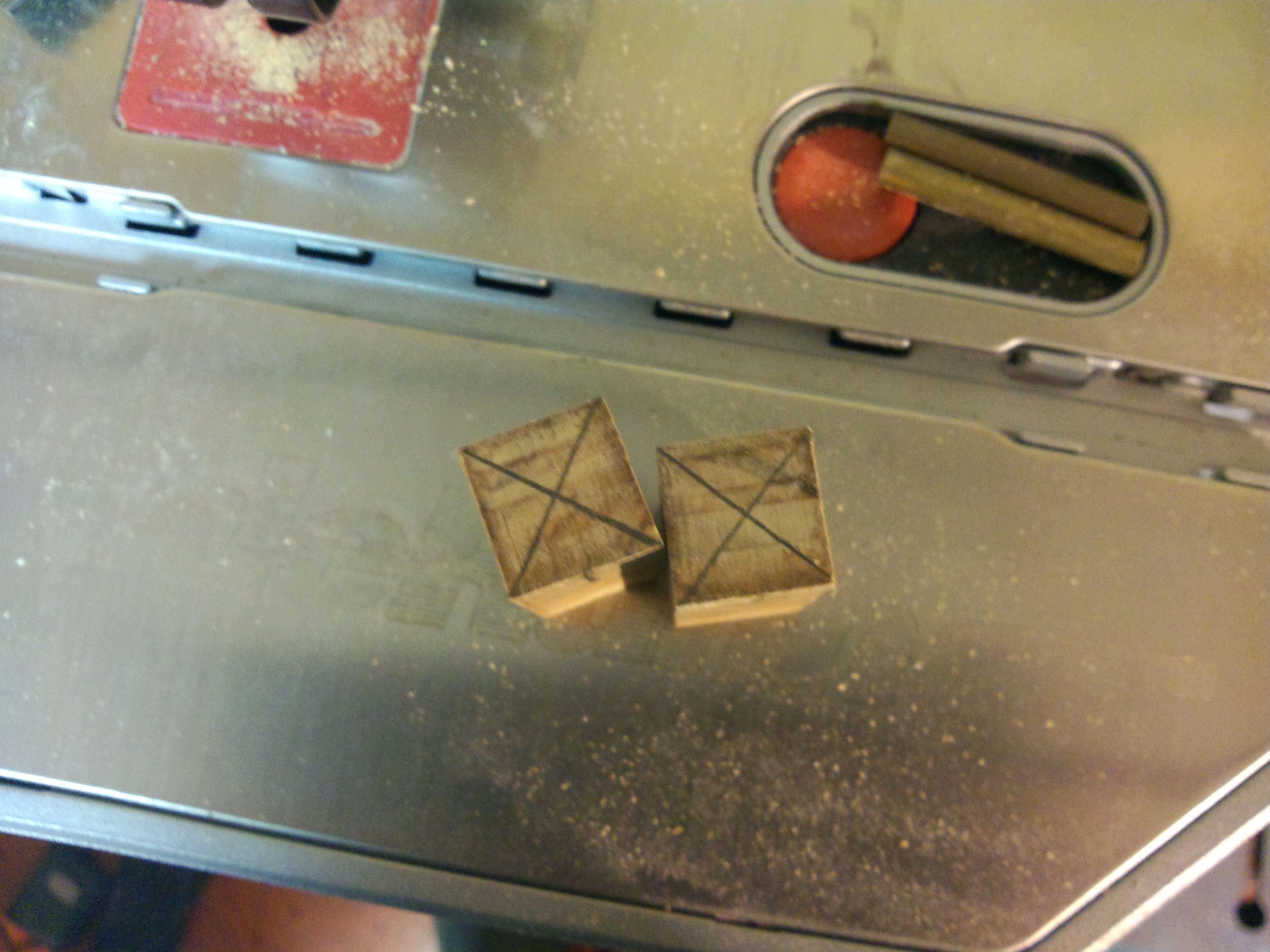
    image

    To help the bit bite, you can punch an awl mark on centre.

    image

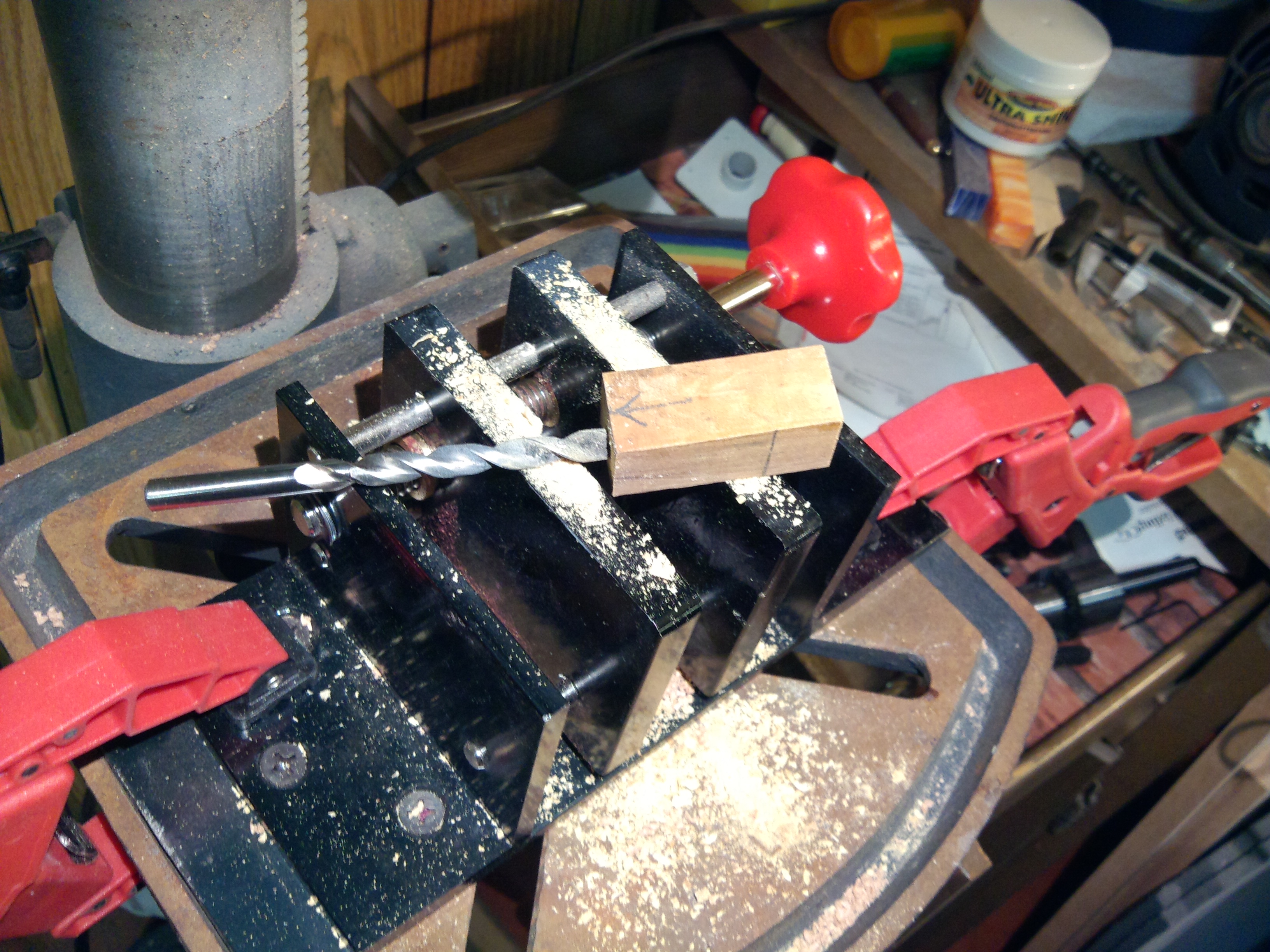
    Once the blanks are ready to go, I then move to the drill press.  The kit that you are making will determine the bit size.  In this case, the brass tube requires a 7mm hole to be drilled.  There are a number of methods or jigs that can be used to keep the blank upright, but I purchased a self-centreing drilling jig from Lee Valley (Do you see a trend here) and this keeps the blanks aligned.

    image

    This picture is for illustration only.  This jig needs to be clamped to the bed of the Drill Press before I start (clamps not shown).  I had been having a lot of trouble lately with blanks blowing out at this stage and the last time I was in Lee Valley, one of the fellows told me I need a bit lubricant to keep the temperature down, so before I drill now, I give the spinning bit a shot of this lubricant.  It helps immensely and makes the bit go through the wood like a hot knife through butter.
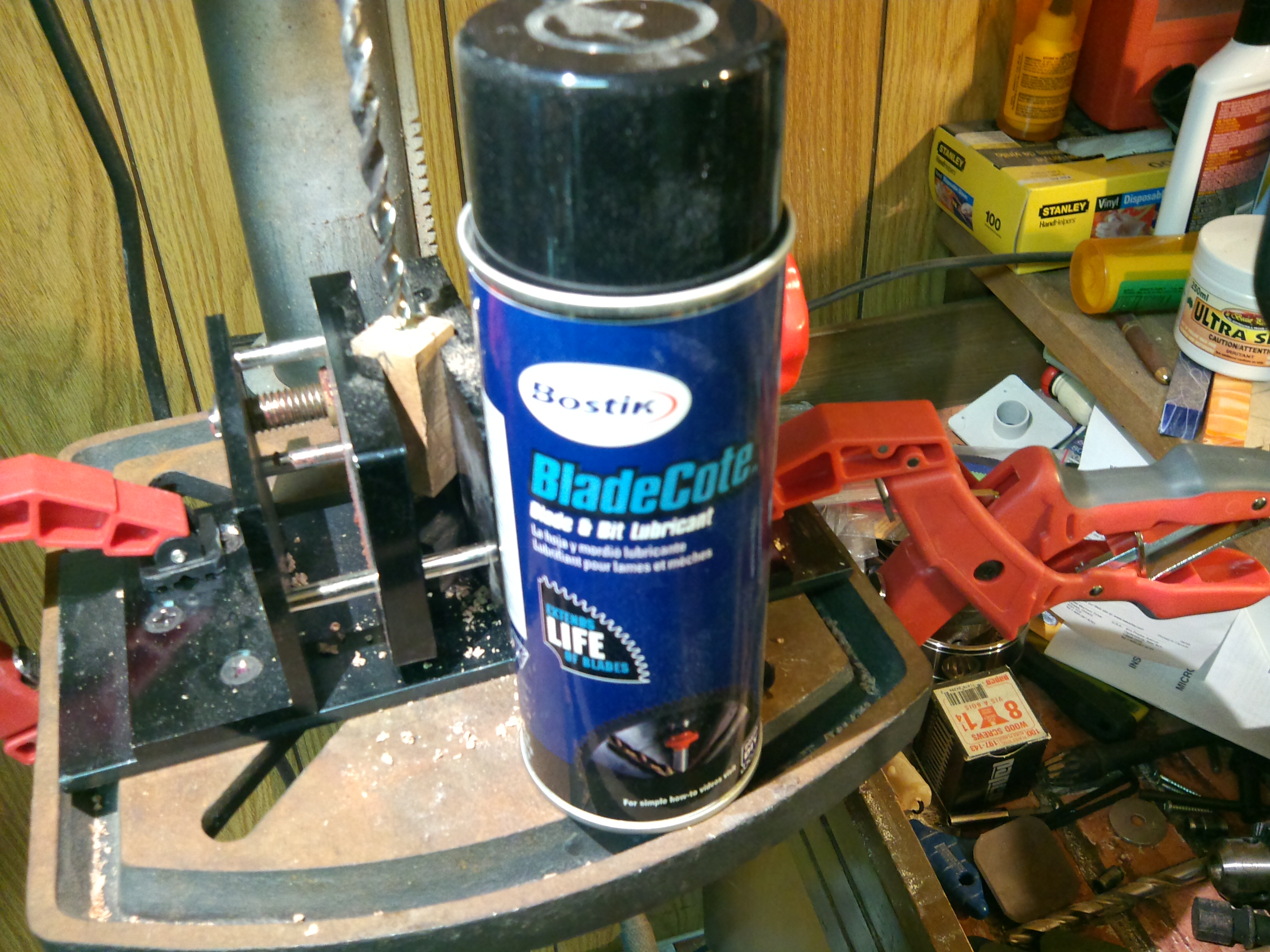
    image

    You can see the clamps holding my drill vice down in this picture.

    As I was drilling the second blank my drill bit came out of the chuck because I had forgotten to tighten the chuck.  This shows how good this lubricant is because the loose chuck was able to go through one of the blanks with no problem.

    I saw a YouTube video of a drill press and was advised in this video to tighten all three holes in the chuck when tightening the drill bit.  Although it doesn’t make any sense to me, it seems that the bit will wander a bit less if I do.  I also find when I am deliberate in tightening all three holes, I don’t (obviously) forget whether the chuck is tight or not.
    image

    You can see in the next picture just how much the drill bit wanders in this Chechen.  If I offset the bit in the top, it would wander too close to the edge of the blank to be of any use.

    image

    There are a number of reasons this happens.  In hardwood, the grain is normally not very uniform and so the drill bit will move along the grain path where it doesn’t have to work as hard.  In the picture above, one half was fine, but the other half was awfully close to being unusable, even though I hit the centre on the other end.

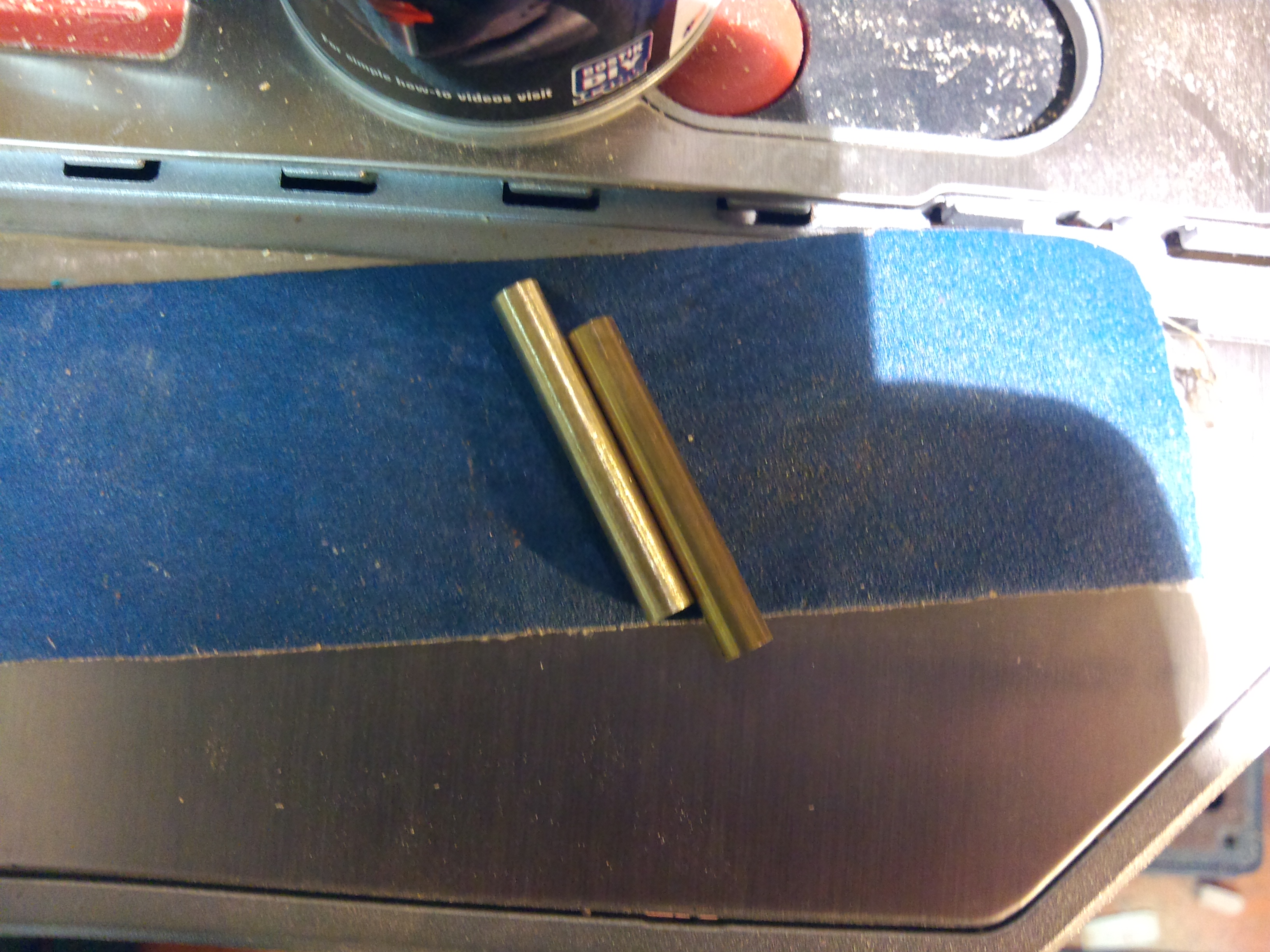
    After the two halves are drilled it is time to prepare the tubes for gluing.  The brass tubes are very smooth and if you attempt to glue them directly to the smooth wood, the bond will not be at all strong.  Taking sandpaper to the tube will give the glue something to adhere to in the blank.
    image

    The shiny tube on the left is roughed up.

    After the tubes are ready, it is time to glue.  I use CA glue, although some people use epoxy.  I use CA glue in finishing so it make sense to me to not have to have another glue on hand for the tubes.  People use epoxy because it takes longer to set.  When you use CA glue, you have to work fairly fast, while getting good coverage with the glue.  If you go too slowly you run the risk of having the tube set while it is still jutting out of the blank (like below).
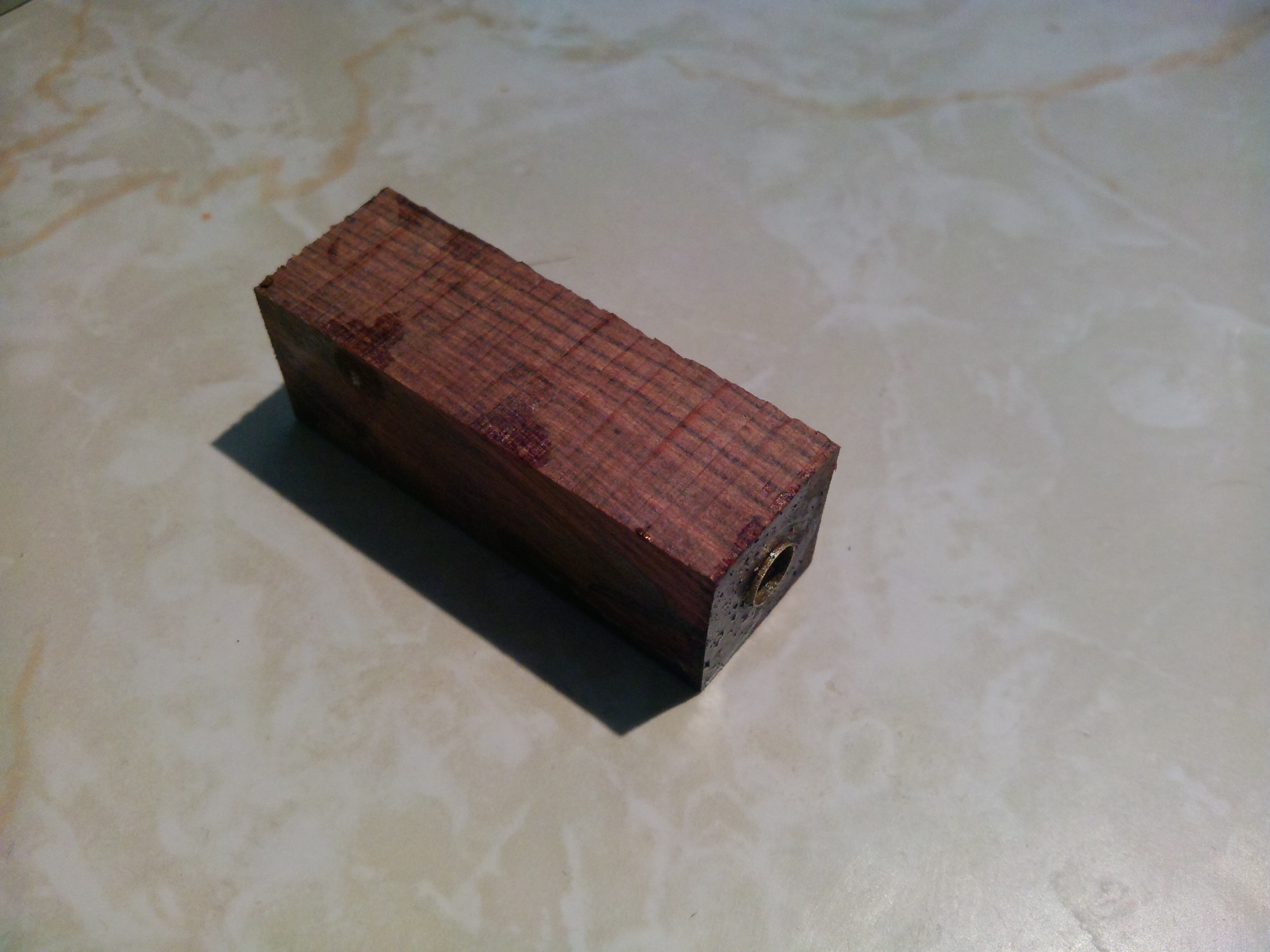
    image

    This blank is now unusable.  Using epoxy gives you a better chance of this not happening.  As this is the first time that this has happened, I don’t usually worry about this.  If you cut your blank well, there should be just a bit of a wood overhang when the tube is set.  This is important because the wood and the tube have to be squared off.  You do this with a pen mill in the drill press.  The pen mill has a shaft that is the same size as the inner diameter of the brass tube.  At the top of the shaft, there is a cutter that does the job of squaring the blank.  One of the biggest errors made in pen kit failures is an out-of-square tube.
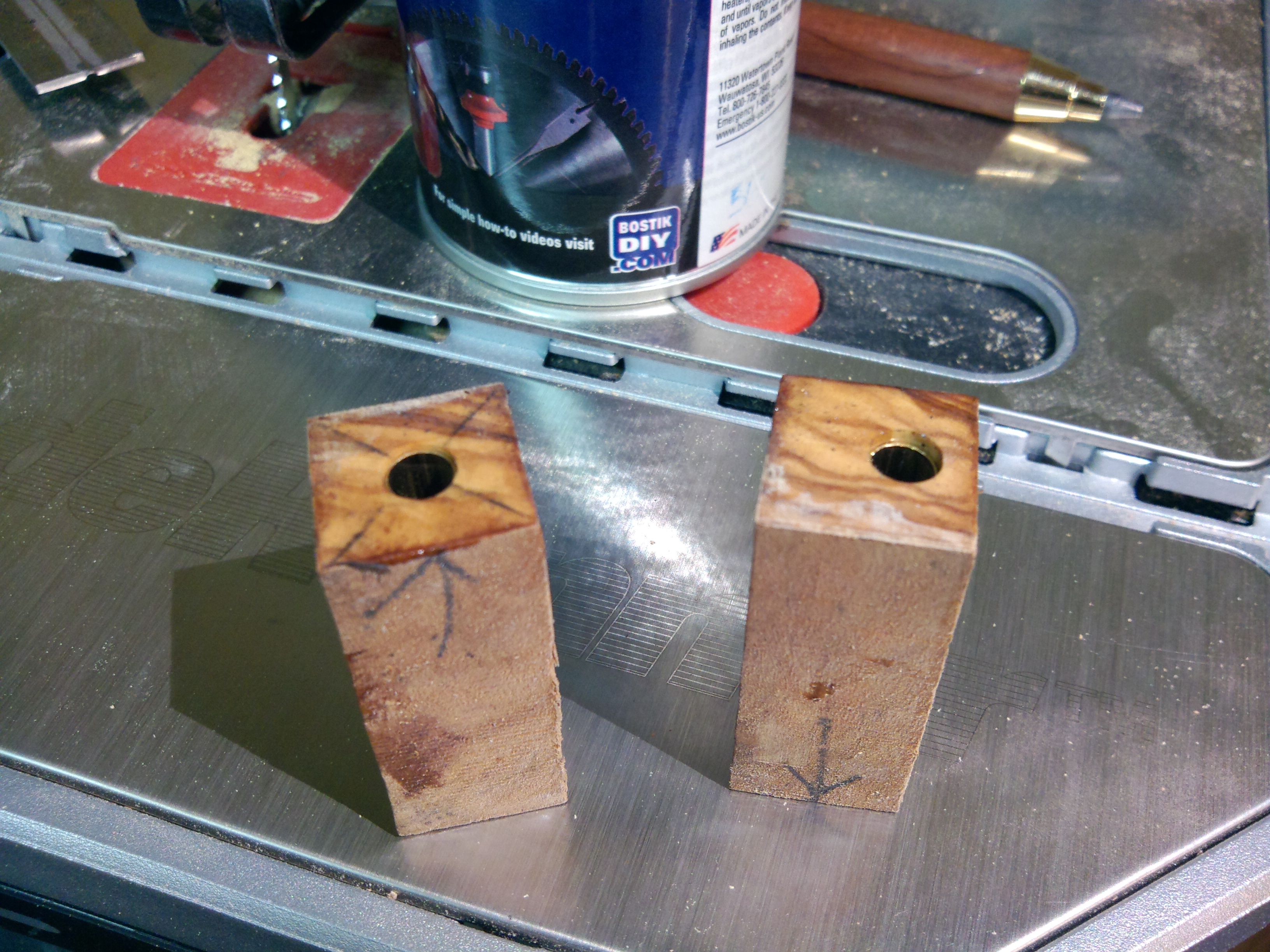
    image

    image

    Holding the blank by hand is probably a bit risky, but I am careful… although not careful enough in this case, because I cut my palm at some point during this process.  The picture below is the blanks squared off and ready to go on the lathe.
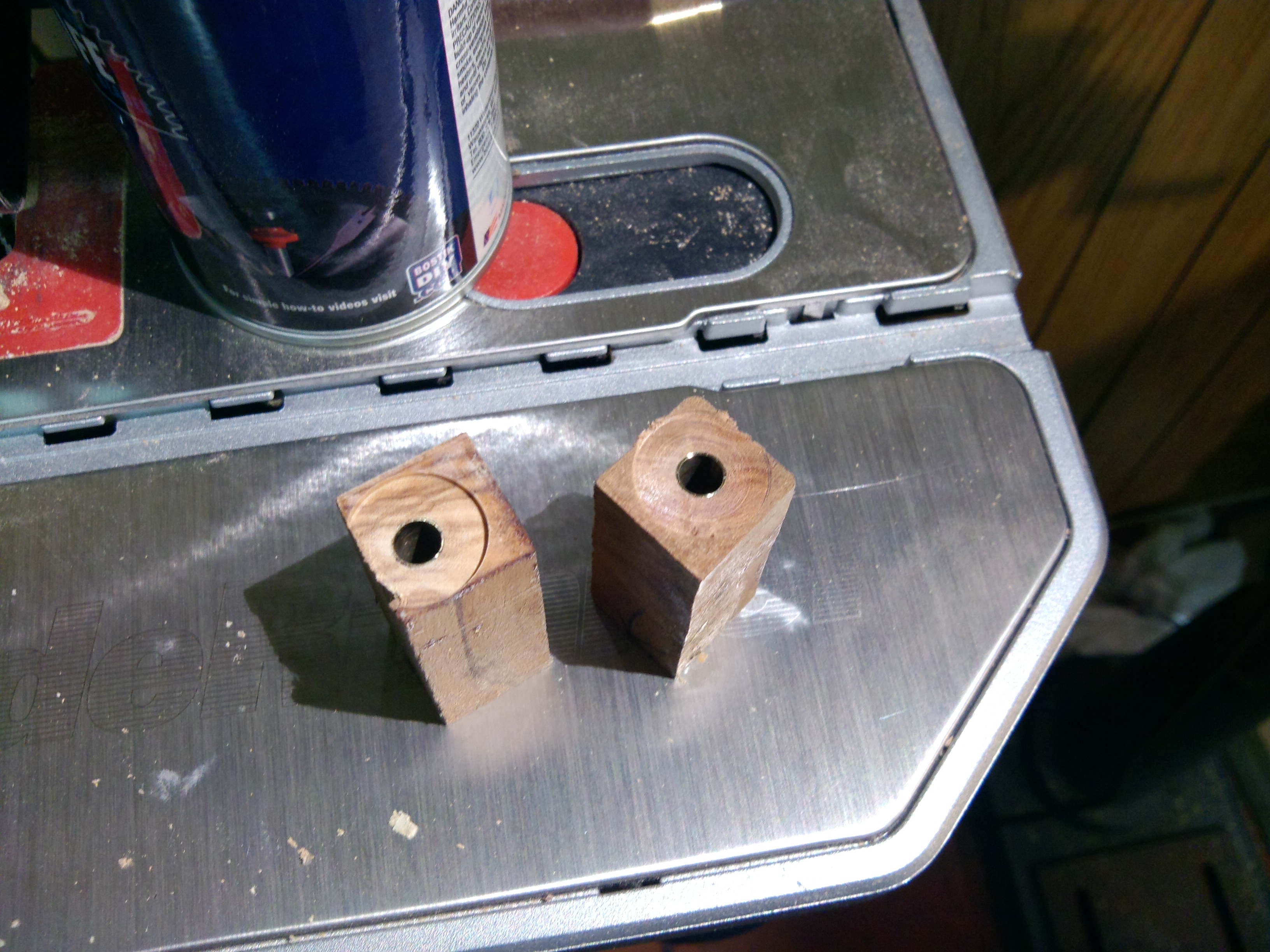
    image

    The bit of the blank that is untouched by the cutter will come off in the turning.  Not picture here, is the mandrel that the blanks go on. There are bushings that are milled to the pen kit pieces, that these pieces will be turned down to.  The kit instructions determine how the blanks go on the mandrel, but I am careful to place them on in the correct orientation (i.e. align the arrows).

    To be continued…

  • I was the Master of Ceremonies for the Change of Command parade at work this past week.  One of the customs of the ceremony is that the outgoing Commanding Officer (CO) and the incoming CO each sign a certificate signifying the handover and then the Presiding officer signs.  For these ceremonies, we always have 3 matching pens.  They are usually cheap 2 dollar pens though so I decided to make three pens for the parade.  This was the first “production line” type of project.

    It started out last Thursday night when I went to Lee Valley to get three ebony blanks and pen kits.  When I got home that evening I started to make them.  Because  each pen has to cure overnight I wanted to make one on Thursday, one on Friday and one on Saturday so that I could finish the last on Sunday after curing.  Well… I started drilling the blanks in my centering vice and the bit kept wandering.  The first one had a tiny crack at the bottom of the blank, but the second one actually split the length of the blank.  I am usually very tired by the time Thursday night rolls around so I decided, in frustration, to stop for the night and start again on Friday.

    So now my plan is going to take me to Monday morning and I was uncomfortable cutting it that close.  I decided to turn a pen, put the CA coats on it and when mostly dry, take it off the mandrel and set it aside to cure.  That way, I could use the mandrel right away to start the next pen.  I ended up getting all three pens made on Friday night and Saturday.  Finishing went even better than my last pen and I was very pleased with the result.  The pens received very favourable comments from the COs and the General as well.

    image

    You can see a bit of grain in the bottom one, but amazingly, you can also see the silver flecks in the pens, especially the centre one.  These flecks are natural and in the wood.  They are not so evident outside of this type of light, but I was very pleased that you could see this.

    By way of contrast, here is a picture of the rough turned blanks and the finished blank.  Quite a difference isn’t it?

    image

    You can see that on this unfinished blank that I hard a substantial Tearout that couldn’t be fixed so, again, I had to start over.  In total I went through 6 Ebony blanks to get three pens.  Not a really good average, but I am sure I will get better?

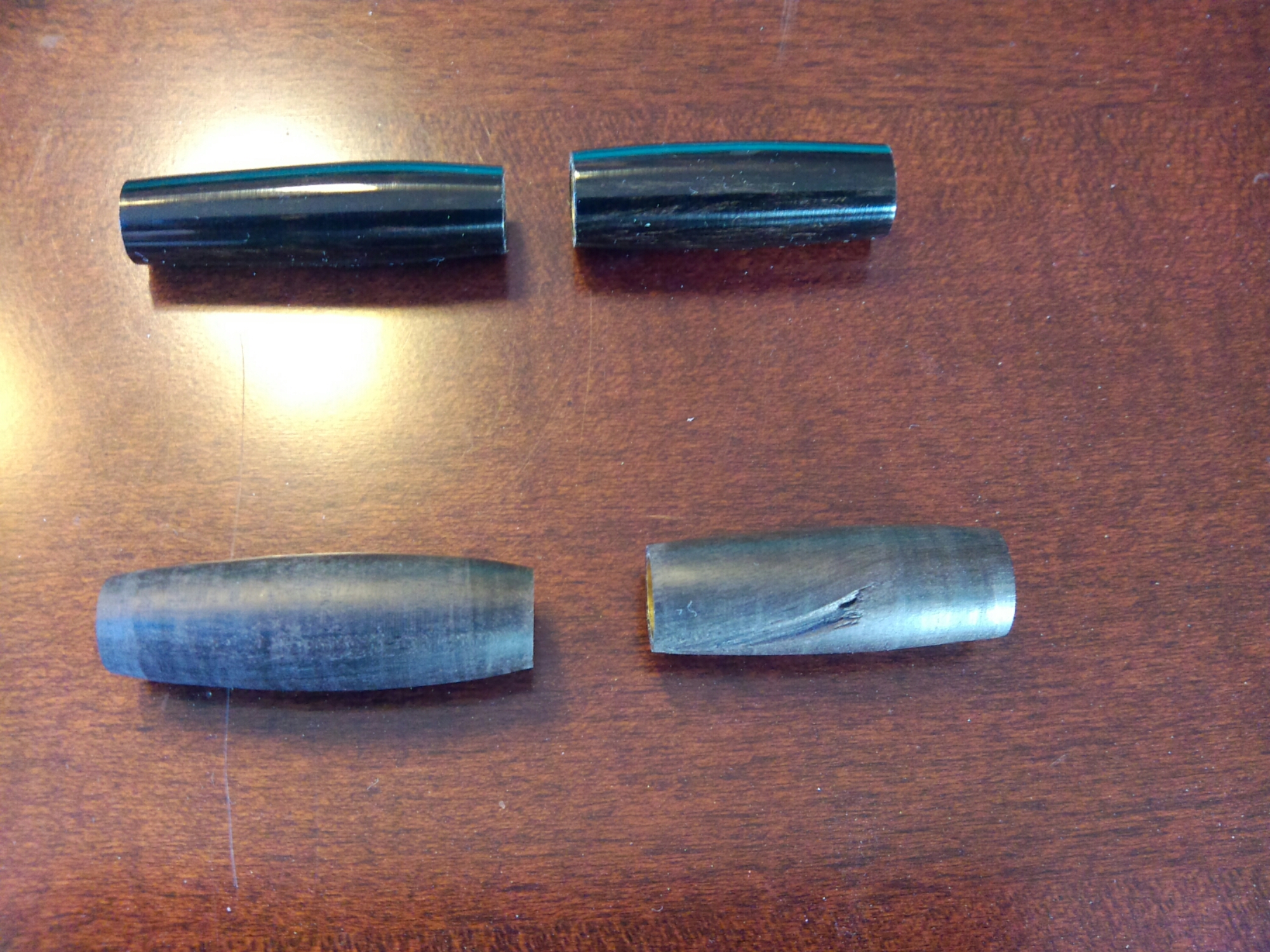
  • When I took my pen-turning class eighteen months ago, the store wouldn’t let us use Ebony for any of our class pens.  I wasn’t sure why, but I assumed it was because of the hardness of the wood.  I have deliberately avoided it in the ensuing months.  Well, after I figured out my CA (cyanoacrylate or Super Glue) finishing technique, I decided that I would give ebony a try.  I have always really liked the elegance of a nice shiny black pen.  I decided that the Baron was an excellent kit as well and I had another Rollerball kit left after making the Chechen pen.

    The ebony comes from Equatorial West Africa, most likely Cameroon.  It is also known as Gaboon Ebony.  While working with it (drilling and cutting) I was amazed just how black the wood was.  Not like the Mun Ebony I have used from Southeast Asia.  Before I got the blanks prepared my hands looked like they were covered in soot.

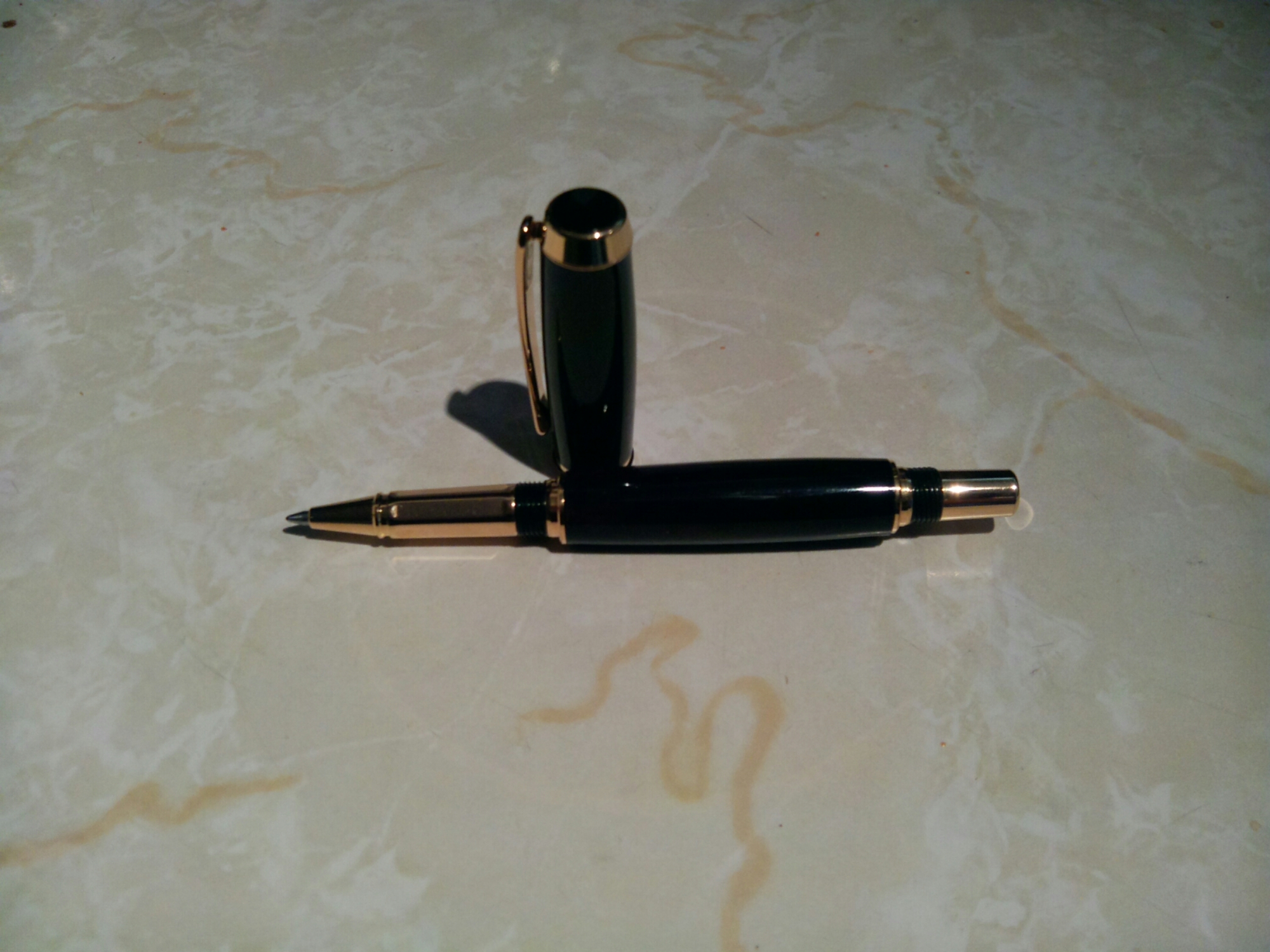
    Anyway, I continued with the turning and was very pleased with how the pen turned out.  The CA finish is a bit rough (although I don’t think rough really covers it)  You can, if you look closely, see some remaining roughness in the wood under the CA.  The finish is extremely smooth, but it is not perfect.  As the second pen though after figuring out my “recipe” for CA finish, I am over-the-moon pleased that this works.

    image

    image

    Almost impossible to see the wood grain in it, but under certain lights a small vein of lighter brown comes through.  You can see the roughness that I am talking about in the first picture.  The finish is very smooth… that roughness is the wood.  One thing about the CA finish is that it is very unforgiving and you have to really take care with your finishing before you apply the CA and when you are polishing the CA.

    From a turning perspective, I don’t know why we weren’t allowed to use this for class.  It is hard, but not as hard as, say Honduras Rosewood.  I had to sharpen my gouges after this pen was completed, but not during.  I quite like the Ebony.

  • Made a new rollerball pen yesterday and finished it today.  I wanted to try the CA finish again and so I dug out my instructions again and followed them to the letter.  This finish turned out really well.

    image

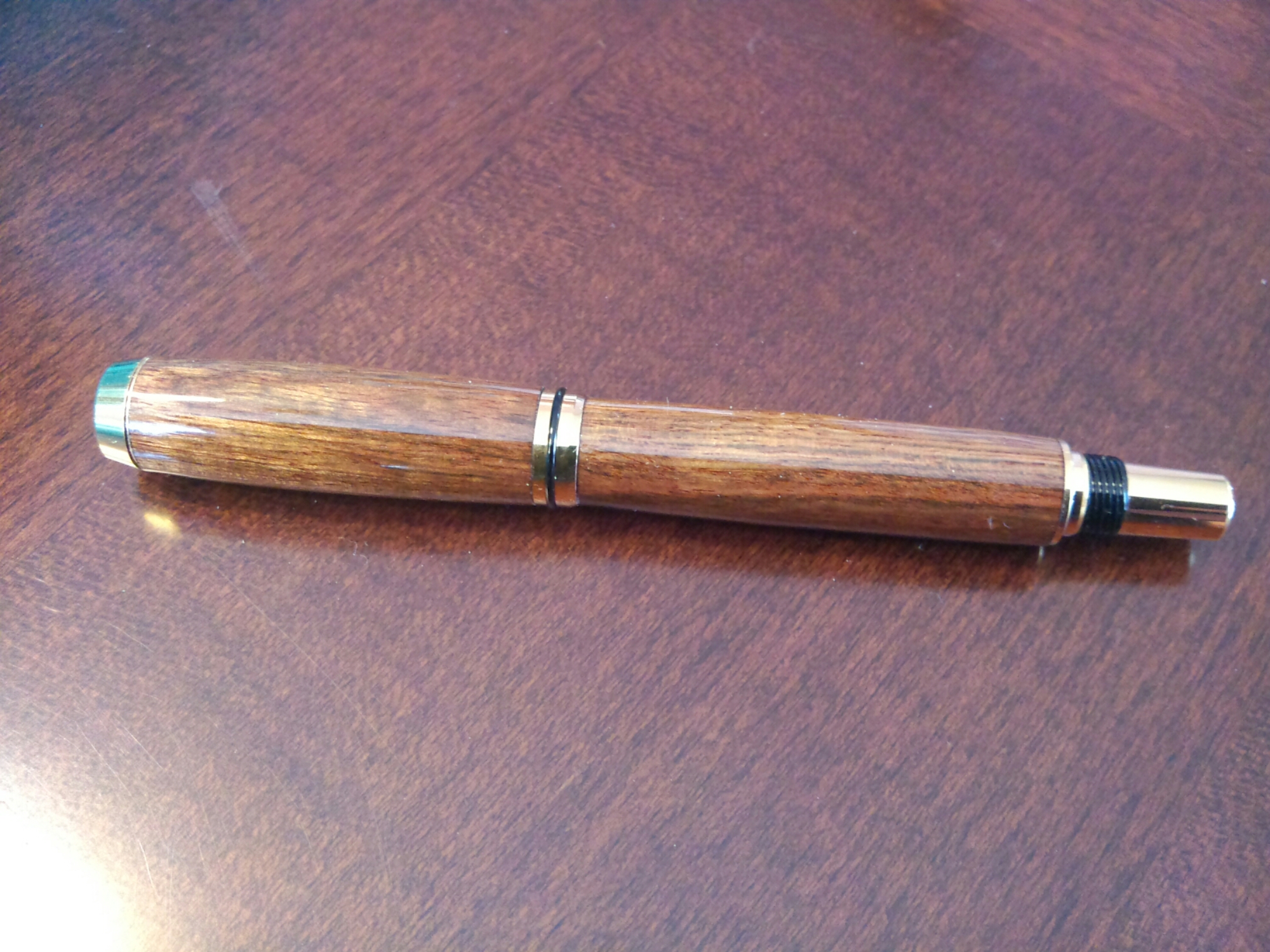
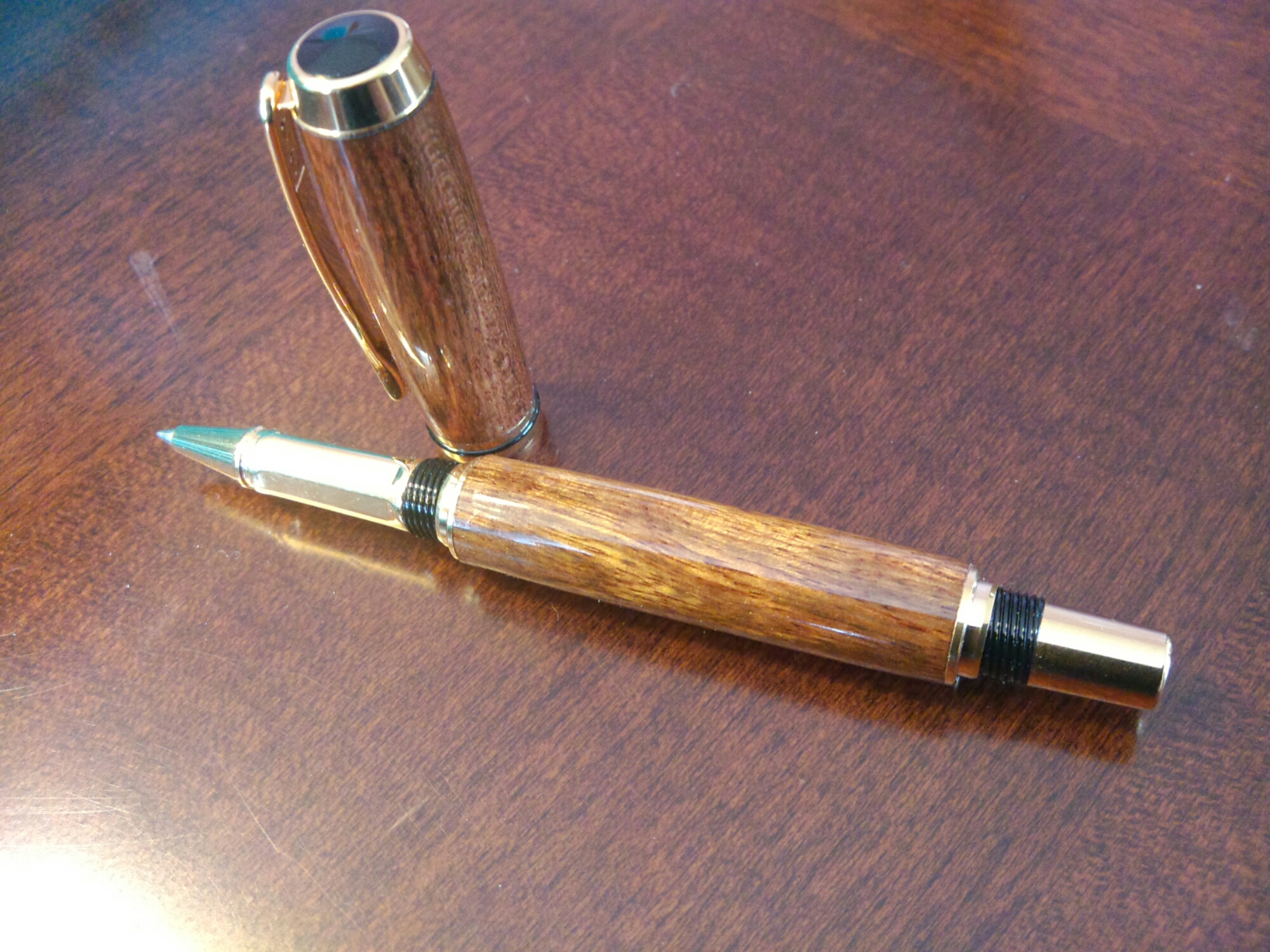
    It has a plastic finish that shows the colours in the wood really well.  This is the first time I have ever used Chechen wood.  When I finished turning (before I sanded, I was thinking that this was really boring as far as wood goes.  Once I started the sanding though, I was amazed at how much better it looked.  In my LED lights on the lathe there are bits of gold in this wood that seemed to glow.  There is also some green that doesn’t quite show up in the photos.

    In terms of the CA finish, there are 6 coats and the key is to put it on smoothly and then DON’T RUSH the drying.  I left at least a half hour between coats.  I’m sure it didn’t take that long to dry between coats, but I didn’t put the next coat on until the previous one was dry (not at all tacky even).  The instructions that I got also said to leave the blank dry overnight and so I did.  That gave the final coat a chance to really cure hard.

    The final thing I did was get a plastic polish from Canadian Tire called PlastX (made by Meguiars).  This made the finish really shine.  All in all I think I have finally figured out the “recipe” to get a good CA finish.  I think it will be helpful to get one or two more mandrels so that I can continue turning while waiting for one to dry.

    image

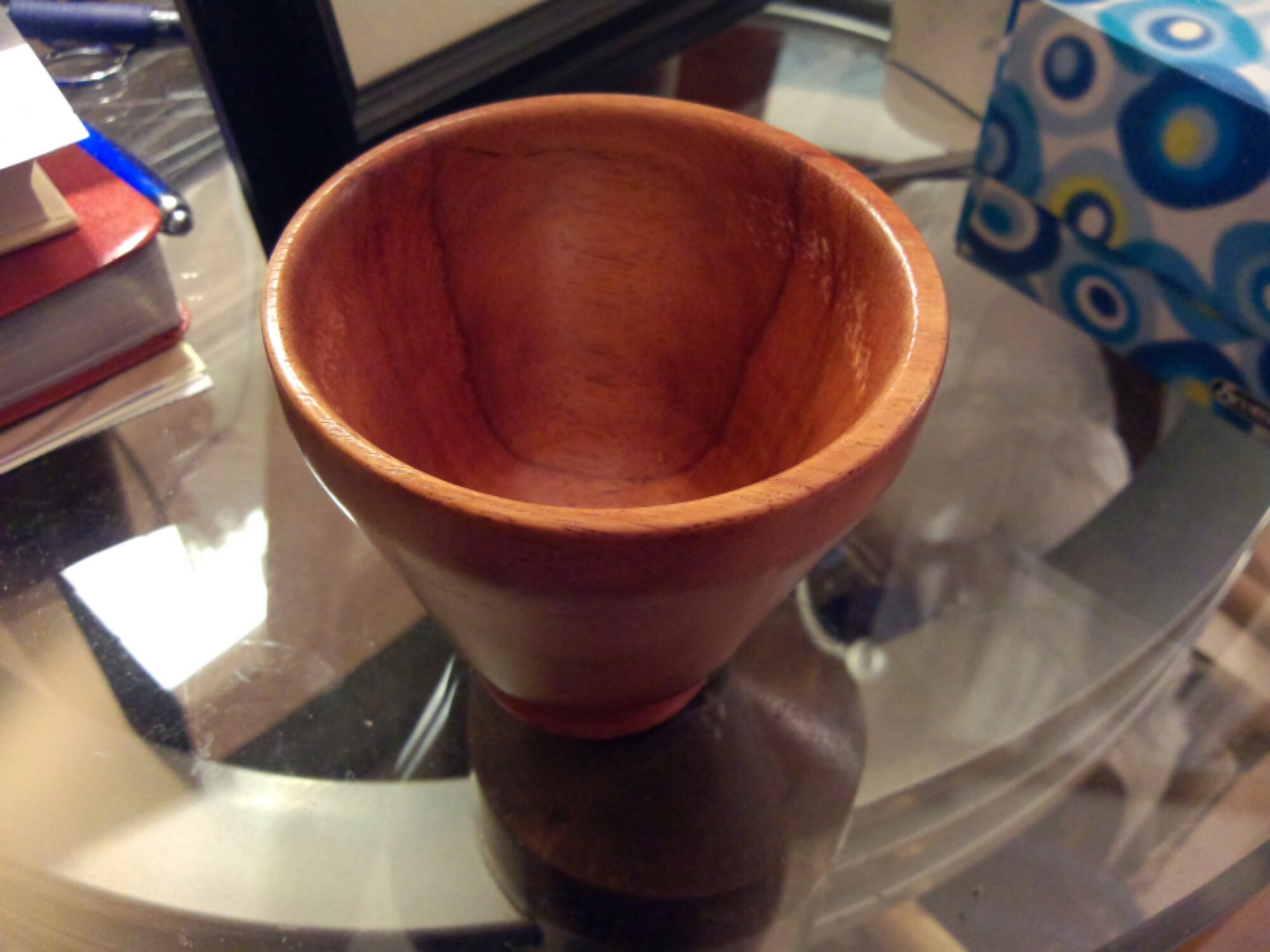
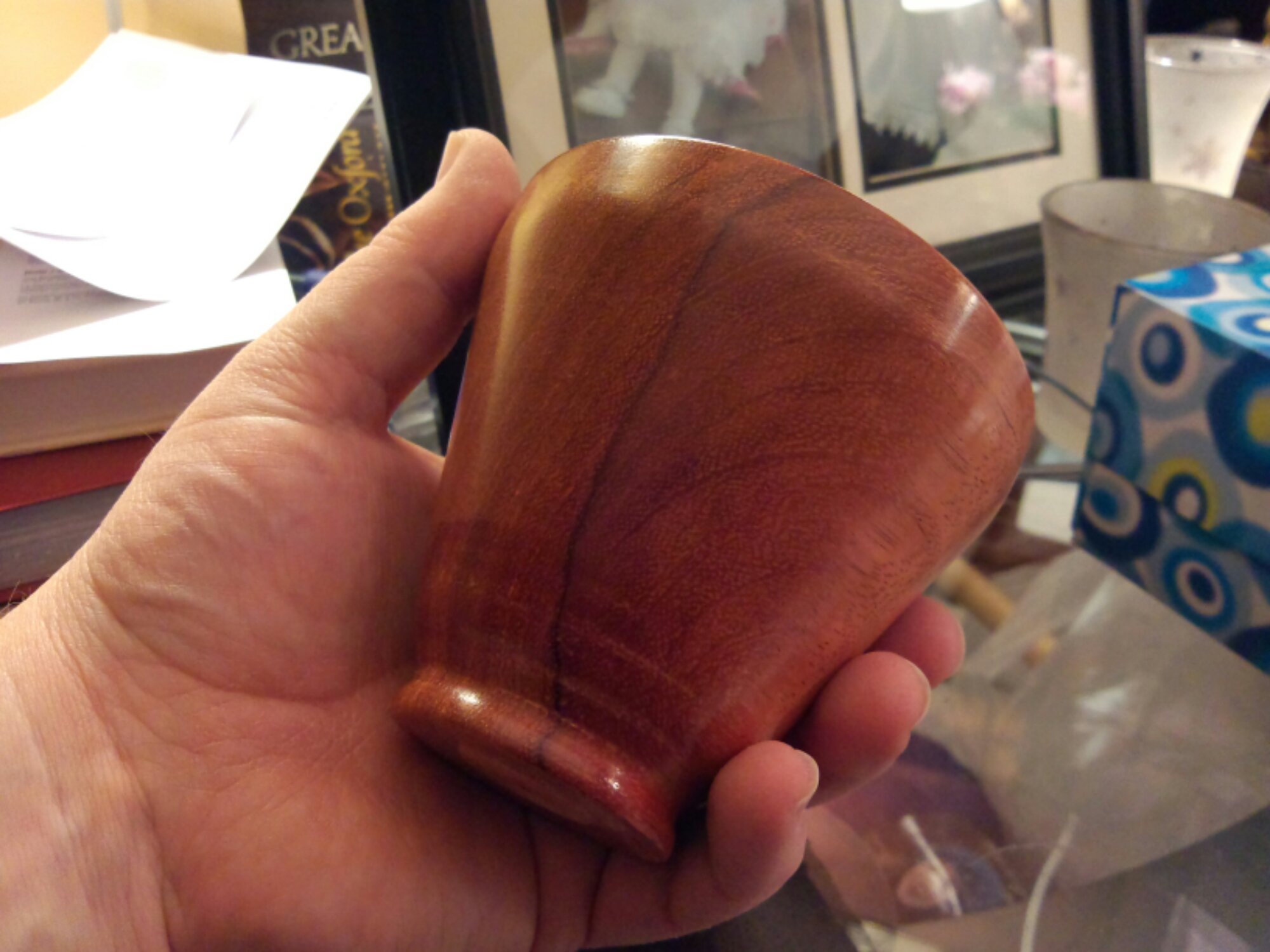
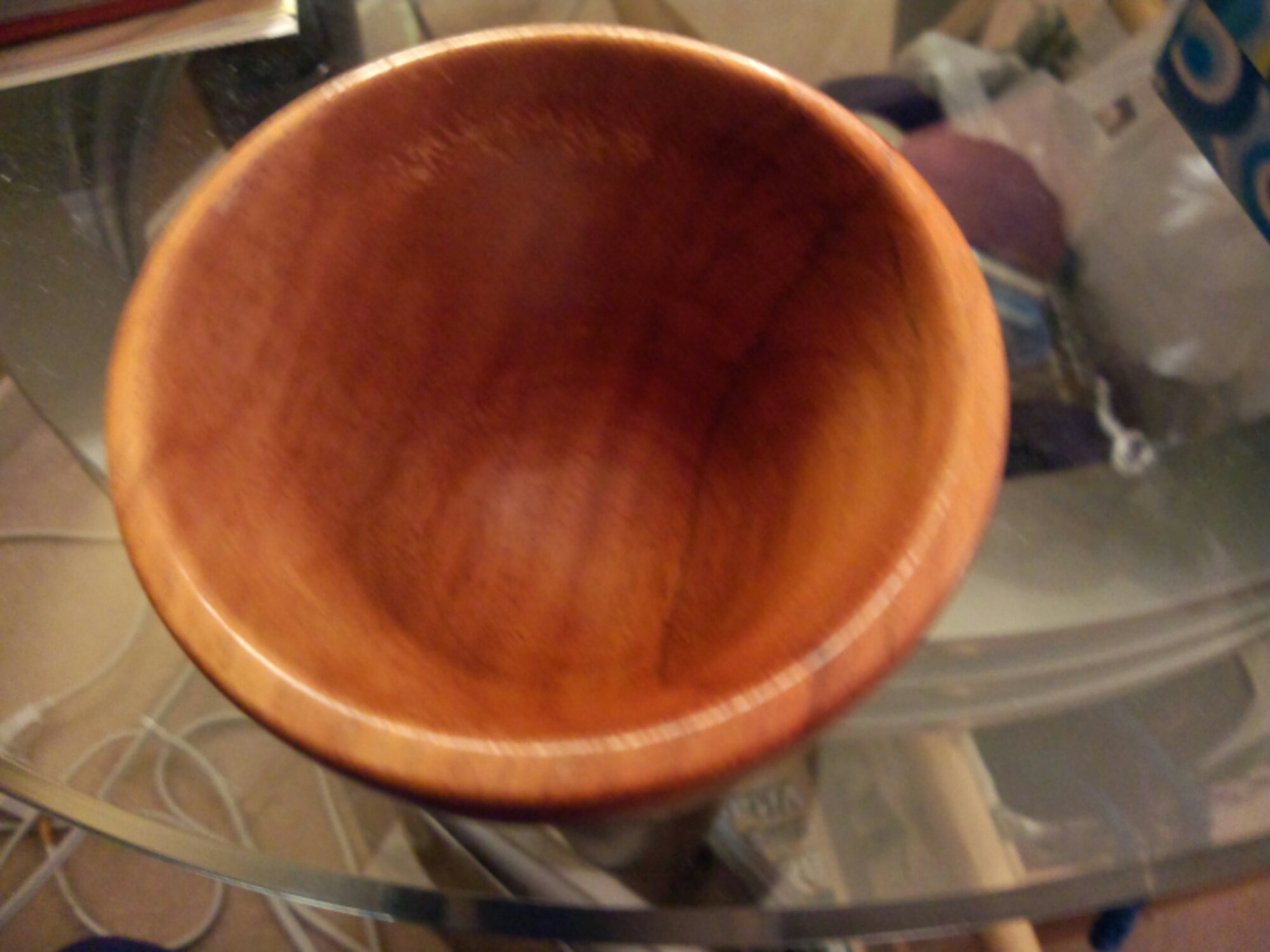
  • Actually it turned out shaped more like a pot than a bowl, but it represents my first attempt at end grain turning and hollowing.  I picked up a piece of Orange Agate (aka Macacauba) and turned it down.  There are a few things that I need to figure out before I do some more bowls.

    1.  Placement on the faceplate is fairly straight forward, although care should be taken to get it as close to centered as possible.

    2.  Once rough shape on the faceplate is done and a tenon is turned on the foot, I have to figure out how to get the piece centred in the chuck.  It’s slightly noticeable that the rim is not an even thickness all the way around, and that is because it was wobbling a bit.  The inside of the rim also has a rough patch that I think was caused by the wobble.

    image

    3.  When turned around to finish (without cole jaws) I had to turn a cone to serve as a jam chuck.  When I brought my tailstock up the hold the pot against the jam chuck, I was unable to turn the foot up close.

    4.  I am also going to have to work on proportion a bit.  The foot in this case is too fine in relation to the pot.  Perhaps the tenon needed to be a bit bigger (longer) which would have given me a more substantial base.

    image

    5.  MOST important.  I have to figure out what I am doing wrong in sharpening my gouges.  The end grain turning did not go as quickly or as smoothly as I see on YouTube and I suspect that is because my gouge was not sharp enough.

    I finished the pot with EEE Cream and Shellawax and am really pleased with how smooth and soft the finish is. I think, when I try this again, I will try it with a bit cheaper piece of wood.  This piece was $16.00 and I would have liked it to have turned out a bit better given the price.

    Finally, before I do much more end grain turning I have to get 2 more tools.  The first is a bowl gouge.  I have a small fingernail gouge that has a kind of bowl gouge grind, but it didn’t quite fit the bill.  The other tool is a round edge scraper.  My scraper is round ended and I was unable to angle it closely enough to the pot wall to get the finish cut really smooth.  I will have to put these on my Christmas wish list.

    image

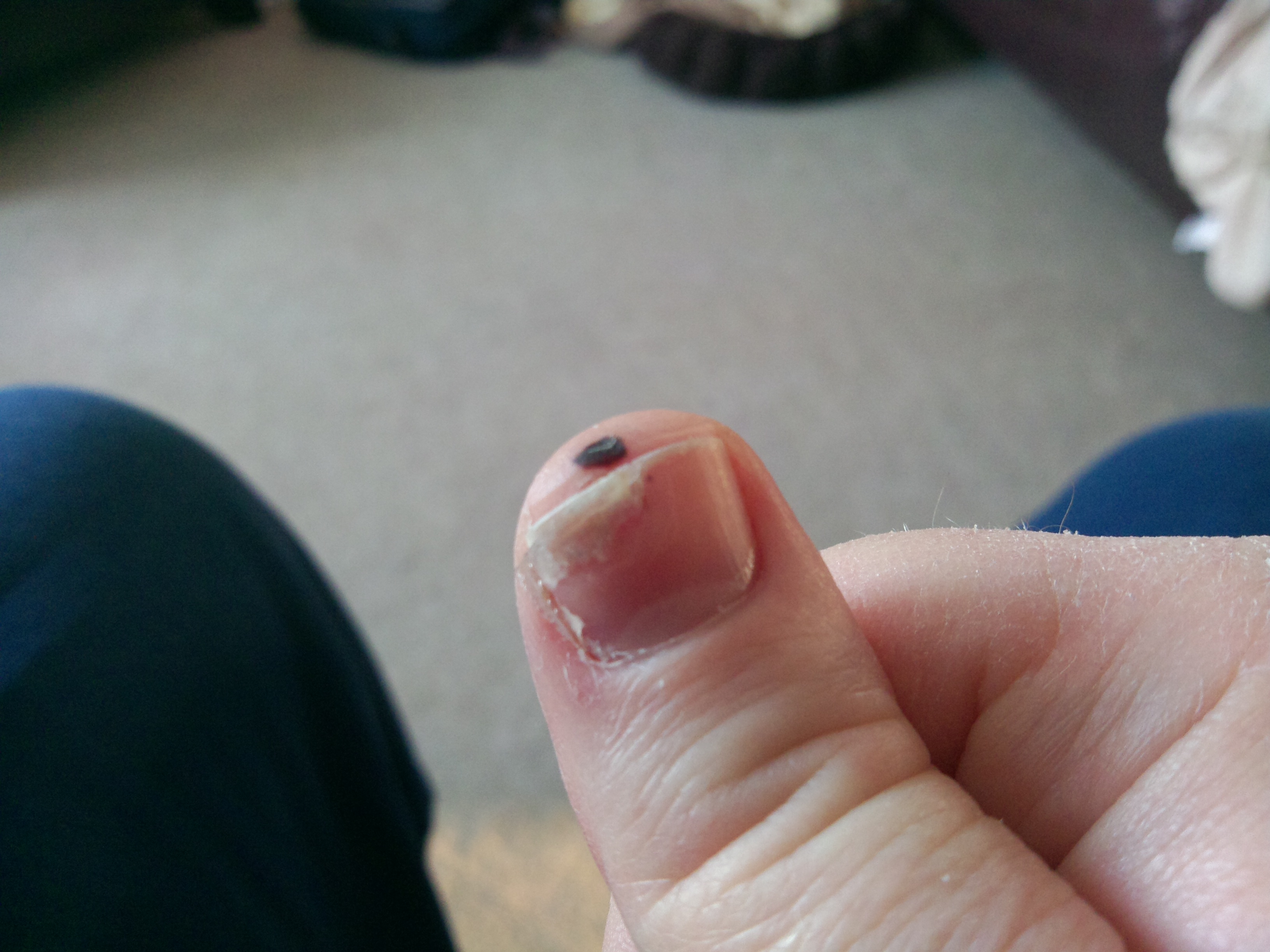
  • I was  making my first bowl last weekend (to be posted later) and in the “burnishing” of the outside of the bowl, I accidently caught my thumb on one of the chuck jaws.  It wasn’t too bad, in terms of the potential dangers of using a lathe, but it was enough to make me stop any work on the lathe for a few days.  The chuck caught my nail and tore almost half of it off and created a little blood blister on the tip of my thumb.  Again, it is bound to happen when you have a chunk of wood spinning at about 3000 rpm, and I console myself with the fact that it could have been a lot worse.  I glued the nail back on with my handy dandy CA glue (super glue) and will baby it until the nail grows out.  Lee Valley sells a chuck cuff (a little rainbow coloured elastic that goes over the chuck jaws) that I will pick up.  Not only does this cover up any sharp corners of the jaws, but because it is brightly coloured, I will be able to see where the spinning chuck is.  The cuff is only $5 so I don’t know why I didn’t pick it up when I bought the chuck.  This is why I have titled this post as a cautionary tale.  

    The picture is of a largely healed thumb after almost a week of care.

    Image